Hawaiian duck at Hanalei refuge confirmed dead from avian influenza
A koloa maoli found sick at Hanalei Wildlife Refuge died of avian influenza; state agencies are monitoring birds and poultry to protect public health and agriculture.

State officials confirmed Jan. 13 that a koloa maoli, the Hawaiian duck found sick at the U.S. Fish and Wildlife Service’s Hanalei Wildlife Refuge on Nov. 26, died from avian influenza. The National Veterinary Services Laboratories identified the virus after the bird, which succumbed within 24 hours of being found, was tested.
No additional detections of the virus have been confirmed elsewhere in Hawai‘i, according to the Department of Land and Natural Resources. The January confirmation focused attention on monitoring efforts across the islands and on precautions for people who work with or live near birds.
Avian influenza is a highly infectious subtype of influenza A that primarily affects birds and is often deadly among wild and domestic populations. Human infections are rare but can occur with close contact, which is why state agencies are stressing biosafety. Officials say this Kaua‘i detection was likely introduced through an infected migratory waterfowl, underscoring the role of seasonal bird movements in spreading the pathogen.
The Hawai‘i Department of Health, Department of Agriculture & Biosecurity, and Department of Land and Natural Resources are coordinating surveillance of public health reports, poultry operations and wild bird populations for signs of spread. That monitoring includes outreach to poultry owners, checks at farms and watching for unusual patterns of illness or mortality in shorebirds and waterfowl.
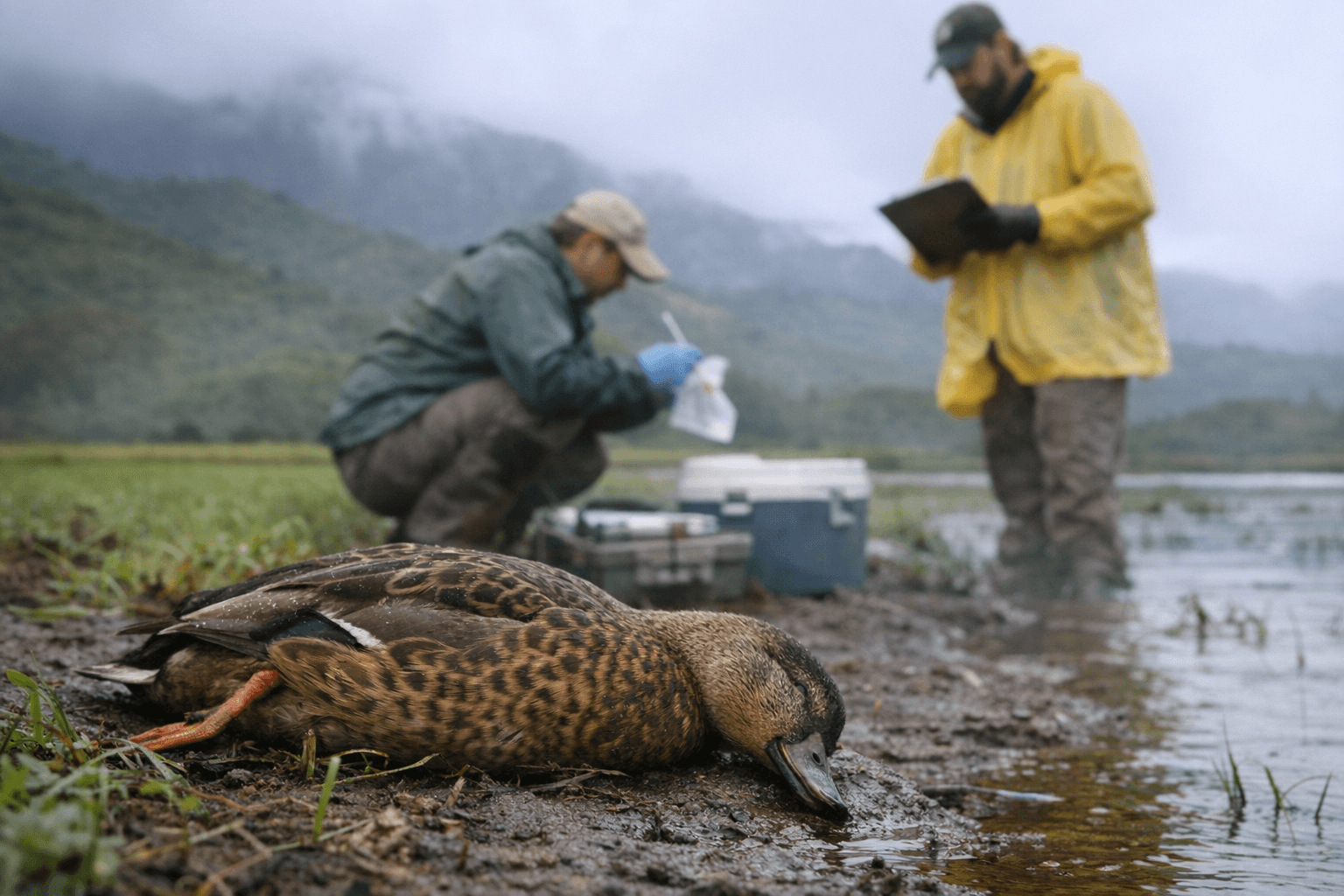
For Kaua‘i residents, the practical steps are straightforward. Avoid touching or handling wild birds, especially waterfowl and shorebirds. If handling a sick or dead bird is unavoidable, wear gloves and follow established biosafety protocols. Report multiple or unusual illnesses in backyard flocks or wild birds to the Department of Agriculture & Biosecurity so investigators can respond quickly.
The confirmed death at Hanalei has particular resonance here because the refuge is a visible, accessible place where residents and visitors encounter waterfowl. Conservation groups and wildlife managers will be watching for any further cases among native and migratory species that use Kaua‘i’s wetlands and coastal areas.
State agencies say surveillance and testing will continue and that they will notify the public if additional cases are found or if guidance changes. For now, the single confirmed case serves as a reminder to protect both bird populations and people by keeping distance from sick or dead wildlife and by reporting concerns promptly.
Sources:
Know something we missed? Have a correction or additional information?
Submit a Tip