Hawaii's Worst Flooding in Two Decades Swallows Homes, Threatens Century-Old Dam
Oahu's North Shore was submerged in muddy floodwaters, forcing thousands to evacuate and raising fears of a 120-year-old dam's failure.
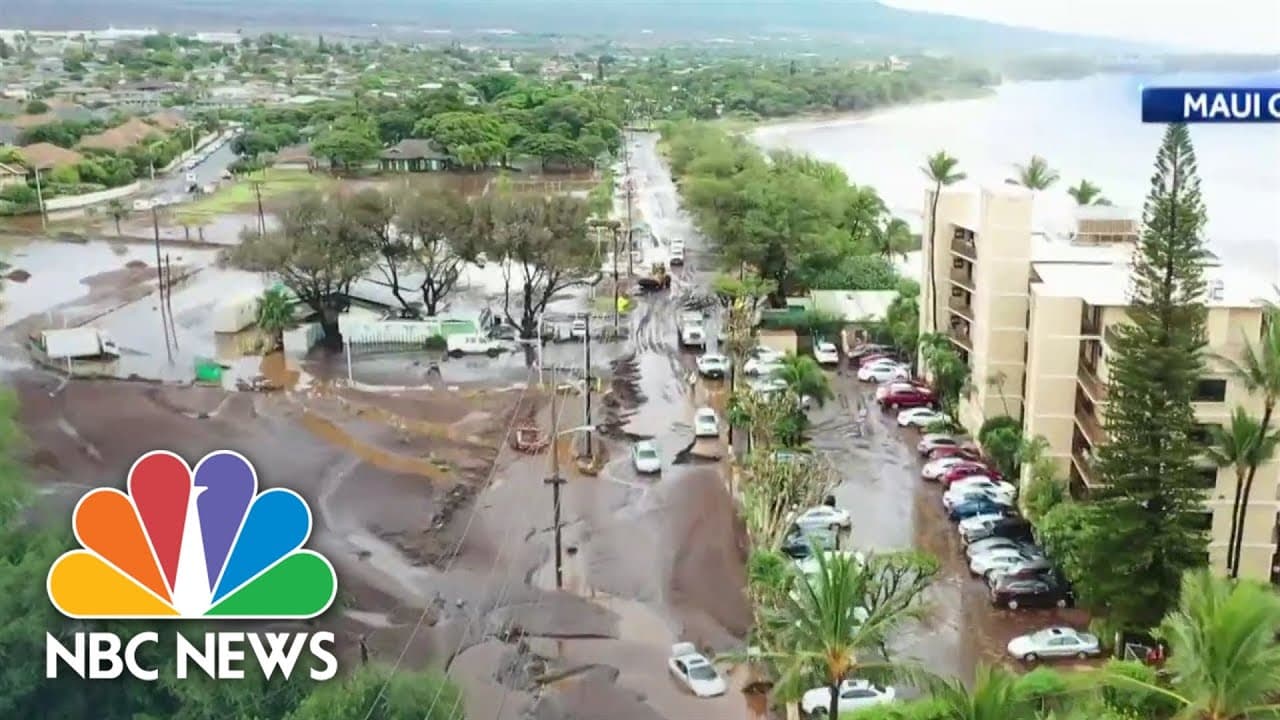
Muddy floodwaters swallowed homes, lifted vehicles, and severed road access across Oahu's North Shore last week, leaving Hawaii grappling with its worst flooding in more than two decades after weeks of relentless rain overwhelmed already saturated ground.
More than 200 people were rescued from rising waters as crews searched by air and by boat for anyone stranded. Evacuation orders covering as many as 5,500 residents in communities north of Honolulu were issued at the height of the crisis, with roughly 4,000 of those people living directly within the emergency zone surrounding a 120-year-old dam in Wahiawa, about 17 miles northwest of Honolulu. Some evacuation orders were later lifted as conditions stabilized in certain areas, but officials warned residents to remain vigilant.
No deaths were reported and no one was unaccounted for, a relief given the scale of destruction. Dozens and perhaps hundreds of homes were damaged, though officials said a full damage assessment had not yet been completed. In the coastal town of Waialua, floodwaters filled the ground floors of homes and pushed debris against bridges along the Kaukonahua Stream. Emergency managers posted an urgent warning on social media telling residents to leave immediately, stating that the only remaining road out of Waialua was "at high risk of failure if rainfall continues."
The Wahiawa dam, which sits at the center of the evacuation zone, became the most alarming focal point of the crisis. Officials warned of its possible failure as water levels climbed, receded by late Friday, then rose again overnight with additional rainfall. By Saturday morning, the dam appeared less critical than the broader, island-wide hazard, said Molly Pierce, a spokesperson for Oahu's Department of Emergency Management.
"We're seeing the waters receding in a lot of places, but again with that saturation, just the smallest amount of water can bring those raging back up," Pierce said. "So even if it's blue skies where you are, I think we all know in Hawaii that if rain is falling on the mountain, it's coming to you soon enough."

The flooding was driven by a Kona low, a subtropical cyclone capable of producing extreme rainfall, compounding weeks of prior precipitation. Parts of Oahu received 8 to 12 inches of rain in a short period, according to the National Weather Service, falling on soil already soaked by a winter storm the previous week. Officials said the flooding was the state's most serious since 2004, when homes and a University of Hawaii library were inundated.
The crisis extended beyond Oahu. On Maui, authorities upgraded an evacuation advisory to a warning for parts of Lahaina, a community still recovering from the catastrophic 2023 wildfire, after retention basins there neared capacity.
State employees, with the exception of emergency workers, were sent home so families could focus on reaching safety. Military reserves were mobilized and troops deployed from Schofield Barracks to assist with relief operations, with the Coast Guard also positioned for potential search-and-rescue missions.
With the region still saturated and forecasters warning of additional rain, the risk of renewed flooding across Oahu's battered North Shore communities remained far from over.
Know something we missed? Have a correction or additional information?
Submit a Tip