Headspace Sleep Program Reduces Insomnia Symptoms in Randomized Trial
Headspace’s Sleep Program cut insomnia symptoms and improved sleep, mood, and mindfulness in 132 adults in a February 2026 randomized trial (ClinicalTrials.gov NCT05872672).
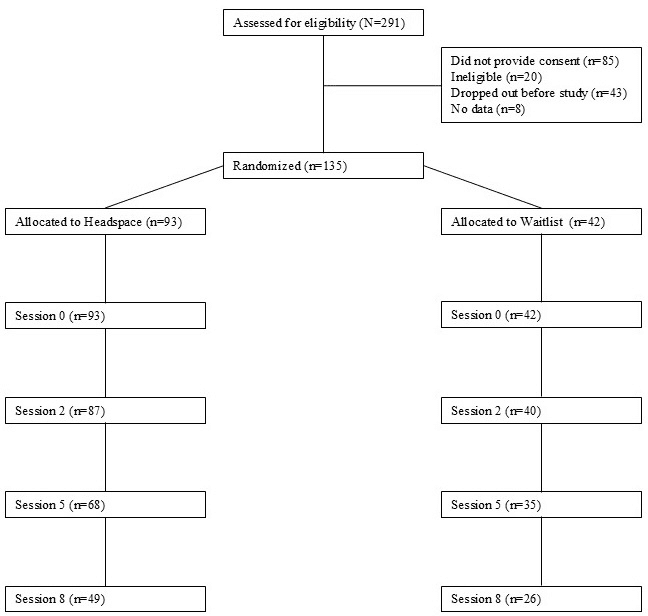
The Headspace Sleep Program produced broad improvements in insomnia and related outcomes in a February 2026 randomized controlled trial registered as ClinicalTrials.gov NCT05872672. The trial evaluated 132 adults with clinical insomnia and found significant improvements in insomnia symptoms, sleep quality, sleep disturbance, depressive symptoms, anxiety symptoms, and mindfulness, and reported that insomnia remission rates and treatment response increased over time in the Headspace group but not in the waitlist control group.
Researchers used a randomized, pre-post design with a 3-week follow-up and compared the Headspace intervention against a waitlist control. Outcomes were assessed at baseline, post-intervention, and three weeks after completion, and daily self-report measures included morning diaries and ecological momentary assessment for tiredness. Finance/Yahoo described the intervention arm as completing an 18-day program; the Pmc excerpt confirms the Headspace Sleep Program was the evaluated intervention but does not specify duration in the supplied text.
Sources report differing recruitment details. A JMIR excerpt states participants “were staff employees at a university in the San Joaquin Valley of California” and lists exclusion criteria verbatim: participants were excluded if they were not university employees or if they were university faculty, younger than 18 years old, not fluent in English, did not have access to a smartphone, or had prior experience in meditation, defined as having participated in mindfulness meditation 2 times per week for 10 minutes over the previous 3 months. By contrast, Finance/Yahoo states the trial was “conducted by researchers at Virginia Tech in collaboration with Headspace” and enrolled 132 adults ages 18-65. The Pmc excerpt reports 132 adults with clinical insomnia but does not list recruitment location in the supplied text.
The trial’s statistical planning combined two approaches. The Pmc excerpt reports a minimally important difference for the Insomnia Severity Index (ISI) defined as an 8-point reduction with a standard deviation of 6 used in sample-size calculation, and G*Power calculations indicating that a sample size of 108 would provide 80% power to detect a between-within interaction effect size f = 0.12; the study ultimately evaluated 132 adults. JMIR’s fragment likewise notes a power analysis assuming a moderate effect size, alpha .05, and power .80, though that excerpt is truncated.

Pmc’s conclusions state plainly: “The Headspace Sleep Program is an effective intervention for improving sleep disturbances in adults with clinical insomnia.” The report also notes that remission rates and treatment response rose over time in the Headspace group but not the waitlist group. Finance/Yahoo adds that “benefits persisted beyond the program’s completion, suggesting improvements could be sustained,” and includes Headspace Senior Director of Research Sarah Kunkle saying, “Headspace takes a unique and holistic approach to research, combining clinical trials and real world evidence, academic collaborations, and internal studies to validate both the efficacy and effectiveness of our products and services.”
The trial sits in a growing mHealth meditation literature that earlier tested the Calm app and other Headspace trials cited on corporate pages. Pmc’s authors call for further research to compare the Headspace Sleep Program with traditional treatments and to test effects in real-world settings. Readers seeking trial identifiers and verification can refer to ClinicalTrials.gov registration NCT05872672 for author names, recruitment sites, and full methods and outcome tables.
Know something we missed? Have a correction or additional information?
Submit a Tip