Heelys, the wheeled shoes of the 2000s, are rolling back into fashion
Heelys were more than a fad: they turned sidewalks into social clubs, then left behind a trail of injuries, lawsuits, and adult nostalgia.
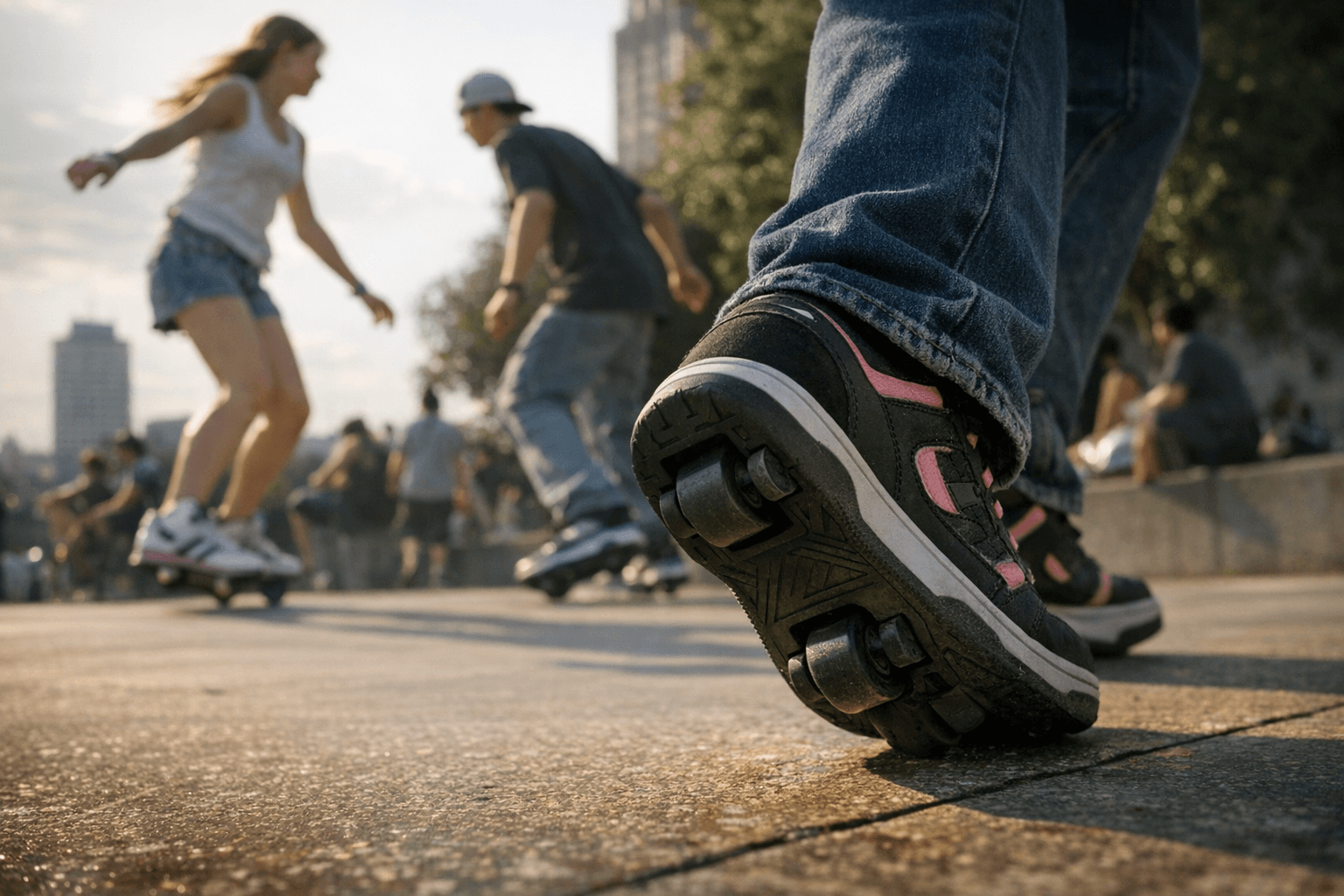
The wheels that made a childhood clique
I still remember the first time Heelys changed the shape of an afternoon. One pair of sneakers with a hidden wheel could turn a schoolyard into a small stage, where gliding even a few feet earned attention, envy, and instant conversation. That was the real product, as much as the shoe itself: not just motion, but membership.
Heelys were invented by Roger Adams, who patented the design in 1999, and the brand took off through Heeling Sports Limited, which started in 2000 and is headquartered in Carrollton, Texas. By 2006, a marketing case study says the company had sold more than 4.5 million pairs in more than 60 countries and generated more than $100 million in sales. The numbers help explain why the shoes felt unavoidable at the height of the craze: Heelys was not a niche curiosity, but a global youth product with enough scale to become a recognizable part of early-2000s kid culture.
How Heelys became social currency
The appeal was never only athletic. Heelys were a shortcut to identity in an era before smartphones mediated every social exchange. If you had a pair, you were not just wearing shoes, you were broadcasting a kind of playfulness and daring that other kids noticed immediately. That made them powerful in the way many childhood fads are powerful: they gave children a way to signal belonging without needing words, status apps, or screens.
The brand understood that appeal. Heelys says it remains “the original shoes with wheels” and now markets them to both kids and nostalgic adults, with a mission to inspire fun, freedom, and self-expression. That language captures why the shoe still has cultural pull. For children, the shoes promised movement and coolness. For adults, they now promise a return to a more open, less managed version of social life, when a block, a driveway, or a parking lot could become the whole world for an hour.
Peak momentum, then a very public slowdown
The company’s rise was fast enough to look effortless from the outside, but the financial timeline tells a more complicated story. Heelys completed its initial public offering in December 2006, after filing an amended S-1 that November. Around the same time, reporting in 2007 described the fad as possibly already over. That sequence matters: it shows how quickly youth products can move from breakout growth to saturation, especially when the novelty is tied to a narrow age group and a specific seasonal rhythm of playground imitation.
That boom-and-bust pattern is familiar in consumer markets. A product that becomes a social object can scale rapidly because children copy one another with remarkable speed. But the same network effect that drives adoption can accelerate decline once the next thing arrives. Heelys’ early sales, international reach, and public listing show the upside of that cycle; the cooling reports show how fragile it was.
The risk hidden inside the fun
The larger story is impossible to tell honestly without the injury data. The U.S. Consumer Product Safety Commission uses NEISS, its injury surveillance system, to collect consumer-product injury data, and Heelys-type equipment appears in that broader tracking universe. A retrospective review of NEISS data from 2002 to 2006 found injuries serious enough to require hospital admission, while a pediatric emergency study reported that many injuries happened outdoors and that 20% occurred on first use and 36% while children were still learning.
That learning curve is important. Heelys were sold as instinctive fun, but the evidence shows that the first attempts were often the most dangerous. The Emergency Medicine Journal also reported that more patients were arriving in emergency departments with Heely-related injuries as the shoes became more popular among children. In the United Kingdom, a study in the same field found increasing numbers of Heelys-related injuries in children, reinforcing that this was not only an American schoolyard phenomenon.
Contemporaneous reporting in the United States was even starker, noting one death and 64 injuries between September 2005 and December 2006 involving trendy roller-skate shoes. That kind of public attention reshaped the conversation around the fad. What looked to kids like playful independence looked, to parents and regulators, like a device that could produce fractures, hospital admissions, and difficult tradeoffs between freedom and safety.
Why the memory still lands in adulthood
The reason Heelys still resonate is that they belong to a particular pre-smartphone freedom that is harder to find now. Kids could roam farther from adults, communicate face-to-face, and build friendships through shared objects rather than shared platforms. The shoes became part of the choreography of those friendships: trying to balance, falling, laughing, then trying again. The product’s appeal was social before it was technical.
That is why the nostalgia is so specific. Adult memories of Heelys are rarely about high performance or sport. They are about the charged feeling of arriving somewhere with something new, something that gave you a place in the group. In that sense, the shoes were a kind of micro-economy of childhood, where novelty, status, and trust all moved together on the same sidewalk.
What their comeback says about the market
Heelys continuing to sell wheeled shoes today, and marketing them to adults as well as children, points to a broader consumer trend: products tied to childhood memory can hold value long after their original peak, especially when they offer a physical experience that digital life cannot replicate. The brand’s survival suggests that nostalgia is not just sentiment. It is demand, and it can be monetized when a company preserves a distinct identity.
But the long arc of Heelys also shows the limits of nostalgia as a business model. The company’s early growth was dramatic, its public market debut came quickly, and the injuries and lawsuits followed just as fast. Patent-infringement and shareholder lawsuits became part of the story, a reminder that rapid consumer success can attract legal pressure as well as imitation. Heelys was never only a fun shoe. It was a product that sat at the intersection of childhood desire, commercial scale, and real-world risk.
That mix is exactly why the brand still matters. Heelys captures a moment when a simple object could create friendship, advertise identity, and expand a child’s world by a few exhilarating feet at a time. The wheels may be small, but the cultural momentum they generated has not stopped rolling.
This article was produced by Prism’s automated news system from verified source data, official records, and press releases, then run through automated quality and moderation checks before publishing. The system is built and supervised by the people who set the standards it runs under. Read our full AI policy.
Did this article answer your question?

