Trump’s 250-Foot Triumph Arch Gets Preliminary Approval in D.C.
Trump’s 250-foot arch cleared its first D.C. hurdle, but commissioners urged revisions as veterans, planners and protesters fought over the monument’s symbolism and scale.
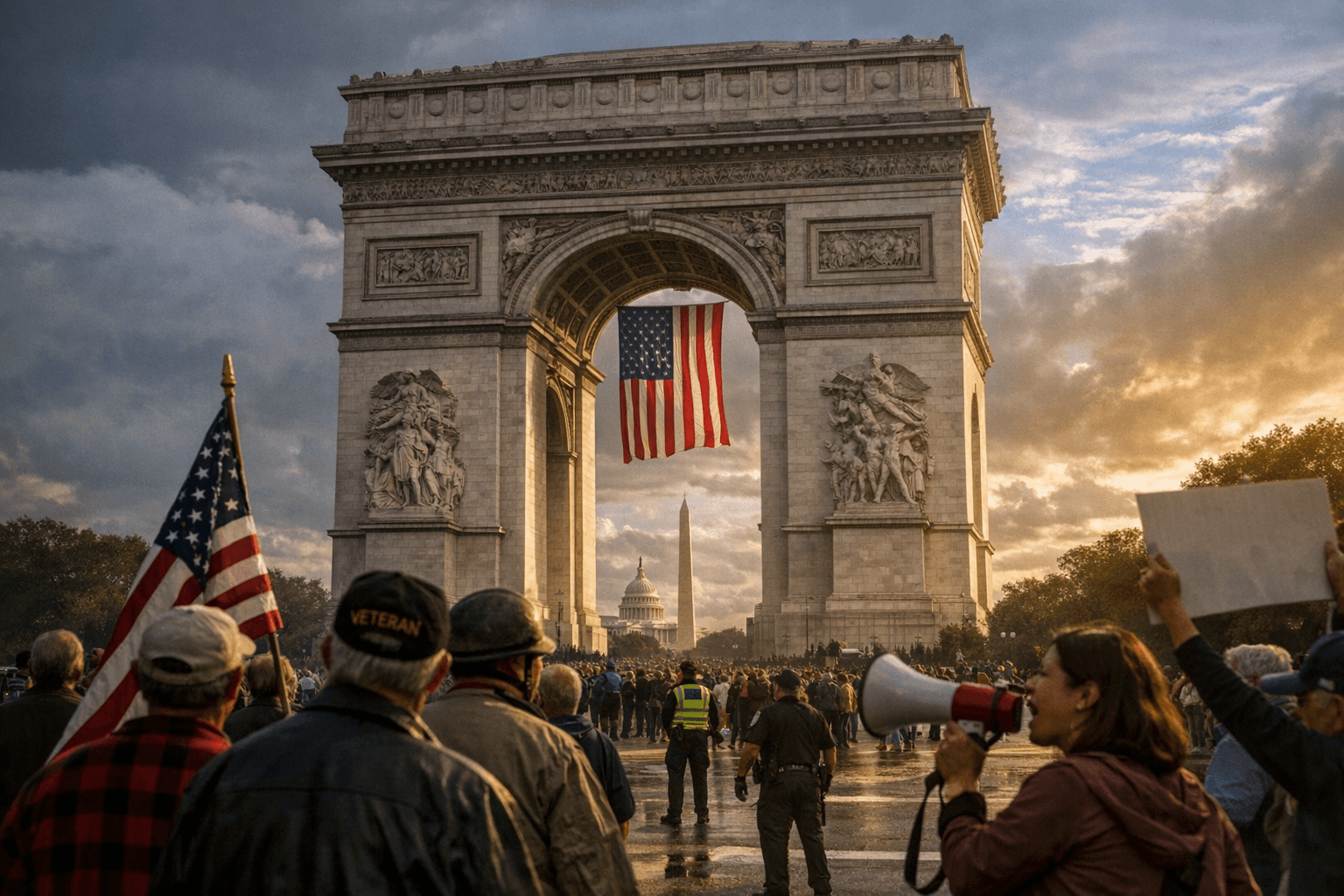
A towering Trump memorial aimed at one of Washington’s most sensitive sightlines won preliminary approval on Wednesday, moving the 250-foot triumphal arch one step closer to Memorial Circle near Arlington National Cemetery. The U.S. Commission of Fine Arts voted unanimously to advance the concept, even as critics warned that the project would reshape the visual approach to Arlington Memorial Bridge and the Lincoln Memorial.
The design shown publicly would rise 166 feet before adding two 24-foot golden eagles and a 60-foot golden Winged Lady Liberty holding a torch, making the structure more than twice the height of the Lincoln Memorial and taller than Paris’s Arc de Triomphe. The monument is meant to mark the nation’s 250th anniversary and honor military veterans, part of Donald Trump’s broader effort to leave a classical imprint on the capital’s landscape.
But the commission’s support was far from a blank check. Vice chair James McCrery II, an architecture professor at Catholic University of America and an architect involved in Trump’s White House ballroom project, pushed for revisions before any final vote. He questioned the planned 250-foot underground visitor passage as unnecessary and objected to lion statues at the base as not culturally American. McCrery and others also raised the possibility of scaling back the monument by removing the gold-plated figures on top.
Public resistance has been overwhelming. Thomas Luebke, the commission’s secretary, said nearly 1,000 public comments were submitted and that all of them opposed the project. Outside the National Building Museum, protesters gathered with signs rejecting the proposal, underscoring how quickly the arch has become more than an architectural exercise. For opponents, the fight is about whether a monument so visibly tied to Trump should dominate a corridor that already carries the weight of the Lincoln Memorial and Arlington National Cemetery, where more than 400,000 service members are buried.
The commission did not discuss cost, and the Trump administration has not released an estimate. Trump has said the arch would be financed with excess private donations from his planned $400 million White House ballroom, though a recent National Endowment for the Humanities spending plan suggests the project could also receive about $15 million in federal money.
The monument already faces a legal challenge. Three Vietnam War veterans sued in February to block the arch, arguing that the administration failed to consult Congress and that the structure would disrupt historic sightlines between the Lincoln Memorial, the Arlington Memorial Bridge and Arlington National Cemetery. The case reflects a larger clash over who gets to define the nation’s capital: a president seeking a permanent symbol of his own legacy, or a civic landscape meant to remain larger than any one administration.
This article was produced by Prism’s automated news system from verified source data, official records, and press releases, then run through automated quality and moderation checks before publishing. The system is built and supervised by the people who set the standards it runs under. Read our full AI policy.
Did this article answer your question?

