Hegseth Blocks Promotions for Black and Female Senior Military Officers
Hegseth personally overrode Army Secretary Driscoll to strike four Black and female officers from a one-star general list, drawing condemnation from senators who called the move potentially unlawful.
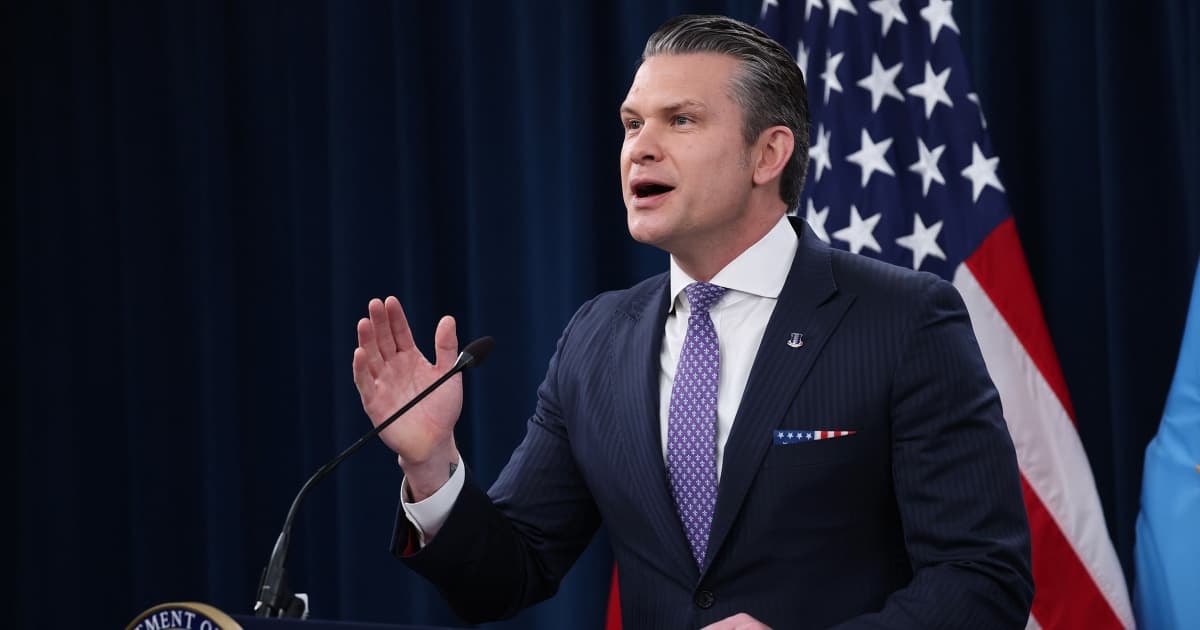
Defense Secretary Pete Hegseth personally struck four Army officers from a one-star general promotion list after Army Secretary Daniel Driscoll repeatedly refused to remove them, a move nine U.S. officials say is part of a broader effort targeting Black and female senior officers based on race, gender, or perceived ties to Biden administration policies.
The four officers, two Black men and two female soldiers, had been on track to become brigadier generals on a list of roughly three dozen names, the overwhelming majority of them white men. Hegseth pressed Driscoll for months before personally striking the names; the list was then forwarded to the White House for review before going to the Senate for confirmation. A Black colonel and a female colonel from a separate branch were also removed from a promotion list, a second confirmation that the intervention extended beyond a single service.
The controversy came into sharp focus around Maj. Gen. Antoinette R. Gant, a Black combat engineer who served in Iraq and Afghanistan and was selected to command the Military District of Washington, a post requiring frequent ceremonial appearances alongside the president. Hegseth's chief of staff, Ricky Buria, was reportedly furious at the appointment and told Driscoll that Trump would not want to stand next to a Black female officer at military events, per three current and former Defense and administration officials. The claim stood in direct tension with the historical record: Gant appeared alongside Trump and Vice President JD Vance at Arlington National Cemetery on Veterans Day, November 11, 2025. Driscoll reportedly pushed back.
Pentagon chief spokesperson Sean Parnell dismissed the reporting as "fake news," saying: "Under Secretary Hegseth, military promotions are given to those who have earned them. Meritocracy, which reigns in this Department, is apolitical and unbiased."
Sen. Jack Reed, the Rhode Island Democrat who serves as ranking member of the Senate Armed Services Committee, called removing officers after an independent promotion board had already selected them based on merit "outrageous" and "potentially unlawful." Sen. Ron Wyden of Oregon placed holds on three separate officer promotions in direct response, describing the administration's conduct as "an unprecedented politicization of the military promotion process." In at least two of those cases, involving officers identified as Noble and MacNeil, Wyden cited links to war crimes cases dating to 2007, raising separate questions about whose records are actually being scrutinized.

The Army promotion fight is one episode in a broader reshaping of the officer corps that began when Hegseth took office in January 2025. Trump fired Gen. CQ Brown, then chairman of the Joint Chiefs, and Adm. Lisa Franchetti, then chief of naval operations, in February 2025, leaving no women in the top ranks of military leadership. Hegseth subsequently fired Vice Adm. Shoshana Chatfield from her NATO military committee role in April 2025, dismissed Air Force Lt. Gen. Jennifer Short as his senior military assistant in early 2025, and reassigned Vice Adm. Yvette Davids, the first female head of the U.S. Naval Academy, in July 2025.
In a November 2025 speech to senior officers, Hegseth articulated his approach: "For too long, we've promoted too many uniform leaders for the wrong reasons, based on their race, based on gender quotas, based on historic so-called firsts."
One retired officer, reacting specifically to the efforts to sideline Gant, rejected that framing without hesitation: "That's like somebody riding up to me with a KKK hood on and robe and telling me they're not a racist. It's all about race."
While the secretary of defense holds statutory authority to review promotion lists before Senate confirmation, personally overriding the selections of independent promotion boards on grounds unrelated to performance is considered both highly unusual and legally contested. Legal experts and senators have signaled the removals are ripe for challenge, setting up a conflict that reaches into the constitutional boundaries of civilian control of the military.
This article was produced by Prism’s automated news system from verified source data, official records, and press releases, then run through automated quality and moderation checks before publishing. The system is built and supervised by the people who set the standards it runs under. Read our full AI policy.
Did this article answer your question?