Hegseth clashes with Congress over Iran war costs, casualties and firings
Hegseth faced a six-hour grilling as the Iran war’s price tag hit $25 billion and Republicans split over firings and funding.
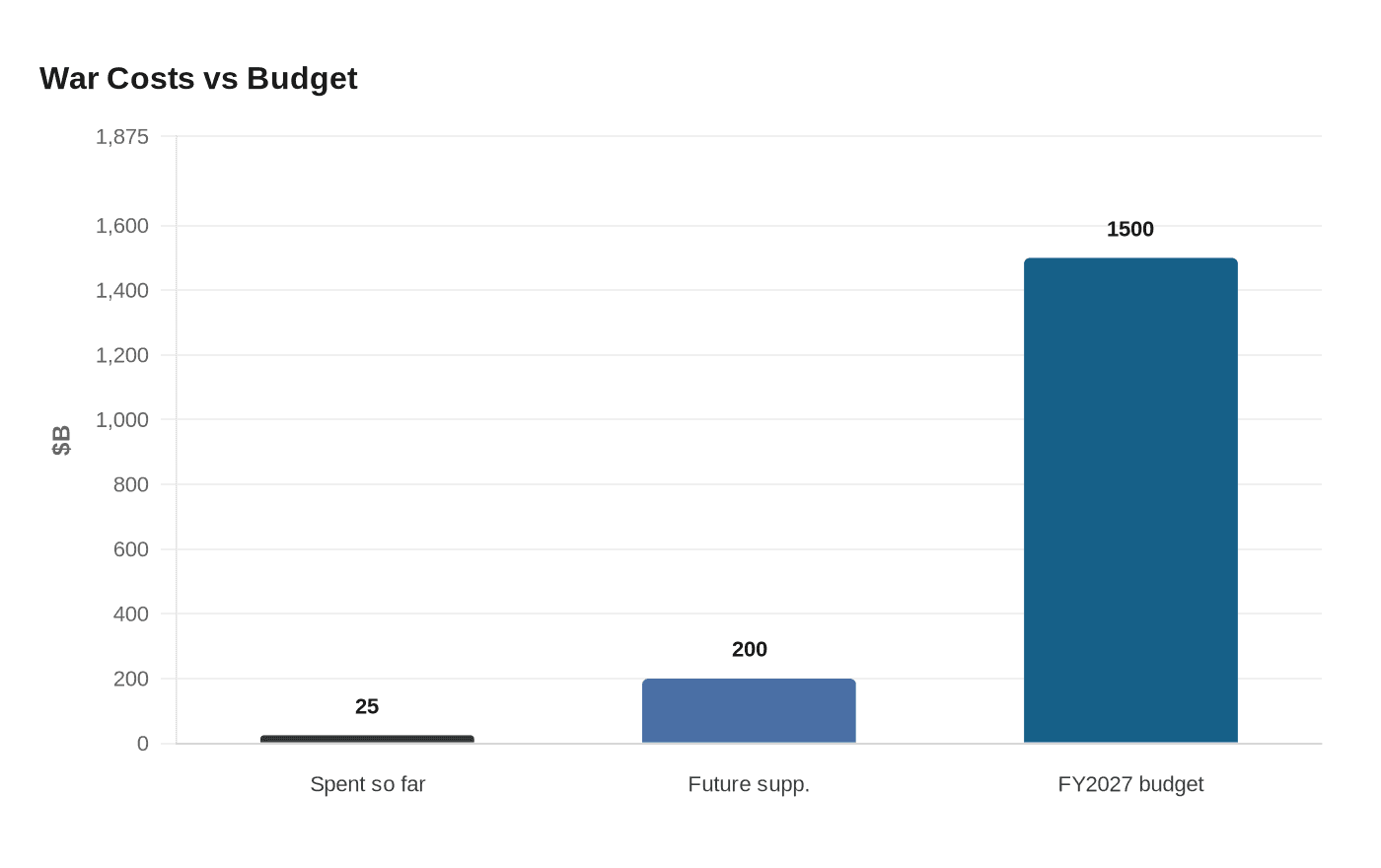
Pete Hegseth’s first appearance before Congress since the Iran war began turned into a test of wartime accountability, with lawmakers pressing him on a conflict that the Pentagon now says has already cost about $25 billion and may require another $200 billion in supplemental funding.
The nearly six-hour House Armed Services Committee hearing on April 29, 2026, was formally tied to the Pentagon’s $1.5 trillion FY2027 budget request, but the war, its objectives and its price dominated the exchange in the Rayburn House Office Building. Acting Pentagon comptroller Jules Hurst III told lawmakers the military has spent about $25 billion so far, most of it on munitions, with the rest on operations, maintenance and equipment replacement.
Hurst said the department would later seek supplemental money once the full bill is assessed. That looming request, expected to reach roughly $200 billion, sharpened the political fight on Capitol Hill over how long the campaign can continue and who bears responsibility for its growing cost.
Democrats accused Hegseth and President Donald Trump of shifting their explanations for the war while obscuring its financial toll. Several lawmakers said the campaign was being fought without congressional approval, and they highlighted the human cost as Pentagon estimates put the number of U.S. service members killed at 13. Hegseth, in turn, argued that criticism from Capitol Hill was undermining the mission more than anything on the battlefield.
“The biggest adversary we face at this point are the reckless, feckless and defeatist words of congressional Democrats and some Republicans,” Hegseth said in his opening remarks.
The hearing also exposed fractures inside the Republican Party. Hegseth faced repeated questions about his dismissal of top military leaders, including Army Chief of Staff Gen. Randy George, and two Republicans, Reps. Don Bacon and Austin Scott, objected to the firing. Their pushback undercut any simple partisan script and showed that the fight over the war’s management is reaching into GOP ranks as well.
Hegseth also clashed with Rep. Adam Smith, telling him that Iran’s nuclear facilities were obliterated in a 2025 U.S. attack. Smith used that point to challenge the administration’s rationale for opening a new war less than a year later, pressing Hegseth on why the campaign had escalated so quickly and what end state Washington was actually pursuing.
By the time the hearing ended, the central questions remained unresolved: how much the Iran war will ultimately cost, how many more casualties it may produce and whether the Pentagon’s wartime personnel shakeups are helping or hurting the case for continued public support.
Know something we missed? Have a correction or additional information?
Submit a Tip