Hegseth Refuses to Reaffirm NATO Article 5, Defers to Trump
Pete Hegseth refused to reaffirm NATO's Article 5, saying collective defense is "a decision that will be left to the president."

Pete Hegseth walked into a Pentagon briefing room Tuesday alongside the chairman of the Joint Chiefs of Staff and walked out having declined to answer one of the most fundamental questions in American foreign policy: whether the United States remains bound by its Article 5 mutual defense obligation to NATO allies.
"As far as NATO is concerned, that's a decision that will be left to the president," the Defense Secretary said when reporters pressed him on collective defense commitments. The remark was not a formal policy reversal, but in the architecture of deterrence, the distinction barely matters.
That gap between Pentagon authority and presidential prerogative is precisely what makes Hegseth's evasion consequential. A defense secretary can speak to force posture, exercise schedules, and contingency plans; only the commander-in-chief can make a binding political commitment to go to war under Article 5. By explicitly deferring to Trump on whether that commitment stands, Hegseth effectively acknowledged that the guarantee underpinning 75 years of European deterrence is now pending a presidential determination.
Article 5 of the 1949 Washington Treaty holds that an armed attack on one NATO member is an attack against all. Its deterrent power depends on certainty: adversaries must believe the United States will honor the clause before any shot is fired, not after deliberation. Hegseth's answer introduced deliberation into that calculation.
The briefing came amid open strains between Washington and European capitals over allied behavior during the month-long U.S. military campaign against Iran. Several European governments signaled limits on overflight permissions and basing support, drawing sharp public criticism from the administration. Hegseth echoed that criticism directly: "You don't have much of an alliance if you have countries that are not willing to stand with you when you need them."
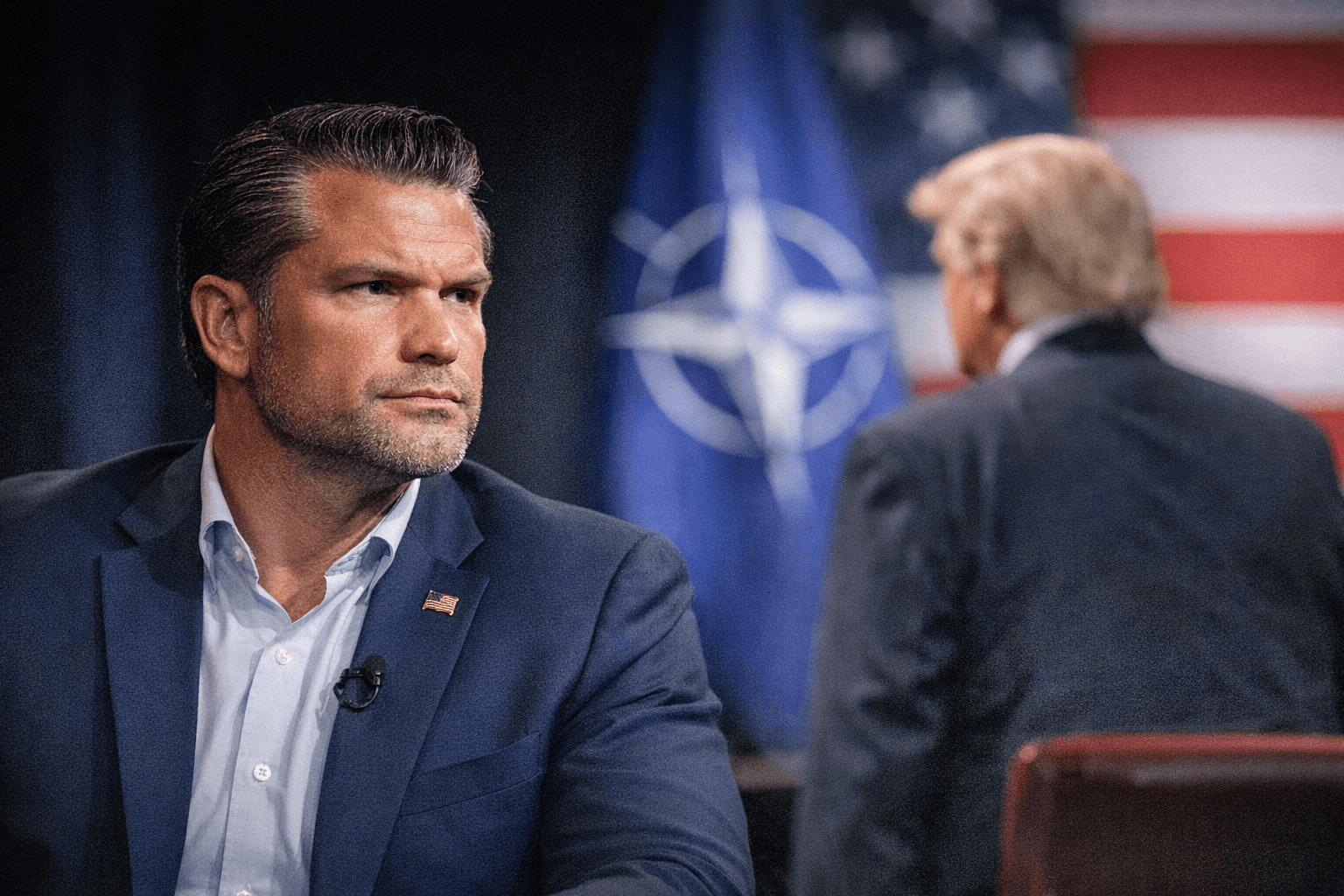
The comment frames Article 5 as a conditional reciprocal arrangement, not an unconditional treaty obligation. That framing represents a significant departure from decades of American policy. U.S. leaders have historically reaffirmed Article 5 without caveats precisely because conditionality undercuts deterrence, signaling to adversaries that the calculus is negotiable.
The most concrete test of where U.S. commitments actually stand will not come from rhetoric but from observable decisions: whether American troop levels in Eastern Europe are maintained, whether scheduled NATO exercises proceed under full U.S. participation, and whether contingency plans continue to carry authoritative American commitments. NATO ministers are expected to seek clarifying statements from the White House, and the comment will almost certainly trigger congressional debate over what treaty obligations the administration considers binding.
For any adversary that has spent years probing the credibility of the Article 5 guarantee, Tuesday's Pentagon briefing required no interpretation. A defense secretary who cannot say whether the United States will defend its allies has already shifted the risk calculus, regardless of what any formal policy document says.
This article was produced by Prism’s automated news system from verified source data, official records, and press releases, then run through automated quality and moderation checks before publishing. The system is built and supervised by the people who set the standards it runs under. Read our full AI policy.
Did this article answer your question?


