Hegseth says U.S. 'accelerating' Iran campaign as strikes spread regionally
Pete Hegseth says the U.S. is "accelerating, not decelerating" operations as strikes reach 1,000 miles; Red Crescent reports at least 555 dead since Saturday.

Pete Hegseth told reporters at a Pentagon press briefing that the United States is "accelerating, not decelerating" its campaign against Iran, framing the operation as a decisive, continuing effort even as strikes and reprisals spread across the Middle East. An Original Report summarized that the campaign is "just getting started" and said strikes have reached "1,000 miles away"; the Pentagon briefing was held on March 2, according to BBC coverage.
Hegseth, speaking alongside Air Force Gen. Dan Caine, described the mission as having a "clear, devastating, decisive mission" to "destroy the missile threat" from Iran, to degrade its navy and to leave "no nukes," remarks reported by PBS. He characterized U.S. strikes as being conducted "in what he characterised as a surgical and overwhelming manner," and said the campaign would not turn into an "endless war," a line carried by Al Jazeera's transcript of the press conference. Hegseth also acknowledged the operation "would involve casualties" and refused to set public limits, saying it would be "foolishness" to outline in advance what the United States would or would not do.
The human toll reported publicly is stark but not uniform across accounts. Al Jazeera and its YouTube transcript cite the Red Crescent as saying at least 555 people have been killed in U.S.-Israeli strikes "since Saturday," and Iranian state media reported at least 165 dead in an attack on a school in southern Iran. PBS and other outlets noted Pentagon releases of the first U.S. service members killed in the conflict but the supplied excerpts do not reconcile the number of U.S. deaths; one Al Jazeera segment acknowledged "reports that four U.S. service members were killed" while PBS reported the Pentagon published names without listing them in the excerpt.
Separately, U.S. Central Command told PBS that Kuwait "mistakenly shot down" three American F-15E Strike Eagles during a combat mission as Iranian aircraft, ballistic missiles and drones were attacking; all six pilots ejected and were in stable condition. Reuters, as cited by CBS, reported two Iranian sources saying Mojtaba Khamenei survived recent attacks on Tehran. Israeli officials have amplified pressure on Iran’s leadership: Israeli Defense Minister Israel Katz warned any new supreme leader who continued Iran's "plan to destroy Israel, to threaten the United States" would be "an unequivocal target for elimination," and Mossad posted a Farsi message saying the clerical leadership's fate was "decreed," CBS reported. The Houthi leader declared a "general mobilization" of his group's forces, though CBS said the speech contained no clear plan to intervene.
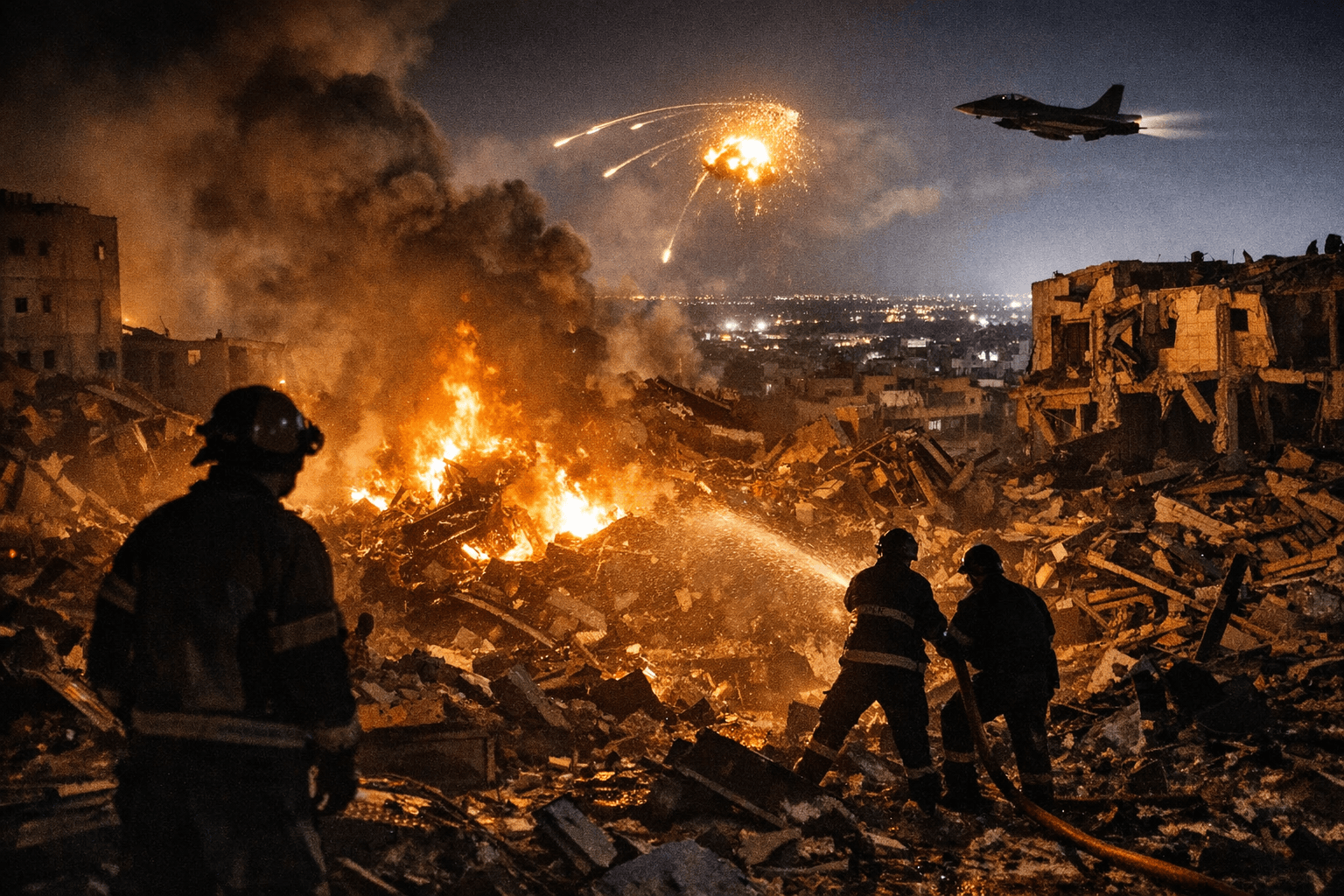
The rapid escalation has immediate market and infrastructure implications. Al Jazeera's coverage flagged airspace shutdowns that have stranded thousands of passengers and incidents that risk energy infrastructure, including a reported strike on a school and media references to damage at oil facilities. Economically, prolonged regional conflict tends to raise energy risk premia, drive up shipping and insurance costs in key routes, and increase volatility in global markets, pressures that already surface in investor behavior during spikes in geopolitical risk. Policymakers face a trade-off between military objectives Hegseth articulated and the wider economic and humanitarian fallout as casualty figures and strategic uncertainty mount.
Reporting remains fragmented and contested. Casualty totals, the scope of U.S. personnel losses and precise geographic reach of strikes vary by source; where figures are cited they are attributed to Red Crescent, Iranian state media, the Pentagon or Reuters as appropriate. The administration’s public communications have been limited: PBS noted President Donald Trump has conducted a small number of phone interviews and released two videos since the operation began, while senior Pentagon officials held the briefing on March 2 to lay out strategy and justify further action.
Know something we missed? Have a correction or additional information?
Submit a Tip