Hegseth Set to Face House Testimony on Iran War Strategy, Budget
With joint U.S.-Israeli strikes on Iran shrouded in Pentagon secrecy, Hegseth's April 29 testimony will be the first on-camera congressional reckoning since the war began.
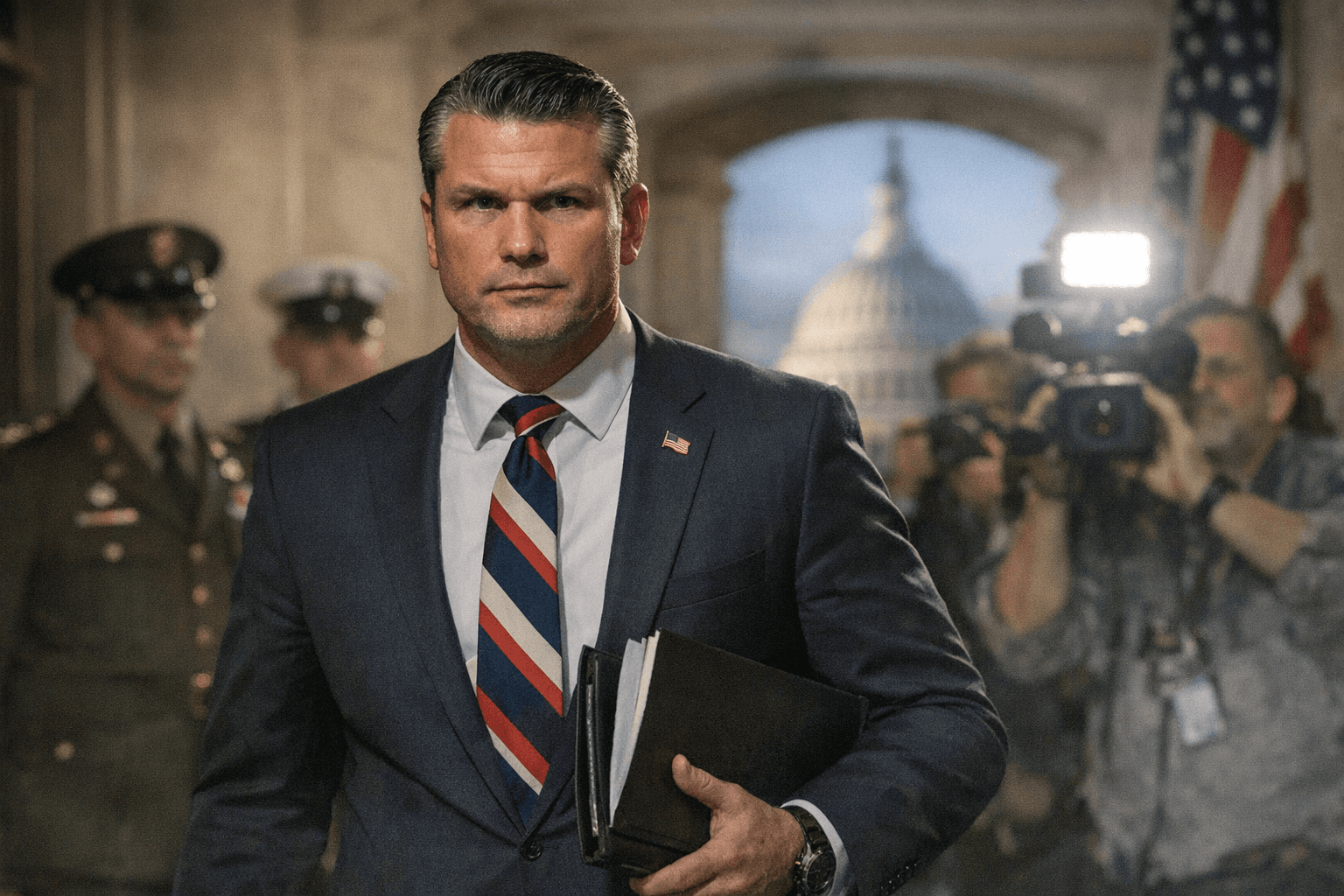
Defense Secretary Pete Hegseth is set to testify publicly before the House Armed Services Committee on April 29, marking the first on-camera congressional reckoning with the monthlong U.S.-Iran war, a conflict that has sent global energy prices soaring and exposed a rare bipartisan fracture over how much the Trump administration has shared with Congress.
The hearing is formally convened as part of the committee's regular oversight of the Defense Department and to examine the Pentagon's annual budget request. The nominal agenda has been overtaken by the operational moment: with joint U.S.-Israeli strikes on Iran ongoing and questions mounting about Washington's strategy and endgame, the budget session is positioned to become the most consequential public forum on the conflict since hostilities began.
The pressure to hold it has been both bipartisan and blunt. All 27 Democrats on the House Armed Services Committee wrote to committee chair Rep. Mike Rogers, R-Ala., asserting that "the military action against Iran necessitates that the Department of Defense immediately testify, in an open setting, before the House Armed Services Committee." House Republicans have since joined those calls, and Rogers himself took the unusual step of publicly breaking with the White House over the quality of classified briefings the administration has provided.
"The administration needs to be more forthcoming in these meetings," Rogers told reporters last week. "I feel like the people they sent over here to brief us are being very constrained and that needs to change." He pressed further: "They need to be able to give us more answers. And I know we know they have more, but they're being very tight-lipped ... we deserve more answers than we're given."
The accountability gap Rogers is describing points directly to what April 29 could realistically force into the open. What lawmakers have been unable to extract from closed briefings includes the rules of engagement governing the strikes, the escalation thresholds that could widen U.S. military exposure, force protection measures for American personnel operating near the theater, and contingency planning for a conflict already a month old. Those are not details the Pentagon has volunteered publicly, and the hearing will be the first formal, televised opportunity for members of both parties to demand them.
The Armed Services Committee is not the only panel pressing. On March 16, Rep. Gregory W. Meeks, Ranking Member of the House Foreign Affairs Committee, led all Foreign Affairs Committee Democrats in demanding that Secretary of State Marco Rubio, Hegseth, U.S. special envoy Steve Witkoff, and Jared Kushner testify before that panel on "the decisions, diplomacy, and planning related to the Iran War."
The Meeks-led demand was pointed about the backgrounds of those who shaped the negotiations: "These individuals, both drawn from the real estate industry rather than diplomatic or national security backgrounds, were placed in charge of one of the most consequential negotiations facing the United States. The decisions made during this process have now resulted in an unauthorized military conflict with Iran, with profound consequences for the security of the American people, the stability of the Middle East, and global energy markets that directly affect American families." That framing of the conflict as "unauthorized" is the Democrats' characterization; the administration has not publicly adopted that language.
The Foreign Affairs Democrats also noted the administration had declined, despite repeated requests, to make at least some of those officials available for testimony. The April 29 date, described as tentative by sources familiar with the plans, could still change. But the direction is clear: the distance between what the Pentagon has told Congress privately and what it has said publicly is about to face its first sustained public test.
This article was produced by Prism’s automated news system from verified source data, official records, and press releases, then run through automated quality and moderation checks before publishing. The system is built and supervised by the people who set the standards it runs under. Read our full AI policy.
Did this article answer your question?

