Hegseth warns Europe faces invasion of dangerous ideologies at D-Day event
At Normandy’s D-Day ceremony, Hegseth recast a memorial for wartime sacrifice as a warning about migration and ideology across Europe.

Pete Hegseth used one of the most solemn stages in the Atlantic alliance to push a sharply political message, warning at Normandy’s American cemetery that Europe faced what he described as an invasion of dangerous ideologies arriving by sea. Delivered in Colleville-sur-Mer during the 82nd anniversary of D-Day, the remarks linked a commemoration of wartime sacrifice to today’s migration and culture-war battles, underscoring how memory itself has become part of the transatlantic political fight.
Hegseth spoke on June 6 at the Normandy American Cemetery, where Allied losses are remembered each year for the June 6, 1944 assault on Nazi-occupied Normandy. Roughly 160,000 Allied troops landed that day, including about 73,000 Americans. Against that backdrop, he named Spain, Italy, Greece and Bulgaria as examples of countries confronting, in his words, “different European beaches” that were being “stormed by different, dangerous ideologies,” and asked, “When will European capitals do something about that invasion or is it too late?”
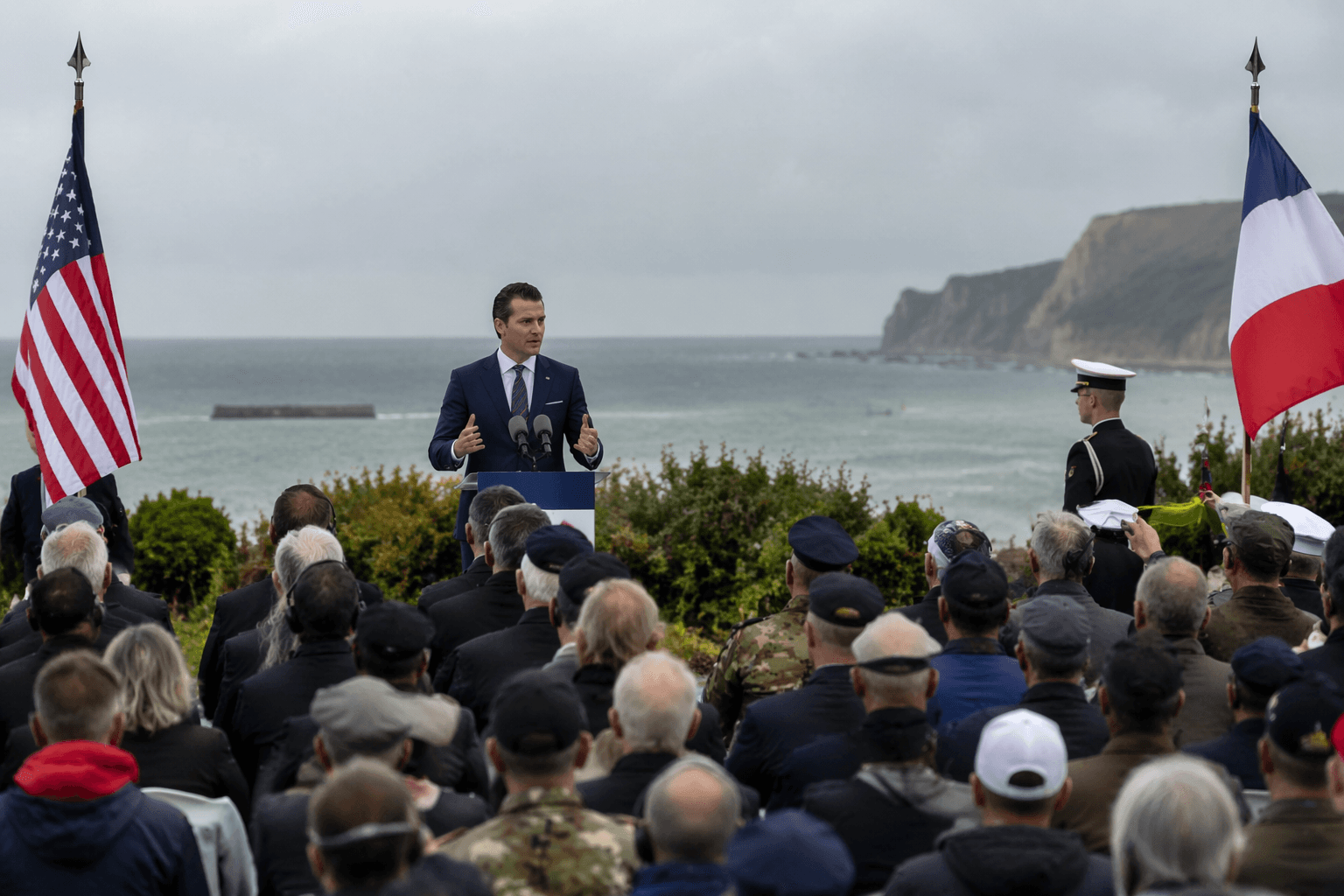
The setting gave the speech added weight. The American Battle Monuments Commission says the ceremony exists to honor and remember U.S. military personnel and allies who gave their lives in the landings and subsequent operations in World War II. By folding present-day migration into that language of invasion, Hegseth shifted the meaning of the event from remembrance toward warning, using the symbolism of the Normandy beaches to frame a broader argument about European decline and political weakness.
The comments also fit the Trump administration’s wider strategic line. The 2026 National Defense Strategy calls for greater burden-sharing with U.S. allies and partners, while also portraying Europe as strategically weaker and overdependent on American support. Senior U.S. officials have repeatedly criticized European governments over defense spending, migration and censorship, and those arguments have already pushed some capitals to think more seriously about reducing reliance on U.S. technology and security guarantees.
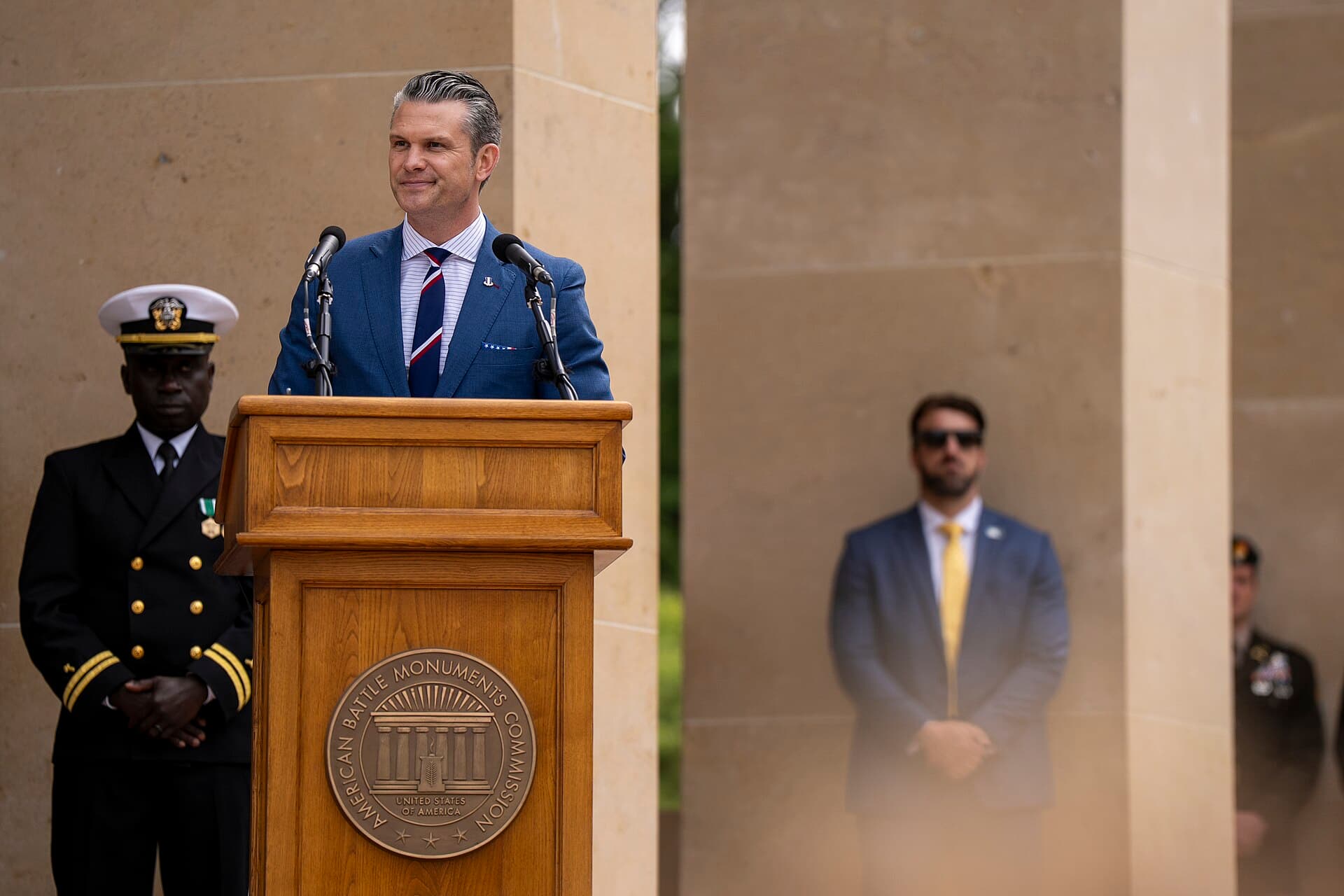
French officials formally welcomed Hegseth before the ceremony, including Catherine Vautrin, even as local reaction in Colleville-sur-Mer and nearby communities was visibly uneasy about the tone of the visit. The tension reflected a broader dispute over who controls the meaning of D-Day in 2026: a shared story of Allied sacrifice, or a platform for present-day ideological combat. The U.S. Department of War said Hegseth traveled to Normandy for the second consecutive year, and the optics of the trip were further sharpened by reports that he brought six of his children to France on the official visit. In that crowded political frame, the cemetery became not just a place of memory, but a stage for contesting the future of Europe and the alliance built to defend it.
This article was produced by Prism’s automated news system from verified source data, official records, and press releases, then run through automated quality and moderation checks before publishing. The system is built and supervised by the people who set the standards it runs under. Read our full AI policy.
Did this article answer your question?


