Heights mini-mural of Malala defaced, restoration pledged by councilmember Abbie Kamin
A Heights mini-mural of Malala Yousafzai was defaced with white paint on Jan. 14; restoration funding was pledged and neighbors urged stronger protections for public art.
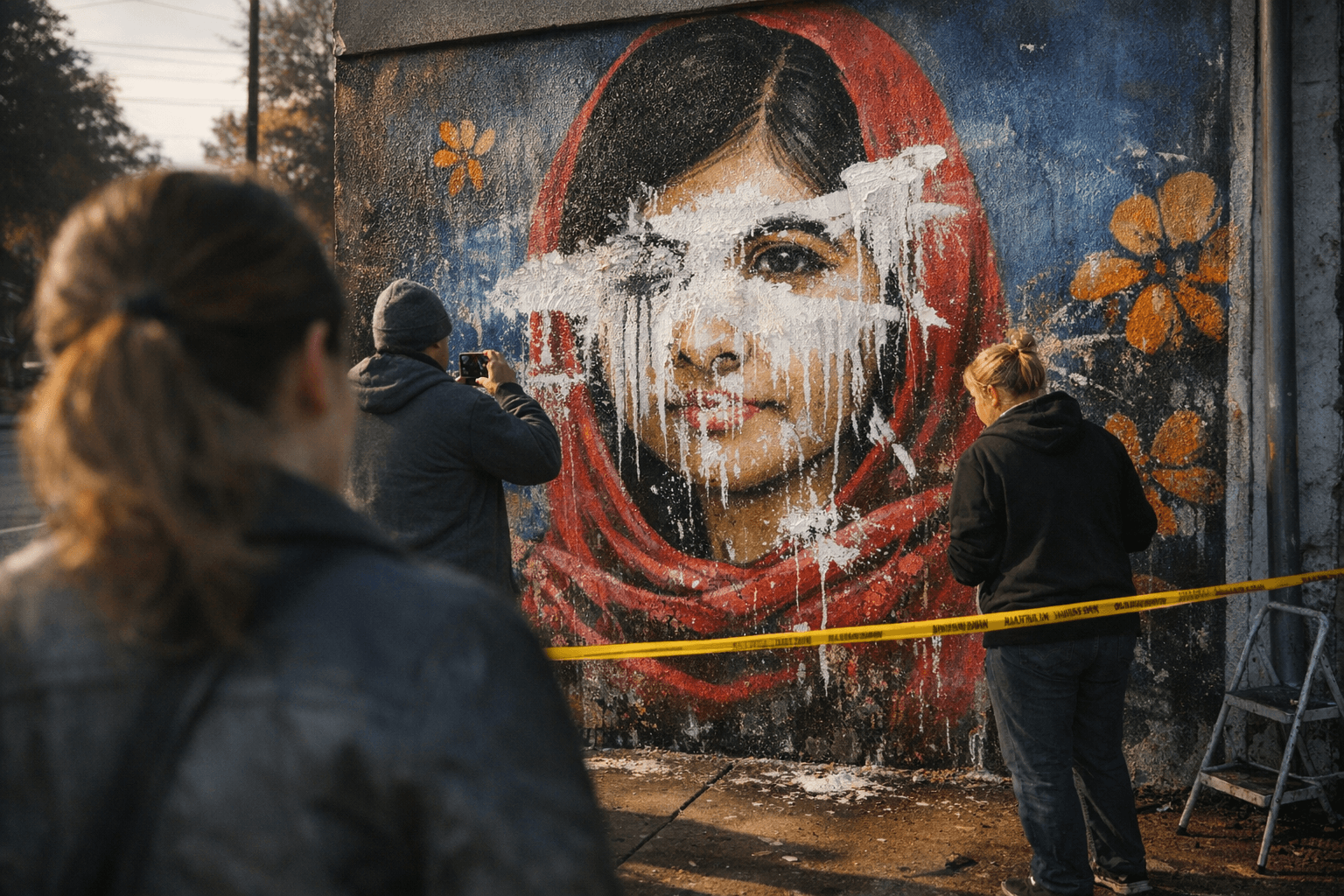
A mini-mural of Nobel laureate and education activist Malala Yousafzai painted on an electrical traffic box in the Heights was defaced with white paint on Jan. 14, renewing concerns about repeated attacks on public art that celebrates women. The mural was created in 2019 by artist Jessica Padilla as part of a city program promoting women's leadership, and neighbors say the piece has been vandalized multiple times before.
City Councilmember Abbie Kamin pledged that her office would fund restoration of the mural. Community members and elected officials described the latest act as part of a disturbing pattern of vandalism directed at artworks honoring women, and called for both repairs and preventive measures to protect similar installations. As of Jan. 14 no police report had been filed in connection with the incident.
The mural sits on public infrastructure in a highly trafficked Heights corridor, making the damage visible to residents, commuters and students who pass the site. Public murals on traffic and utility boxes were installed in recent years to increase neighborhood character, amplify underrepresented voices, and reduce graffiti through community ownership. Recurrent vandalism undermines those goals and shifts the burden for cleanup and protection onto artists, volunteers and elected offices.
The pledge of restoration funding addresses immediate community expectations that the image be returned, but it also highlights gaps in long-term policy for public art maintenance and protection. Decisions about funding, staffing, enforcement and surveillance typically fall across city cultural agencies, public works, and law enforcement. Repeated incidents like this one often prompt calls for clearer procedures: prompt reporting to police, faster city removal of offensive or damaging paint, investments in protective coatings or enclosures, and community-led watch programs that can deter repeat offenders.
For residents, the defacement is more than aesthetic damage. It affects civic space, representation and a sense of safety for those who see murals as affirmation of local values. Restoring the portrait of Malala Yousafzai would return a visible symbol of education advocacy and women's leadership to the public sphere, but the recurring pattern of attacks raises the prospect of constant repairs rather than durable solutions.
What comes next is likely to include a funded restoration, discussions between the councilmember's office and city departments about protective measures, and pressure from neighborhood groups for better reporting and rapid response. For Heights residents, the episode underscores the practical stakes of public art policy: who pays to repair it, who enforces protections, and how the community chooses to safeguard shared cultural spaces.
Sources:
Know something we missed? Have a correction or additional information?
Submit a Tip