Henry Nowak case sparks policing row as prince backs pubs
Henry Nowak’s arrest has triggered a policing crisis, while the Prince of Wales’ pub pledge taps worries about everyday costs and community life.
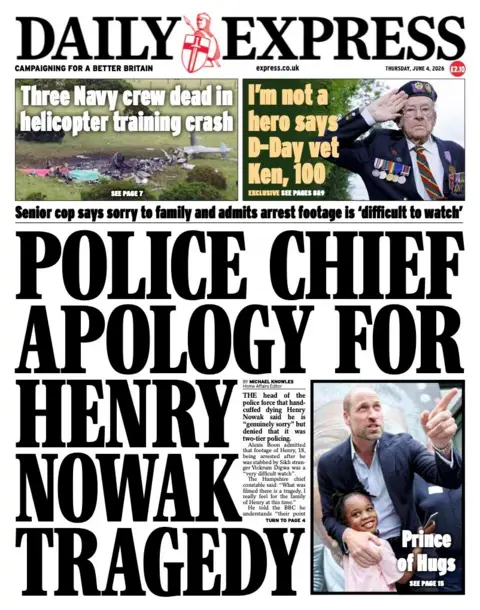
The fallout from Henry Nowak’s case has put British policing under a harsh national spotlight, with Hampshire’s chief constable apologising and rejecting claims of “two-tier policing” while admitting there are individual officers who are “racist”. Officers involved in the arrest of the 18-year-old student have been removed from frontline duties, deepening the sense that the force is still trying to contain the damage as questions about accountability spread far beyond Hampshire.
The case has also become a political flashpoint. Nigel Farage has called for “pure cold rage” over the treatment of Henry Nowak, pushing the dispute into a wider argument about trust in British police and whether the issue is being seized on for political advantage. That tension, between institutional failure and political exploitation, is now at the centre of the story as police leaders seek to reassure the public while facing scrutiny over conduct inside the force.

Thursday’s papers treated the affair as more than a single incident. The framing points to a broader national concern: whether police can command confidence after a case that has prompted apology, public anger and a direct challenge to claims of systemic bias. The chief constable’s rejection of “two-tier policing” was meant to draw a line under the accusation; his acknowledgement that racist officers do exist did the opposite, confirming that misconduct is not treated as an abstract concern but as a live problem inside the service.
Running alongside that row is a very different front-page theme, but one that lands just as squarely with public mood. The Prince of Wales has pledged to support pubs, a gesture that speaks to the pressure facing hospitality and the symbolic weight pubs still carry as neighbourhood gathering places. In a period of strained household budgets and uncertainty for businesses, the promise resonates as a defence of something ordinary, local and widely recognised.
Together, the two stories explain why editors judged these to be the dominant national themes. One cuts to trust in state authority, the other to the economics and social value of everyday life. In both cases, the papers are reading the same mood: suspicion of institutions when they fail, and attachment to public spaces when they feel under threat.
This article was produced by Prism’s automated news system from verified source data, official records, and press releases, then run through automated quality and moderation checks before publishing. The system is built and supervised by the people who set the standards it runs under. Read our full AI policy.
Did this article answer your question?


