Herzog rejects Netanyahu pardon for now, seeks mediation in corruption case
Herzog put Netanyahu’s pardon bid on hold and steered it toward mediation, escalating a constitutional fight over equality before the law.
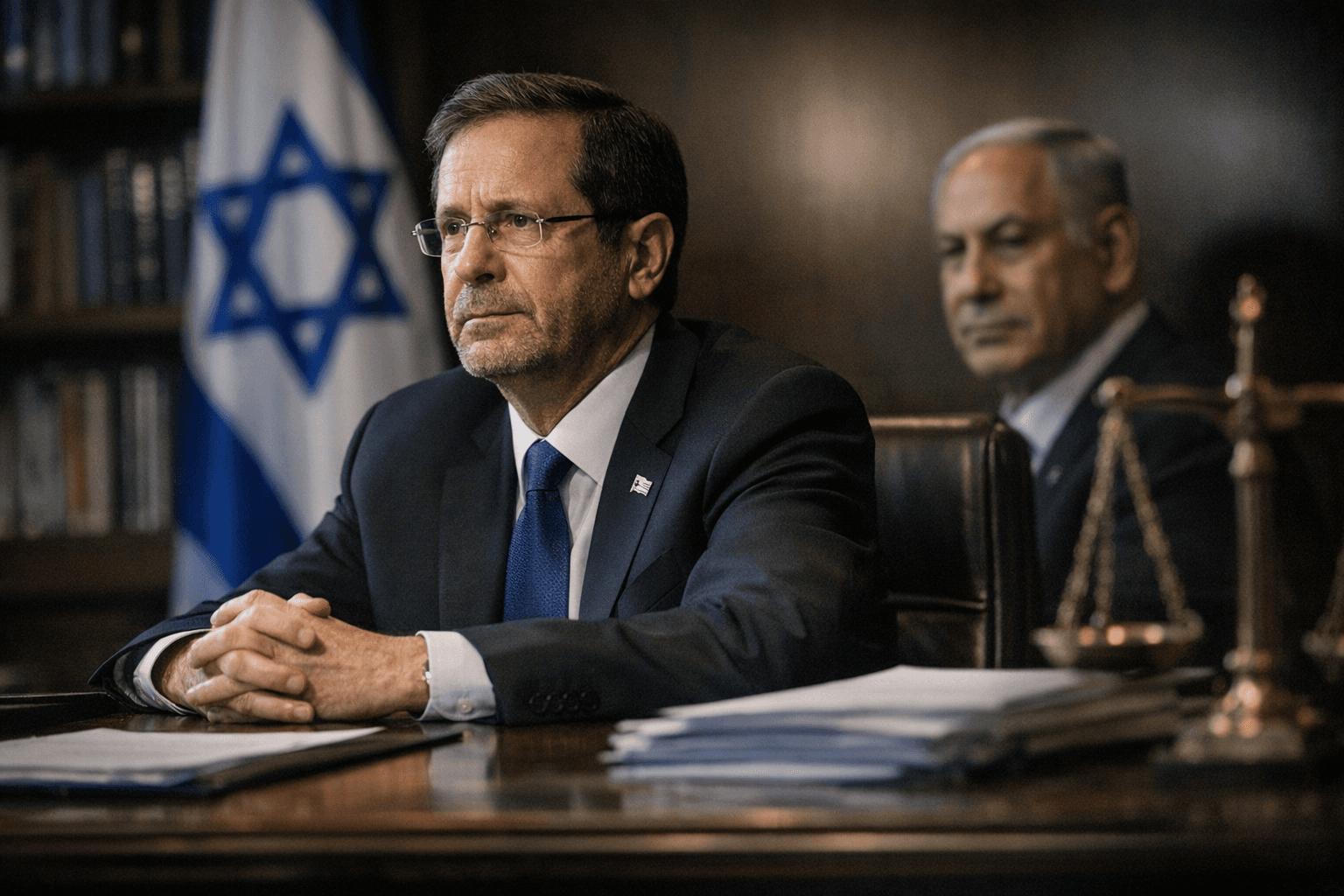
President Isaac Herzog has put Benjamin Netanyahu’s pardon request on hold and moved instead toward mediation, a decision that turned Israel’s longest-running political corruption case into a direct test of the country’s institutions. Netanyahu sought clemency on November 30, 2025, while facing bribery, fraud and breach of trust charges in Cases 1000, 2000 and 4000, and he did not admit guilt in the request.
Herzog’s office had already described the petition as “extraordinary” and said it carried “significant implications.” That language captured the stakes in a case that reaches beyond Netanyahu’s personal future. He is the first sitting Israeli prime minister to stand trial, and the proceedings, which began in 2020 after his November 2019 indictment, have become a measure of whether the presidency, the courts and the government can hold to the same legal standard when the defendant is Israel’s most powerful elected leader.
The Justice Ministry’s Pardons Department concluded in a legal position paper that Netanyahu’s request did not meet the necessary criteria. The department cited the absence of a conviction, the lack of remorse and the unprecedented nature of a pre-conviction pardon in this setting. Under normal practice, Israeli presidential pardons are granted after legal proceedings end, with only extremely rare exceptions before verdict.
Herzog’s staff also asked the Justice Ministry in March 2026 for additional legal materials and precedents, including cases involving pardons before criminal proceedings were completed and examples tied to diplomatic gestures or hostage-release deals. The search for those precedents underscored how unusual Netanyahu’s bid was, and how carefully Herzog’s office was weighing the legal and political consequences before making any final move.
The pressure on Herzog has not come only from inside Israel. Donald Trump wrote to Herzog in November 2025 urging him to pardon Netanyahu, and later criticized Herzog publicly for not doing so. Within Israel, members of the governing coalition backed clemency, while opposition politicians, watchdog groups and legal experts warned that a pardon before conviction could weaken the rule of law and suggest a special exit for a sitting prime minister.
Herzog has previously signaled that he would prefer the case to end through an agreed plea bargain rather than an unconditional pardon, and the push toward mediation now appears to follow that path. Whether it defuses the crisis or deepens public distrust will depend on whether Israelis see a negotiated exit as constitutional restraint or as another exception carved out for Netanyahu.
Know something we missed? Have a correction or additional information?
Submit a Tip