Hezbollah launches attacks that reignite Lebanon war, killing thousands and displacing over a million
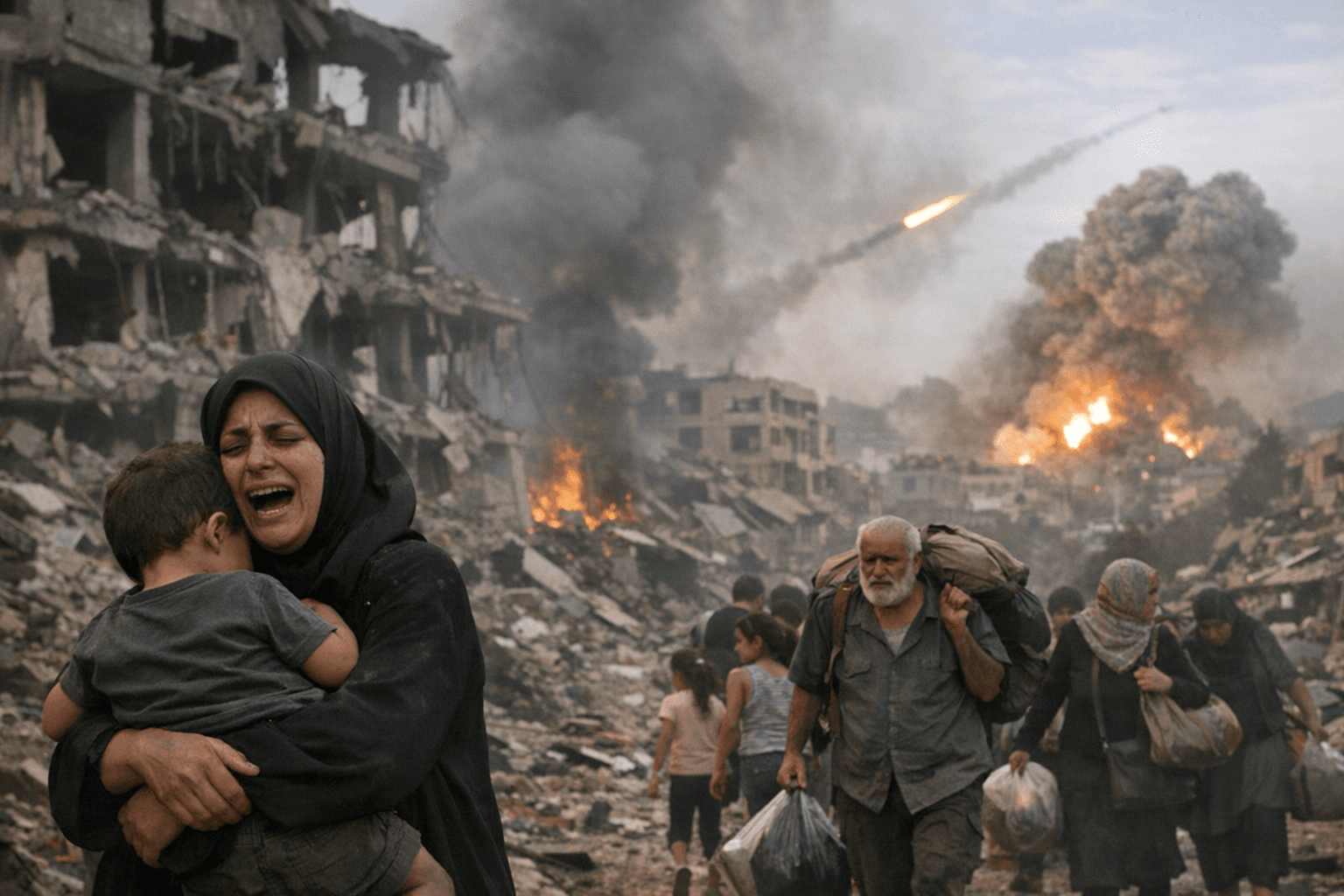
Hezbollah’s strikes provoked Israeli retaliation, fueling an offensive that killed around 4,000 people and displaced more than 1 million, reshaping Lebanon’s politics and security.
Hezbollah launched attacks that provoked Israeli retaliation, plunging Lebanon back into widespread fighting and contributing to an offensive that killed around 4,000 people and displaced more than 1 million, according to the BBC and regional analysts. The renewed hostilities come after a fall 2024 Israeli campaign that, analysts say, “significantly degraded” Hezbollah’s capabilities but did not eliminate the group’s military capacity.
Israeli air strikes and a ground invasion of southern Lebanon in September 2024 imposed heavy infrastructure and personnel losses on Hezbollah and on Lebanese civilians, the BBC and Understandingwar report. Israel counts 45 civilians and 75 soldiers killed through November 2024, while Lebanese deaths from the offensive total about 4,000, many of them noncombatants. Understandingwar describes a ceasefire that followed fall 2024 operations as conditioned on Hezbollah disarming in the south, and says Hezbollah began reconstituting its forces immediately afterward.
The group’s tactical profile is contested by analysts. Brookings documents that Hezbollah sent thousands of fighters to Syria, suffering at least 1,400 casualties there while acquiring conventional capabilities such as T-72 tanks and infantry fighting vehicles and learning to coordinate with Russian air power. Those gains in battlefield skills coexist with political and social erosion at home: Brookings argues Hezbollah’s role in Syria damaged its cross-sectarian standing, and Understandingwar says the group is struggling to sustain social services and financial commitments in southern Lebanon, generating “unprecedented discontent” among its Shia support base.
The Israeli National Security Studies (INSS) center frames the wider conflict as a regional realignment that has “reshaped the regional balance, especially weakening the Shiite axis.” INSS warns that Hezbollah, while diminished, “clings to the ideology of ‘resistance’” and is rebuilding with Iranian assistance. Tehran’s backing complicates disarmament efforts and wider stability: INSS notes Iranian disappointment that Hezbollah did not open a new front during a 12-day Israel–Iran clash in June 2025, underscoring Tehran’s ongoing role and internal policy deliberations.
The war has also produced rapid political change in Beirut. U.S. and Saudi diplomatic pressure, coupled with Hezbollah’s battlefield strain, helped produce the January 2025 appointment of army chief Joseph Aoun as president and a post-war cabinet that excludes Hezbollah, BBC reporting shows. Aoun has pledged to defend “the exclusive right to bear arms,” a direct reference to Hezbollah’s arsenal. New U.S. Middle East envoy Morgan Ortagus warned the Trump administration has “clear red lines” about Hezbollah’s political role.
Policy options on the table are stark. INSS lays out an explicitly military option for Israel: a large-scale campaign to conquer southern Lebanon up to the Litani River to expand a security zone and prevent Hezbollah’s recovery. INSS cautions that such a move could improve Israel’s leverage but would risk another protracted war and further strain an Israeli military already stretched by years of conflict.
Analysts emphasize a paradox central to Lebanon’s near term: Hezbollah is simultaneously battle-hardened and weakened. Understandingwar calls recent government moves to disarm the south “an inflection in Lebanese politics,” but warns those steps are imperfect and fragile. With Iranian support persisting and Hezbollah actively reconstituting, the regional balance that has shifted since October 2023 may be unsettled for years, leaving Lebanon’s humanitarian crisis, political fragmentation, and security dilemmas unresolved.
This article was produced by Prism’s automated news system from verified source data, official records, and press releases, then run through automated quality and moderation checks before publishing. The system is built and supervised by the people who set the standards it runs under. Read our full AI policy.
Did this article answer your question?