Hezbollah’s fiber-optic drones expose a weak point in Israel’s defenses
Hezbollah’s cheap fiber-optic drones are forcing Israel to confront a defense gap it cannot jam away. The battlefield lesson is stark: low-cost systems can blunt expensive air power.

A new kind of threat at the border
Hezbollah has found a way to make Israel’s layered air defenses work against the wrong enemy. By sending first-person-view drones down thin fiber-optic cables, the group has built a strike method that does not depend on radio signals, which means electronic jamming, one of Israel’s main defensive tools, cannot simply shut it down.
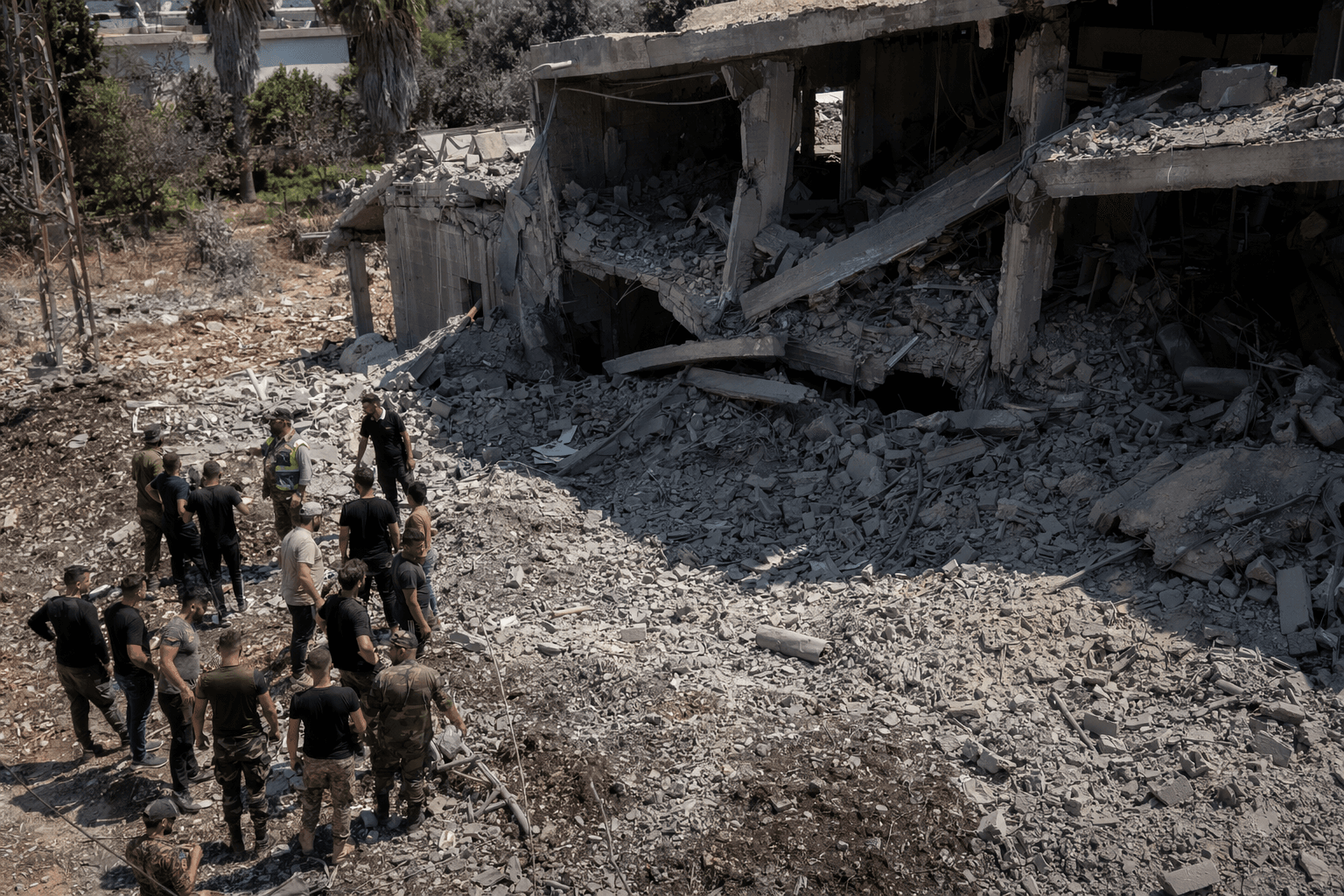
That shift has already had lethal results. The Associated Press reported that the drones killed an Israeli soldier in southern Lebanon and injured at least a dozen more people in northern Israel, including two seriously. Earlier that week, AP said, a soldier and a defense contractor were also killed in Lebanon. The immediate damage is military, but the strategic message is broader: a cheap, portable system has exposed a weakness in one of the region’s most sophisticated defense architectures.
Why fiber-optic drones are so hard to stop
The drones are controlled through a cable described as the width of dental floss. Because the pilot remains linked to the aircraft through that physical connection, the drone does not need radio transmission to navigate. That removes the electronic signature that jammers and signal-interception systems are built to detect and disrupt.
The Times of Israel reported that no proper defense yet exists for explosive drones guided by fiber-optic cable, and that Israel only began looking into solutions during the current war. That gap matters because Israel’s air defense system was designed around a different threat profile, one dominated by rockets, missiles, and conventional drones that emit signals or follow patterns that can be tracked and intercepted. Fiber-optic FPVs exploit the blind spot between those systems and the battlefield reality now unfolding along the Lebanese border.
A cheap weapon with expensive consequences
What makes the tactic so disruptive is not only its technical elegance, but its economics. These drones can be assembled from civilian parts for only a few hundred dollars, yet they have already killed and maimed Israeli personnel. That ratio is central to the story: one side absorbs a tiny manufacturing cost, while the other is forced to spend far more on detection, interception, and force protection.
This is the kind of imbalance militaries struggle to defeat. A weapon that costs little to build can impose huge operational burdens, especially when it can be flown with precision from far behind the front line. Hezbollah operators can first send a reconnaissance drone, then guide an explosive drone to the target with greater accuracy, often against troops who do not know they are being watched until the final seconds. The result is not mass destruction, but a steady erosion of confidence in safe movement, static positions, and rear-area security.
How Hezbollah adapted a lesson from Ukraine
The tactic did not appear in a vacuum. Reporting has linked Hezbollah’s drone campaign to the war in Ukraine, where fiber-optic FPV drones became widespread because they are effectively unjammable. That conflict showed how quickly cheap systems could evolve into durable battlefield tools, and Hezbollah appears to have imported that lesson into the Lebanese-Israeli theater.
An Atlantic Council analysis said these drones can strike at ranges of over 30 kilometers with pinpoint precision, a combination that helps explain their appeal. They are not merely nuisance devices. Used properly, they become precision-guided attack platforms that can reach well beyond the immediate front and still remain difficult to disrupt. The Ukraine precedent shows how battlefield innovation now travels fast, and how a tactic born under one set of conditions can be repurposed in a very different war.
What the numbers say about the campaign
Follow-up reporting suggests this is not an isolated experiment. FDD’s Long War Journal said Hezbollah’s south Lebanon drone unit allegedly has about 100 specialized operators and had launched 160 drones at Israeli forces since early March 2026, 90 of them FPVs with a physical fiber-optic connection. Alma Research and Education Center said more than 80 explosive drones had been used since the current campaign began and especially after the April 18, 2026 ceasefire.
Those figures point to an organized capability rather than a one-off improvisation. A unit with dedicated operators, a recurring launch pattern, and a growing inventory of explosive drones can keep pressure on Israeli forces over time. That persistence is what turns a tactical nuisance into a strategic problem, because it forces the IDF to treat a low-cost system as a recurring operational threat.
The IDF response is still catching up
Israeli defense reporting says the IDF is working on countermeasures and has sought help from foreign militaries, but the technology has not yet matured into an operational solution. That leaves Israeli forces in a difficult position. They must defend against a weapon that is both simple and adaptable, while also avoiding the trap of overcommitting expensive systems to counter a relatively cheap threat.
The Times of Israel’s account that Israel only began looking for solutions during the current war underscores how quickly the threat has outpaced planning. In practical terms, this means the IDF may need to adapt both doctrine and equipment. It is not enough to improve interception alone; troops on the ground also need new habits, better concealment, faster movement, and a more skeptical view of what “safe” airspace now means near the border.
Why the psychological effect matters as much as the damage
The battlefield footage has been part of the message. Drones chasing soldiers or nearly striking a helicopter do more than inflict casualties. They signal that modern warfare is becoming more portable, more improvised, and more intimate. Fighters no longer need a large launch platform or a sophisticated radar-crossing missile to create fear. A small drone, guided by a cable and aimed from far away, can do enough to unsettle even a heavily defended force.
That psychological pressure matters because it changes behavior. Units slow down, spread out, and spend more time scanning the sky. Commanders must assume that any pause, vehicle movement, or exposed position can become a target. In that sense, the drone campaign is not only about battlefield damage. It is about forcing the stronger military to fight on terms that are less predictable and more resource-intensive.
The wider lesson
Hezbollah’s fiber-optic drones show how a far cheaper system can blunt the advantages of a far more powerful military. Israel still has the region’s most advanced air defenses, but this campaign reveals that technological superiority is not fixed. It can be eroded by tactics that are simple, flexible, and tailored to a specific weakness.
That is why the story matters beyond Lebanon and Israel. The next battlefield breakthrough may not come from the most expensive platform in the arsenal. It may come from the cheapest tool that can survive jamming, evade detection, and force an opponent to rethink the cost of defense.
This article was produced by Prism’s automated news system from verified source data, official records, and press releases, then run through automated quality and moderation checks before publishing. The system is built and supervised by the people who set the standards it runs under. Read our full AI policy.
Did this article answer your question?