Hidden awareness in coma patients is reshaping end-of-life decisions
Some coma patients can understand more than bedside exams reveal, and that hidden awareness can change whether treatment is continued or withdrawn.
The medical blind spot
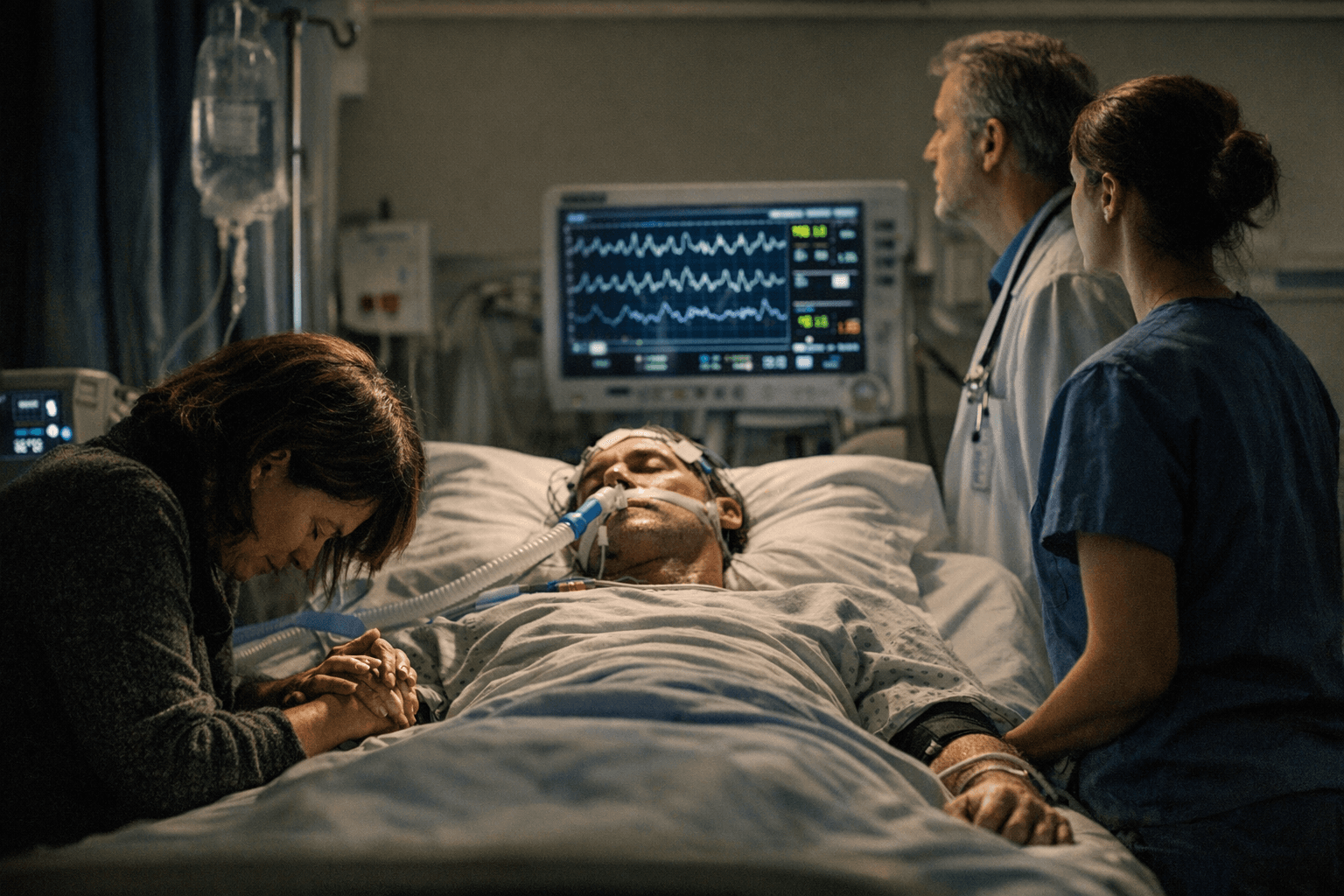
A patient who looks unresponsive may still be aware, and that possibility is forcing families and clinicians to rethink some of the most painful decisions in medicine. The bedside exam can miss signs of consciousness when a person cannot move, speak, or reliably follow commands, turning a diagnosis into an ethical fault line at the exact moment care decisions matter most.
That blind spot is not theoretical. Since at least 2006, researchers have warned that patients diagnosed as being in a vegetative state may retain covert awareness, even when they give no outward sign of it. The problem is not simply medical classification. It reaches into decisions about nutrition, hydration, life support, communication, rehabilitation, and whether a family is being asked to choose in the dark.
From a single striking case to a broader pattern
The modern debate accelerated with a landmark 2006 Science study by Adrian M. Owen and colleagues. In that report, a patient who met clinical criteria for vegetative state was able to respond to mental-imagery commands on fMRI, a finding that jolted neurologists and ethicists alike. It showed that preserved awareness could exist without visible movement, and it immediately raised the question of how many other patients might be hidden behind a diagnosis based only on behavior.
That early result was treated with caution, as it should have been. Commentators at the time stressed that one patient could not stand in for all patients with the same diagnosis, but they also noted the potential ethical force of the finding. If a patient appears absent but can still understand, then decisions about withdrawing nutrition and hydration, or limiting other life-sustaining treatment, become far more fraught.
What the newest evidence shows
The field moved from isolated case reports toward larger studies, and the newest data are unsettling in a different way: they suggest this is not rare. In 2024, a major prospective cohort study published in the New England Journal of Medicine examined 353 adults with disorders of consciousness at six international centers. Twenty-five percent showed evidence of cognitive motor dissociation on fMRI or EEG, meaning they displayed signs of consciousness without being able to show it at the bedside.
That estimate matters because earlier summaries had put hidden consciousness in roughly 15% to 20% of unresponsive patients. The 2024 study pushed the figure higher, suggesting that a quarter of such patients, or even more, may have some preserved internal awareness. The patients in that cohort were often cared for at home or in long-term care, and the median time since injury was about eight months, a reminder that these are not only acute hospital cases but long-staying patients and families living with uncertainty for months.
The researchers said the finding could affect withdrawal of life-sustaining treatment and goals of care. That is the central clinical tension: if cognitive motor dissociation is not detected, a patient may be treated as if there is no meaningful awareness when there may in fact be some. The consequence is not just a missed diagnosis, but a potentially different course of care.
Why bedside assessment can fall short
Disorders of consciousness include coma, unresponsive wakefulness syndrome, and minimally conscious state, and these labels do not capture every patient’s inner life. Advances in acute care have increased survival after severe brain injury, which means more people are living in prolonged states of profound neurologic disability. As survival improves, the number of patients whose consciousness is uncertain also grows, along with the pressure on hospitals, nursing facilities, and families to make decisions with incomplete information.
The gap between appearance and awareness is what makes this area so ethically charged. A person may open their eyes, breathe on their own, or cycle through sleep and wakefulness while still failing standard command-following tests. Without specialized imaging or EEG-based testing, clinicians can conclude that no awareness is present when the patient may actually be capable of thought, memory, or internal response.
The language around these patients has changed too
Medical language reflects this uncertainty. In 2010, neurologists proposed replacing the term “vegetative state” with “unresponsive wakefulness syndrome” because the older label was seen as pejorative and misleading. That choice of words was not cosmetic. It recognized that families and clinicians often hear “vegetative” as a declaration of emptiness, even though the condition may still include wakefulness and, in some cases, hidden signs of cognition.
The professional framework has also shifted. The American Academy of Neurology guideline on disorders of consciousness updated the 1995 practice parameter on persistent vegetative state and the 2002 case definition of minimally conscious state, and it was reaffirmed on July 12, 2024. That reaffirmation matters because it signals that these diagnostic and ethical questions are now part of mainstream neurology, not a niche debate at the edge of the field.
What families and clinicians are being asked to do differently
The practical challenge is how to respond when traditional bedside assessments may underestimate consciousness. Families need clearer explanations that a lack of movement does not always equal a lack of awareness, and clinicians need a low threshold to consider specialized testing when the diagnosis will shape treatment choices. That includes asking whether fMRI or EEG might reveal cognitive motor dissociation, especially when a patient’s condition has remained ambiguous for months.
It also means that end-of-life conversations need a more careful frame. When a team discusses withdrawing life-sustaining treatment, the question is not only prognosis, but what evidence exists that the patient can or cannot understand what is happening. In this setting, hidden awareness is not a scientific curiosity. It becomes part of the moral architecture of decision-making.
There is also the problem of disclosure. Ethics researchers have argued that findings suggesting covert awareness should be shared cautiously with families because the results can carry both psychological and practical consequences. A scan that suggests an inner life may offer hope, but it may also deepen grief, delay decisions, or create new uncertainty about what the patient can experience. The fact that the information is meaningful does not make it easy to absorb.
The larger public health and equity stakes
This is not just a story about brain imaging. It is about who gets access to careful diagnosis, who is cared for at home versus in long-term facilities, and whether the system is equipped to recognize subtle signs in patients whose voices are already absent. When advanced testing is unavailable or delayed, the burden falls hardest on families with fewer resources, fewer specialist referrals, and less ability to press for reevaluation.
The most important lesson from the newer research is not that every unresponsive patient is secretly aware. It is that some are, and traditional assessments can miss them. That reality should make clinicians slower to equate silence with absence, more willing to investigate uncertainty, and more cautious when a diagnosis is being used to justify irreversible decisions. Hidden awareness is reshaping end-of-life care because it forces medicine to admit that, in some patients, the inner life may be far more present than the bedside can show.
This article was produced by Prism’s automated news system from verified source data, official records, and press releases, then run through automated quality and moderation checks before publishing. The system is built and supervised by the people who set the standards it runs under. Read our full AI policy.
Did this article answer your question?