High Court Warns Legal Flaws in Levin's Sde Teiman Oversight Choice
Israel's Supreme Court told the justice minister and attorney general to reach a compromise after justices identified legal problems with the minister's pick to oversee the Sde Teiman leak probe, offering the court as a backstop. The dispute pits executive control over a sensitive investigation against judicial safeguards, a clash that could reshape public trust in institutions amid mounting regional security pressures.
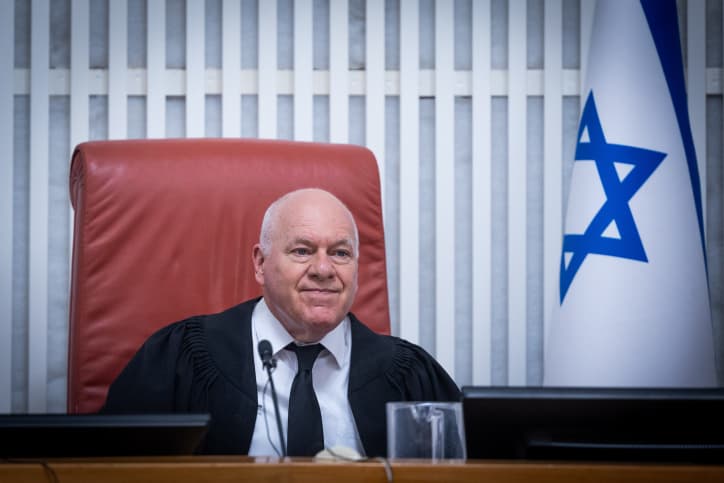
The Supreme Court pressed Justice Minister Levin and the attorney general to settle their dispute over who should oversee the Sde Teiman leak probe, warning that the minister's nominee faces legal obstacles that could imperil the investigation's legitimacy. In a hearing on November 11 the court urged the two offices to find common ground, while signaling its willingness to intervene if they fail to do so.
Justices suggested a compromise that would allow the court itself to appoint an outside judge to oversee the probe, creating a neutral alternative to a politically chosen overseer. "We will wait for you here, just reach an agreement," the panel told the executive offices, offering both a procedural option and an implicit timeline for resolution.
The conflict centers on the executive branch's assertion of control over a politically sensitive investigation into leaks related to Sde Teiman, and the judiciary's role in safeguarding legal standards and impartiality. The justices' finding of legal problems with the minister's selection raised questions about conflicts of interest and statutory authority, though the court did not detail every specific legal defect during the hearing.
The dispute carries broader institutional implications. If the justice minister proceeds with a figure whom the court finds legally infirm, the result could be prolonged litigation, contested rulings, and a perception that political actors can sidestep procedural safeguards. Conversely, a negotiated compromise that empowers an independent judicial appointment would reinforce the separation of powers and protect the investigation from partisan influence.
The attorney general now faces a choice between contesting the minister's pick in court and negotiating a joint path forward. The court's proposal to empower itself to appoint an outside judge would represent a significant assertion of judicial authority, and a novel mechanism for resolving an executive impasse. Such a move would likely set a precedent for future disputes over oversight of politically charged inquiries.
This institutional standoff occurs against a backdrop of heightened regional tensions, including recent confrontations along Israel's northern border and broader concerns about Iranian and Hezbollah activity. Those security dynamics raise the stakes of the Sde Teiman probe, as any perception of politicized oversight could erode public confidence in the state at a moment when coherent and credible institutions are critical.
For citizens, the episode underscores how legal procedure and institutional independence affect the credibility of inquiries that touch on national security and governance. The outcome will influence not only the immediate investigation but also wider public assessments of how political power is exercised and checked. Political parties and civic groups are likely to monitor the court's next steps closely, as the approach to resolving this dispute could become a salient issue in debates about rule of law and accountability.
If the justice minister and the attorney general reach agreement within the window the court has suggested, the confrontation may be resolved without a dramatic judicial takeover. If not, the Supreme Court appears prepared to act, asserting its role as arbiter of legal propriety in situations where executive appointments threaten to undercut impartial judicial oversight.
This article was produced by Prism’s automated news system from verified source data, official records, and press releases, then run through automated quality and moderation checks before publishing. The system is built and supervised by the people who set the standards it runs under. Read our full AI policy.
Did this article answer your question?

