Hiker Falls 180 Feet Down New Zealand Waterfall, Crowd-Funded Effort Reunites Her With Dog
Molly the border collie survived a week alone in New Zealand's remote Arahura Valley after her owner fell 180 feet; a crowd-funded thermal imaging search brought them home together.
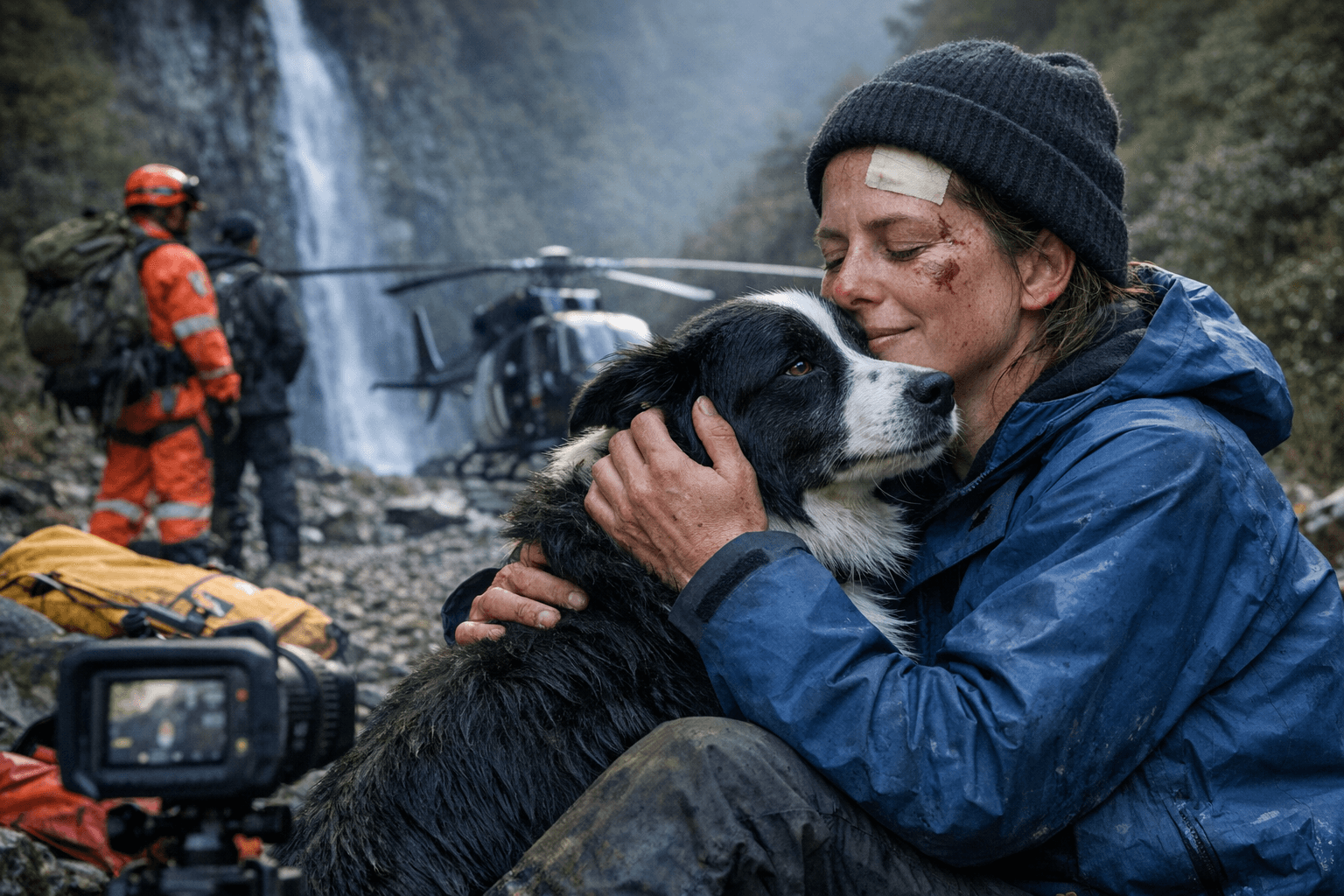
When emergency crews airlifted Jessica Johnston on March 24, the call was the one wilderness rescuers almost always make: get the injured person out first. Johnston had just plummeted 55 meters down a waterfall on the Arahura River, sustaining bruises and lacerations that would later require a cast on her right arm. Her border collie, Molly, could not be located in time. The helicopter left without her.
That decision, standard under New Zealand's search and rescue framework, set in motion an eight-day saga drawing together strangers, a Hokitika Gorge helicopter operator, thermal imaging technology from Christchurch, and a rescue dog named Bingo.
Johnston had been hiking toward the Campbell Bivouac on the Campbell Range in the Arahura Valley, one of the South Island's most remote backcountry environments, historically traversed by Māori pounamu gatherers and 19th-century gold miners. She had been documenting the trip on Facebook, posting photos of camping and snowy mountain peaks, when she lost her footing atop the waterfall. She had reportedly been holding Molly when she fell, but was too disoriented after the impact to account for the dog's whereabouts.
Matt Newton, owner-operator of Precision Helicopters New Zealand at Hokitika Gorge, reached out to Johnston in hospital. "I contacted her in hospital and said I'd go for a look for it," Newton said. He searched the area from the air three separate times. Each time, no sign of Molly.
Newton and his family then launched a public crowdfunding campaign. Within days, strangers pledged more than NZ$11,000, roughly US$6,300, enough to fund three additional hours of helicopter time equipped with thermal imaging technology sourced from Christchurch.
On March 31, Newton flew back into the valley with a veterinary nurse, volunteer searchers, and Wayne Holmes, whose rescue dog Bingo was brought to help coax Molly aboard. The thermal camera delivered within the first hour. "We struck jackpot within about an hour," Newton said. "As we made our way up the river, we could see the dog in the thermal and then we could visually see it." Molly was found just meters from the base of the waterfall where Johnston had landed, bedraggled and hungry but alive. Newton believed she had survived by eating feral animals.
The helicopter dropped low enough for a volunteer and Bingo to disembark, and Molly cooperated. "She knew what we were up to, I think," Newton said. "She behaved real well. She didn't run away and she was pleased to be rescued." Volunteers who had gathered at the base expecting to assist celebrated instead. "We just had a big barbecue and all had a cuddle with Molly," Newton said.
Hours later, Johnston arrived for the reunion, still wearing a cast on her right arm. Molly ran toward her on landing. Johnston posted on Facebook afterward: "Still a great trip before our lives got turned upside (down)." Newton said he expected the reunion to "speed up her healing process somewhat."
The incident exposes a structural gap in New Zealand's backcountry rescue system. Over 90% of the country's search and rescue responders are volunteers, according to Te Ara, the Encyclopedia of New Zealand, and the framework is built primarily around human evacuations. Recovering pets falls largely outside that mandate; here, the gap was filled by community crowdfunding and thermal imaging.
A GPS pet tracker gives rescuers a known last location if an animal is separated during an evacuation. Most satellite communicators used by trampers do not independently track animals. The decision to extract the injured person first, searching for the animal separately, will not change. What changes is the information available when that second search begins.
This article was produced by Prism’s automated news system from verified source data, official records, and press releases, then run through automated quality and moderation checks before publishing. The system is built and supervised by the people who set the standards it runs under. Read our full AI policy.
Did this article answer your question?