Himalayan villages build artificial glaciers to secure spring irrigation water
In Ladakh’s freezing hills, winter runoff is frozen into cone-shaped ice towers that drip water just when farmers need it to plant by May.
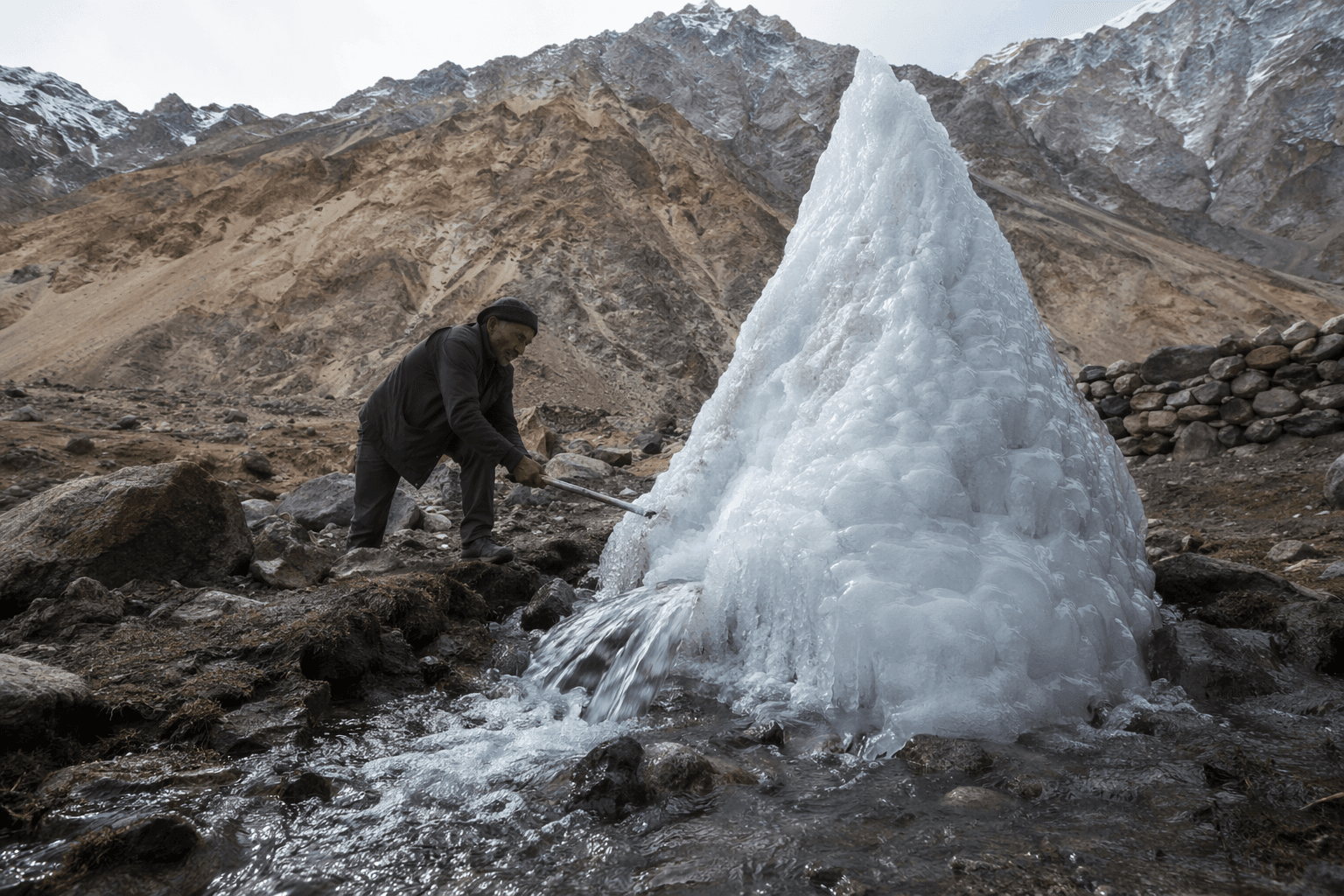
Himalayan villages are turning winter water into tall cones of ice to solve a problem that gets worse every spring: fields need irrigation exactly when meltwater is scarce. In Ladakh, a high-altitude cold desert where the growing season is brutally short, farmers depend on glacier melt and winter snow to keep crops alive until harvest, and many must get seeds in the ground by May or risk losing the season before winter returns.
The answer some villages have built is an artificial glacier known as an ice stupa. Water is piped uphill during winter and sprayed into freezing air, where it builds into a towering ice cone that stores water through the cold months and releases it later, when spring planting begins and summer heat deepens the shortage. The method has made Ladakh a testing ground for adaptation in a region where glacier loss, rapid urbanisation and groundwater stress have become increasingly urgent concerns.
Chewang Norphel, the civil engineer widely credited with pioneering artificial glaciers in Ladakh and known as the Ice Man of India, helped popularize the approach with early systems built from local labor and materials. He said each glacier could cost about 3 to 10 lakh rupees, depending on the site and size, far less than a cement water reservoir priced at about US$34,000. He also estimated that one artificial glacier could supply about 6 million gallons of water a year to communities in need.
The idea also carries deeper roots. Some accounts trace glacier grafting in the High Himalayas to the 13th century, suggesting that today’s ice stupas are not just a modern engineering trick but a revival of older mountain survival strategies. That history matters in Ladakh, where water security has always been tied to timing, elevation and the fragile balance between snow, ice and crops.
More recently, Sonam Wangchuk and the Students’ Educational and Cultural Movement of Ladakh launched the Ice Stupa programme in 2013 to respond to rising water scarcity. By 2024, an automated ice reservoir in Igoo village near Leh was reported to store 4 million litres, use sensors and weather data, and convert about 80% of sprinkled water into ice. Supporters say automation reduces waste and helps ensure irrigation arrives when sowing begins.
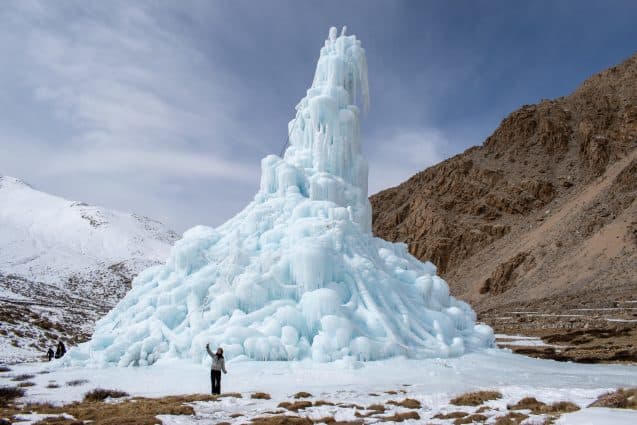
But the model has limits. Early systems could fail when freezing weather cracked pipes, and some downstream farmers objected that capturing water upstream left them with less. As Himalayan warming accelerates, the challenge is no longer whether ice stupas can work in a single village, but whether they can remain affordable, durable and fair enough to help whole watersheds, not just the communities that first build them.
This article was produced by Prism’s automated news system from verified source data, official records, and press releases, then run through automated quality and moderation checks before publishing. The system is built and supervised by the people who set the standards it runs under. Read our full AI policy.
Know something we missed? Have a correction or additional information?
Submit a Tip