Historians find Max Planck papers blanked out in Springer Nature archive
Historians found Max Planck papers on Springer Nature’s archive replaced by blank PDFs, even though normal retractions keep the text visible with a notice.
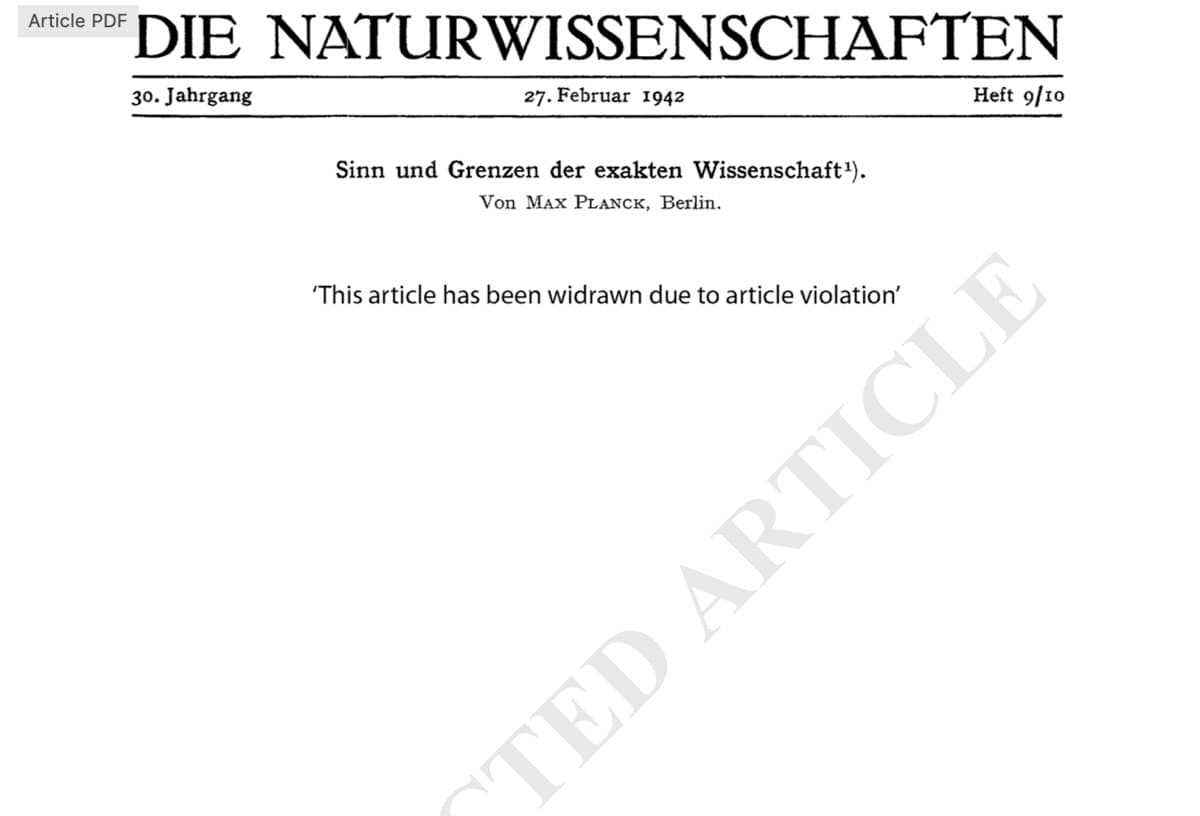
Historians Yves Gingras and Mahdi Khelfaoui found two Max Planck papers on Springer Nature’s platform marked as retracted and stripped down to blank pages, rather than preserved with the original text and a retraction notice. The 1940 paper was reduced to two empty pages and the 1942 paper to nine, a treatment Gingras called, “Intellectually, it’s not acceptable.”
The papers appeared in Naturwissenschaften, now called The Science of Nature, a journal Springer has owned since its creation in 1913. Gingras, of the Université du Québec à Montréal, and Khelfaoui, of the Université du Québec à Trois-Rivières, came across the entries while Gingras was browsing Retraction Watch’s list of Nobel Prize winners with retractions.
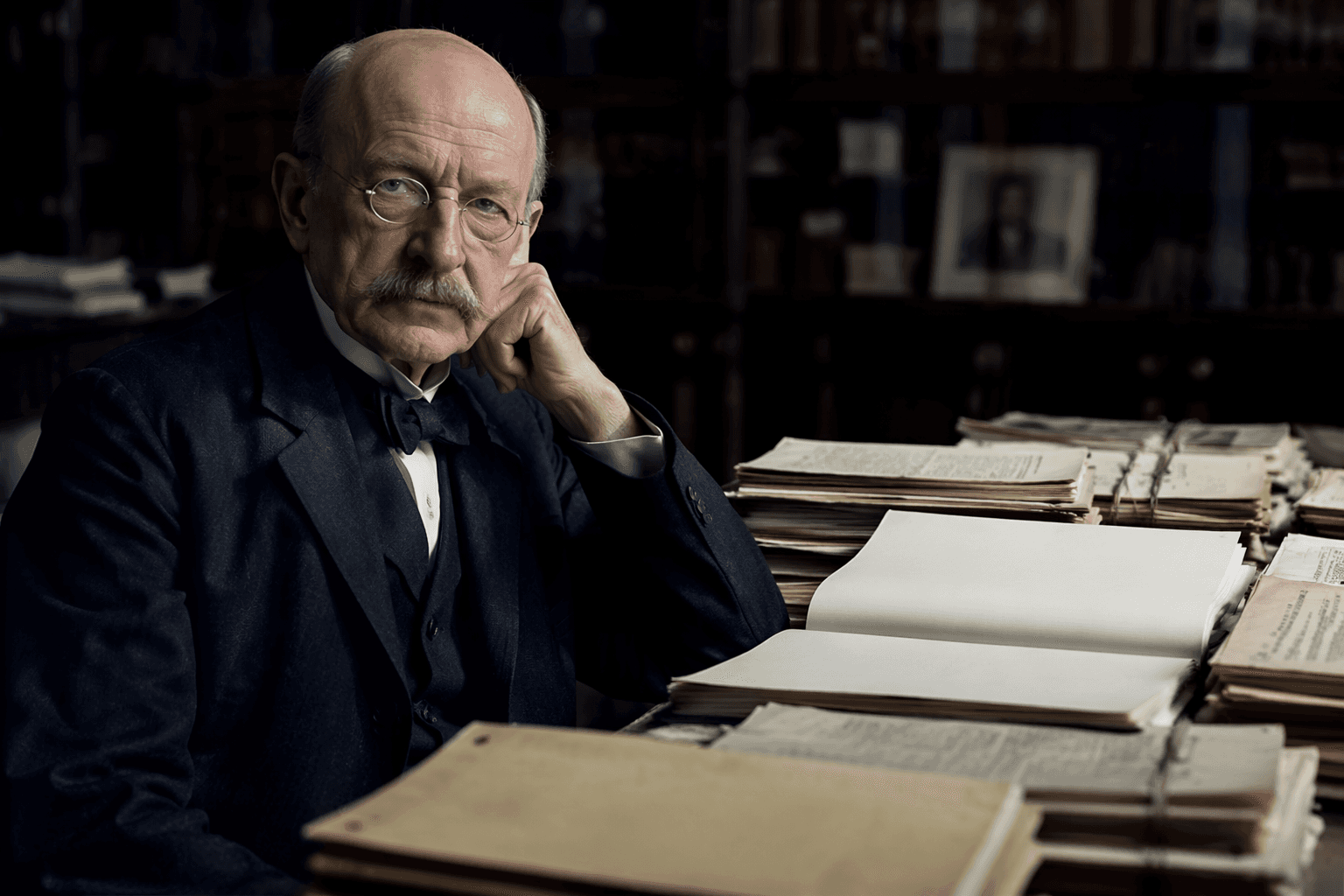
The historians argue that the apparent retractions had nothing to do with fraud or misconduct. Instead, they say the problem arose from digitization and copyright-management procedures being applied to historical work in a way that makes no sense for early-20th-century publishing. Concepts such as duplicate publication and self-plagiarism are historically situated and should not be imposed retroactively on Planck’s papers, which were republished across formats at a time when that was a normal part of scientific communication.
Max Planck founded quantum theory, won the 1918 Nobel Prize in Physics and died in 1947. John Heilbron called him an “upright man” in his biography, and Gingras and Khelfaoui found it hard to believe these papers could truly have been retracted while Planck was alive or for any sound reason after his death.
Springer Nature’s policy keeps retracted articles on the platform with a watermark and a linked explanation. The original papers remain available through the nonprofit Internet Archive, but the publisher that issued them has left readers with empty PDFs. Suzanne Scarlata, the current editor-in-chief of The Science of Nature, had not heard about the retractions before being contacted and said the episode was a likely administrative or algorithmic mistake that should be corrected. Springer Nature was also still listing the empty PDFs at $39.95.
This article was produced by Prism’s automated news system from verified source data, official records, and press releases, then run through automated quality and moderation checks before publishing. The system is built and supervised by the people who set the standards it runs under. Read our full AI policy.
Did this article answer your question?