Historic taverns still pour the spirit of the American Revolution
These taverns were colonial power hubs, where news, debate, and alliances moved faster than pamphlets, and several still stand as proof.
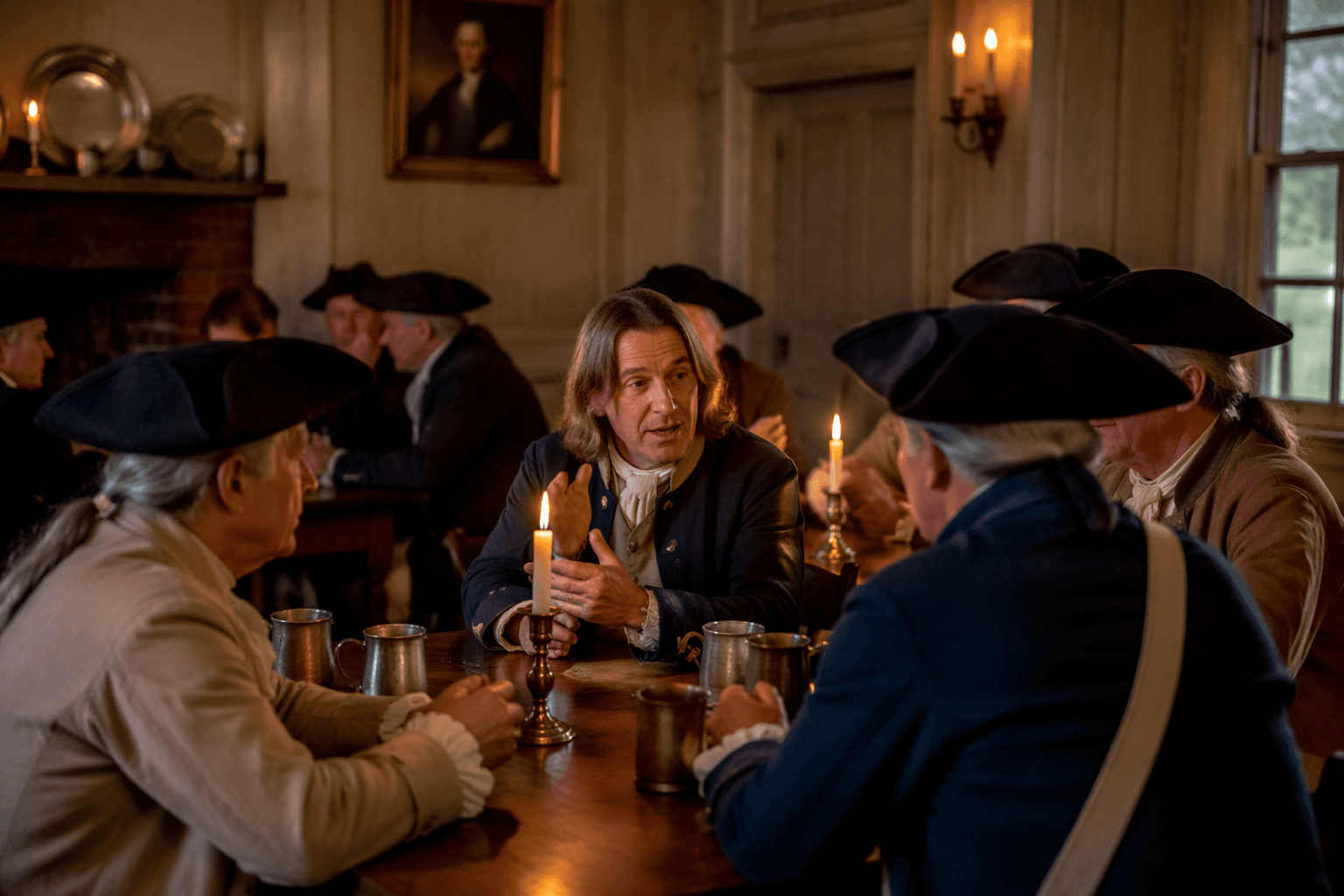
Taverns were where the Revolution became practical. In colonial America, public houses were places to sleep and eat, but also to read newspapers, play cards, and debate politics, which turned them into essential civic infrastructure long before they became heritage sites. As historian Cathy Hellier put it, they were “convenient” because “All the stuff that they really needed was in one place.”
The tavern as a political machine
That mix of lodging, food, information, and conversation mattered because politics in the 18th century was built face to face. Taverns worked as meeting rooms, informal headquarters, and news exchanges where the ideas behind independence, the Declaration of Independence, and the Constitution were debated by people who were shaping events in real time. The National Historical Society says it is developing the first comprehensive website listing more than 200 historic taverns from the Colonial, Revolutionary War, and early Republic eras, a sign that these places were not side notes to the founding, but part of its operating system.
White Horse Tavern, Newport
The White Horse Tavern in Newport, Rhode Island, stands out because it makes the colonial era feel almost continuous. It dates to 1673 and is widely described as the oldest continuously operating tavern in the United States, which places it well before the Revolution itself and shows how old the social infrastructure behind the rebellion really was. Its value is not just age, but endurance: it survived as a working tavern while the country it preceded was still being invented.
That longevity matters because it captures the everyday settings where political habits were learned. The White Horse is a reminder that revolutionary talk did not begin in halls of state; it began in shared rooms where strangers could sit down, eat, drink, and argue over the news of the day. In a period when newspapers moved slowly and formal institutions were still fragile, a tavern like this helped knit local communities into a broader political public.
Fraunces Tavern, Lower Manhattan
Fraunces Tavern in New York City is the clearest surviving stage for the war’s closing act. The National Park Service says the site played a prominent role in pre-Revolution, American Revolution, and post-Revolution history, serving as a headquarters for George Washington and as a venue for peace negotiations with the British. In Lower Manhattan, that makes it less a nostalgic stop than a physical record of how military, diplomatic, and civic authority all crossed the same threshold.
Two dates define its place in the national story. On November 25, 1783, after the British Army evacuated New York City, Washington marked Evacuation Day at Fraunces Tavern. Nine days later, on December 4, 1783, he returned to the Long Room to bid farewell to his officers after the last British soldiers had left American soil. Those moments make the tavern a rare site where the end of occupation and the transition to peacetime command can still be traced to a single room.
City Tavern, Philadelphia
City Tavern in Philadelphia shows how a tavern could sit inside the machinery of constitutional government without ever losing its social role. It opened in 1773, and some members of the Second Continental Congress dined there regularly. By 1787, members of the Constitutional Convention adjourned there after creating a new framework for government, a detail that captures how political negotiation extended into supper tables and private conversation after formal sessions ended.
That makes City Tavern more than a historic restaurant. It was part of the same Philadelphia ecosystem that turned the city into the central workshop of American governance, where delegates, diners, and dealmakers mixed in spaces that blurred the line between public duty and social ritual. The tavern’s surviving fame rests on that overlap: it was where the people making the system for the new republic relaxed, argued, and kept working after the official day was over.
The '76 House, Tappan
The ’76 House in Tappan, New York, illustrates the way legend and documentation often travel together. Its exact origins are debated, but it is still marketed as America’s oldest restaurant, and its Revolutionary-era reputation is anchored by a documented association with Major John André, who was confined there before his execution on October 2, 1780. That connection gives the building a darker edge than a simple dining room story: it was tied to espionage, military betrayal, and the tightening security of wartime patriot control.
That distinction matters. Some taverns are remembered because the record is unusually clear, while others are wrapped in claims that have grown larger than the surviving evidence. The ’76 House belongs to both categories at once: a real Revolutionary site with real historical weight, and a place where the marketing language can outrun the documentary trail if read too loosely.
Why these places still matter
Taken together, these taverns show that the Revolution was not only fought in fields and debated in chambers. It was organized in places that offered food, shelter, newspapers, cards, and a room where class lines could soften long enough for political ideas to spread. That is why the surviving bars still matter: they preserve the physical settings where grievances were shared, alliances were built, and the language of independence moved from rumor to action.
They also force a disciplined reading of history. The strongest surviving taverns are not just romantic backdrops for a drink with the Founders; they are evidence that democratic change depends on ordinary spaces as much as grand monuments. In that sense, these buildings do more than pour nostalgia. They still pour the spirit of a republic being argued into existence.
This article was produced by Prism’s automated news system from verified source data, official records, and press releases, then run through automated quality and moderation checks before publishing. The system is built and supervised by the people who set the standards it runs under. Read our full AI policy.
Know something we missed? Have a correction or additional information?
Submit a Tip