Holiday travellers face delays as EU border checks begin at Dover
Dover’s half-term queues became the first real test of Europe’s new biometric border checks, with families and freight warned to budget extra time.
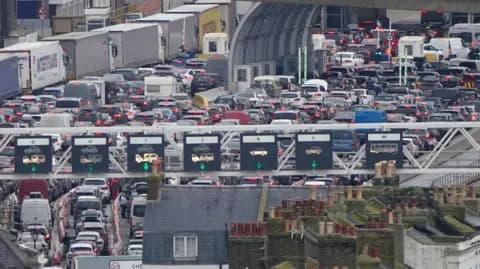
Holiday traffic through Dover became the first major test of the EU’s new border regime, as British travellers were required to face biometric checks instead of a quick passport stamp. The Entry/Exit System, which began on 12 October 2025 and was phased in across Schengen border crossings over six months, was now fully in place and affecting most non-EU citizens, including British passport holders.
The Port of Dover said the system turned the border into a digital checkpoint, with fingerprints and a photograph collected on entry or exit for short stays of up to 90 days in a rolling 180-day period. That change matters because Dover is the UK’s busiest international ferry port, handling more than 11 million passengers a year and about 33% of UK trade in goods with the EU. Even modest delays at the border can ripple quickly into family holiday plans, coach schedules and lorry timetables.

Government officials had already warned travellers to allow extra time because EES could take longer to complete for each passenger. The UK government also put £10.5 million into measures to minimise disruption at juxtaposed ports, equal to £3.5 million for each port. At Dover, port officials said they had prepared new facilities and were working closely with French border agency partners to manage the phased checks.

By late March, the UK government said EES was already operational in 29 European countries, covering all EU member states except Ireland and Cyprus, plus Iceland, Liechtenstein, Norway and Switzerland. That wide rollout meant Dover was not dealing with a local pilot but with the frontline of a wider border change that touched holidaymakers, freight operators and supply chains at the same time.


The practical question for Kent was whether the queues seen during half-term would fade once travellers became familiar with the new process, or whether they would become the new normal for every school break and summer crossing. For Dover and the businesses that depend on it, the answer will shape not only travel time but also the movement of goods through one of Britain’s most important trade corridors.
This article was produced by Prism’s automated news system from verified source data, official records, and press releases, then run through automated quality and moderation checks before publishing. The system is built and supervised by the people who set the standards it runs under. Read our full AI policy.
Did this article answer your question?