Holly Robinson Peete and KultureCity Champion Autism Awareness and Inclusion
Holly Robinson Peete's son was diagnosed with autism at age 3; the HollyRod Foundation has since helped more than 50,000 families navigate a system still full of gaps.
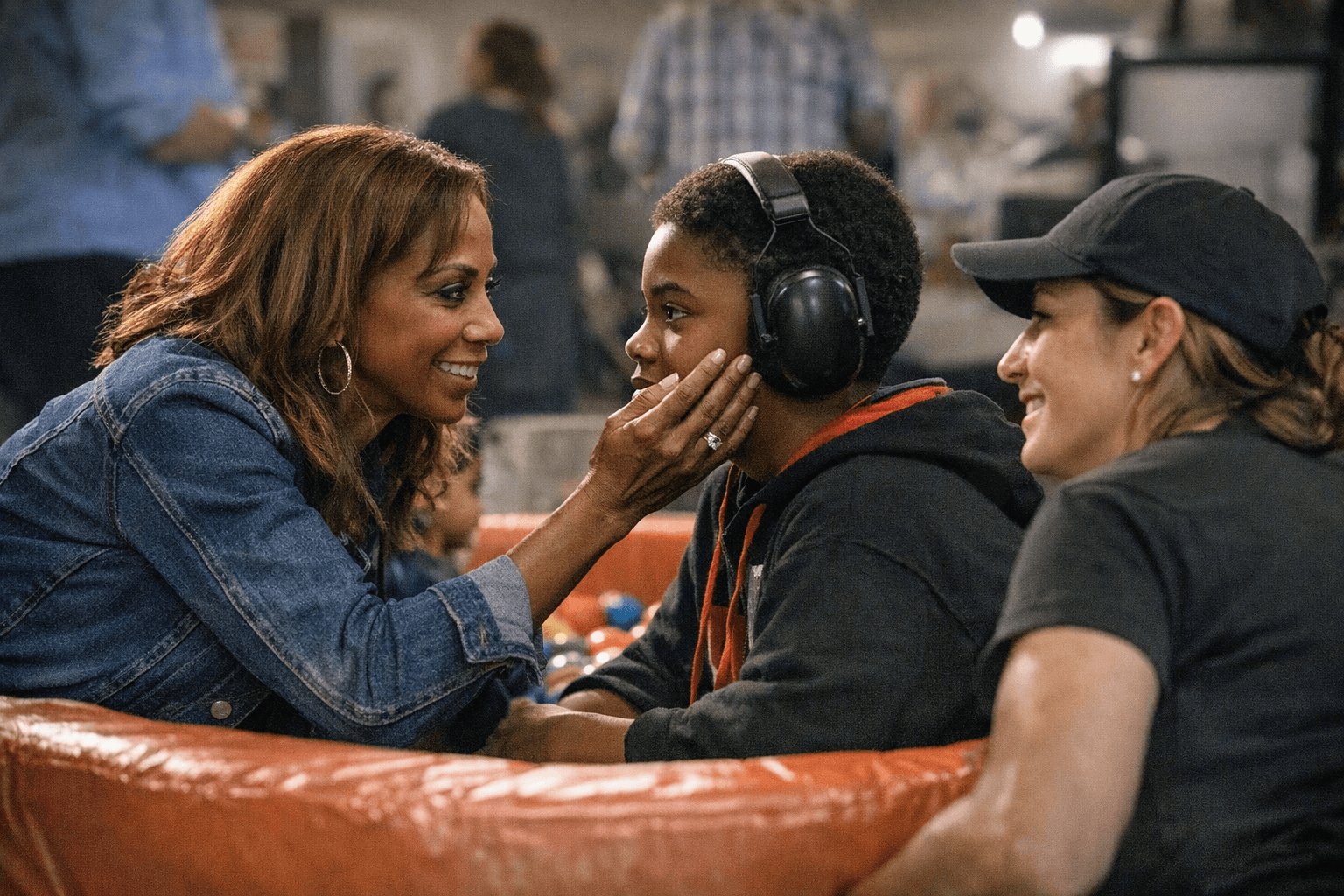
Two decades after actress Holly Robinson Peete redirected the HollyRod Foundation she co-founded in 1997 to center autism support, she joined ABC News anchor Linsey Davis alongside KultureCity co-founder Dr. Michele Kong to make the case that awareness alone is not enough: the infrastructure families navigate daily remains uneven, underfunded, and too often invisible.
The personal stakes for Peete are well documented. In 2000, her eldest son, Rodney "RJ" Peete Jr., was diagnosed with autism at age three. That diagnosis transformed HollyRod from a Parkinson's-focused nonprofit, originally inspired by her father Matthew T. Robinson Jr., into a dual-mission organization providing medical, physical, and emotional support for both conditions. The foundation's HollyRod4Kids initiative now offers free resources on diagnosis, treatment options, and support services; the organization reports having helped more than 50,000 families to date. Families seeking help can reach the foundation directly through hollyrod.org, where a library of expert-reviewed autism information is available at no cost.
Dr. Kong's entry into the space carried its own inflection point. She co-founded KultureCity in Birmingham, Alabama in 2014 after experiencing firsthand how hostile everyday environments could be for children with sensory needs. The nonprofit has since certified more than 3,000 locations in the United States and internationally under its Sensory Inclusive program, a designation that requires staff training, venue modifications, quiet zones, and the distribution of sensory bags containing noise-canceling headphones, fidget tools, weighted lap pads, and verbal cue cards. Major league partnerships include the NFL Pro Bowl, the Super Bowl, and 16 NBA arenas. Families can locate certified venues near them using KultureCity's free app, available on iOS and Android, which filters results by city, state, and venue category.
The breadth of that list, however, also exposes a persistent gap. KultureCity's certified footprint skews heavily toward large sporting arenas, entertainment complexes, and urban institutions. Rural communities, lower-income school districts, and smaller healthcare settings remain largely outside the certification network. The CDC currently estimates that approximately 1 in 31 children aged eight years in the United States has been identified with autism spectrum disorder, a figure that cuts across every racial, ethnic, and socioeconomic group. The demand for sensory-accessible spaces is not concentrated in major metropolitan markets.
On the school side, HollyRod's resources address diagnosis and early intervention, but families in states without robust special education enforcement or Medicaid waiver programs frequently encounter waitlists that stretch months or years before any school-based support materializes. KultureCity has piloted staff training at some healthcare and educational settings, but that programming has not scaled to match the certification numbers posted by arenas and stadiums.
The accountability question is one both organizations will face as the autism community pushes beyond awareness months toward measurable outcomes. KultureCity tracks venue certifications and training completions. HollyRod counts families reached. Neither metric captures whether a family in rural Mississippi or a low-income household in a major city can actually access a sensory-safe space or an autism specialist without a six-month wait. Closing that gap, advocates argue, requires federal and state investment in community-based training, school integration mandates with enforcement teeth, and Medicaid funding structures that reimburse sensory and behavioral support without means-testing families into corners.
For families looking to act now: KultureCity's app is free and searchable; hollyrod.org offers no-cost guidance on navigating a diagnosis. The harder work of building the infrastructure those resources point toward remains squarely in the hands of legislators.
This article was produced by Prism’s automated news system from verified source data, official records, and press releases, then run through automated quality and moderation checks before publishing. The system is built and supervised by the people who set the standards it runs under. Read our full AI policy.
Did this article answer your question?


