Home At Last Sanctuary's Parrot Care Essentials: Space, Diet, Enrichment, Commitment
Home At Last Parrot Sanctuary outlines practical parrot care essentials emphasizing space, balanced diet, enrichment, and lifetime commitment.
Parrots require more than a perch and a seed cup; they need space to move, a varied diet, daily social interaction, and veterinary care to thrive. Home At Last Parrot Sanctuary lays out clear, practical guidance for anyone keeping or adopting a parrot so owners can reduce common health and behavior problems and improve welfare.
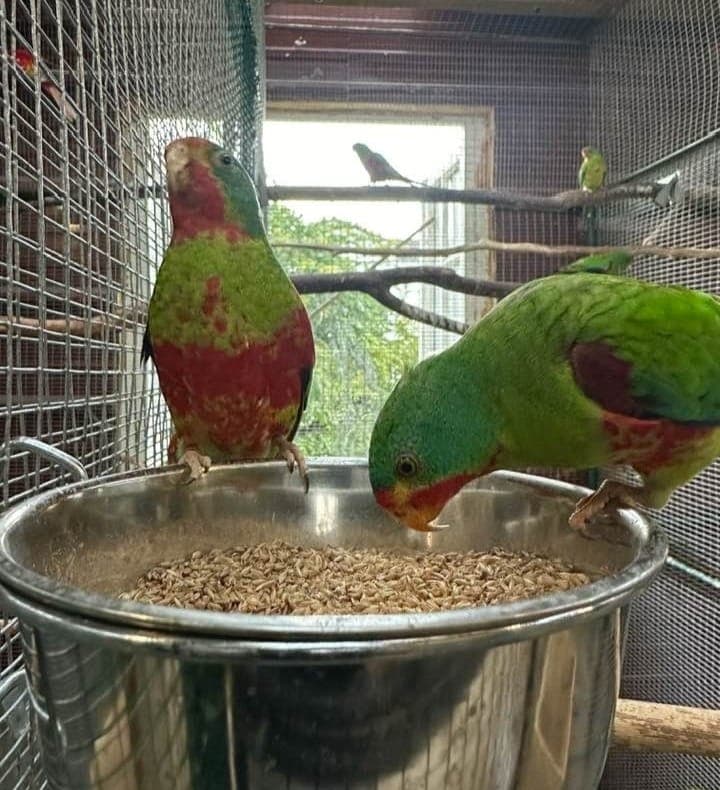
Provide the largest safe enclosure possible and plan daily out-of-cage time for exercise and flight or supervised wing-flapping. Flight-capable species are highly active and benefit from access to an aviary or a roomy cage plus several periods out of cages for stretching and socializing. Home At Last Parrot Sanctuary stresses that confinement to undersized cages is a frequent source of physical and psychological problems.
Nutrition matters. Home At Last Parrot Sanctuary recommends a balanced, varied diet that centers on formulated pellets supplemented with vegetables, grains, and legumes, and only limited amounts of fruits and nuts. Seeds alone are inadequate for most species and can lead to nutritional imbalances. Owners should learn species-appropriate feeding requirements and prepare fresh food safely to avoid spoilage and bacterial contamination.
A clean environment supports feather and skin health. Routine cleaning of feeding and watering dishes, perches, and cages reduces pathogen exposure. Provide access to fresh air when safe, and bathing options such as misting or shallow baths to maintain feather condition. Hygiene practices that include frequent water changes and prompt removal of uneaten fresh food protect both bird and household.
Foot health receives special emphasis. Home At Last Parrot Sanctuary advises multiple perch types and diameters, including natural wood perches of varying thickness, to prevent pressure sores and foot problems. Avoiding only smooth dowel perches and offering quiet spots for rest and privacy helps birds use their feet normally and reduces stress.
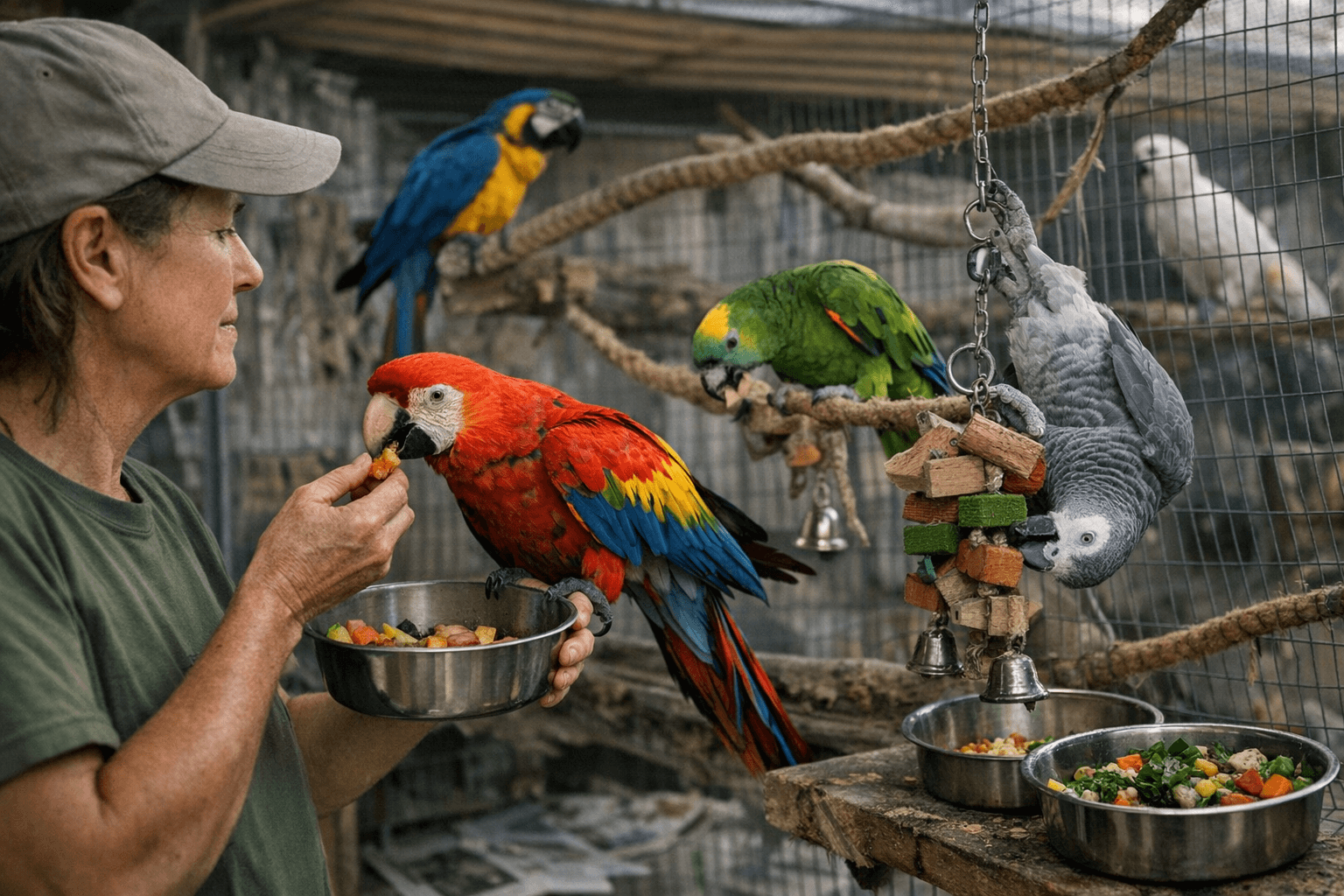
Enrichment and social interaction are essential. Parrots are social, intelligent animals that need toys, chewables, and foraging devices to occupy their minds and bodies. Daily interaction with a human flock provides stimulation and bonding. Without sufficient enrichment, parrots can develop boredom-related problems such as feather plucking and stereotyped behaviors.
Underlying all care is a clear call for lifetime commitment. Home At Last Parrot Sanctuary highlights the need for ongoing enrichment, avian veterinary care, and readiness to meet changing needs over a bird’s lifespan. The sanctuary also underscores adoption and rescue pathways as responsible options for displaced parrots.
For anyone evaluating whether to keep or adopt a parrot, follow these essentials: secure appropriate space, plan a varied diet, schedule regular cleaning and baths, fit diverse perches, rotate enrichment, and budget for lifelong care. Meeting these standards reduces common welfare issues and keeps your feathered flock healthy and engaged.
Know something we missed? Have a correction or additional information?
Submit a Tip