Honesty About War's Risks Is a Duty We Owe Troops and Families
As the Pentagon readies potential ground raids in Iran and the 82nd Airborne heads to the Middle East, troops and families deserve the unvarnished truth about what's at stake.
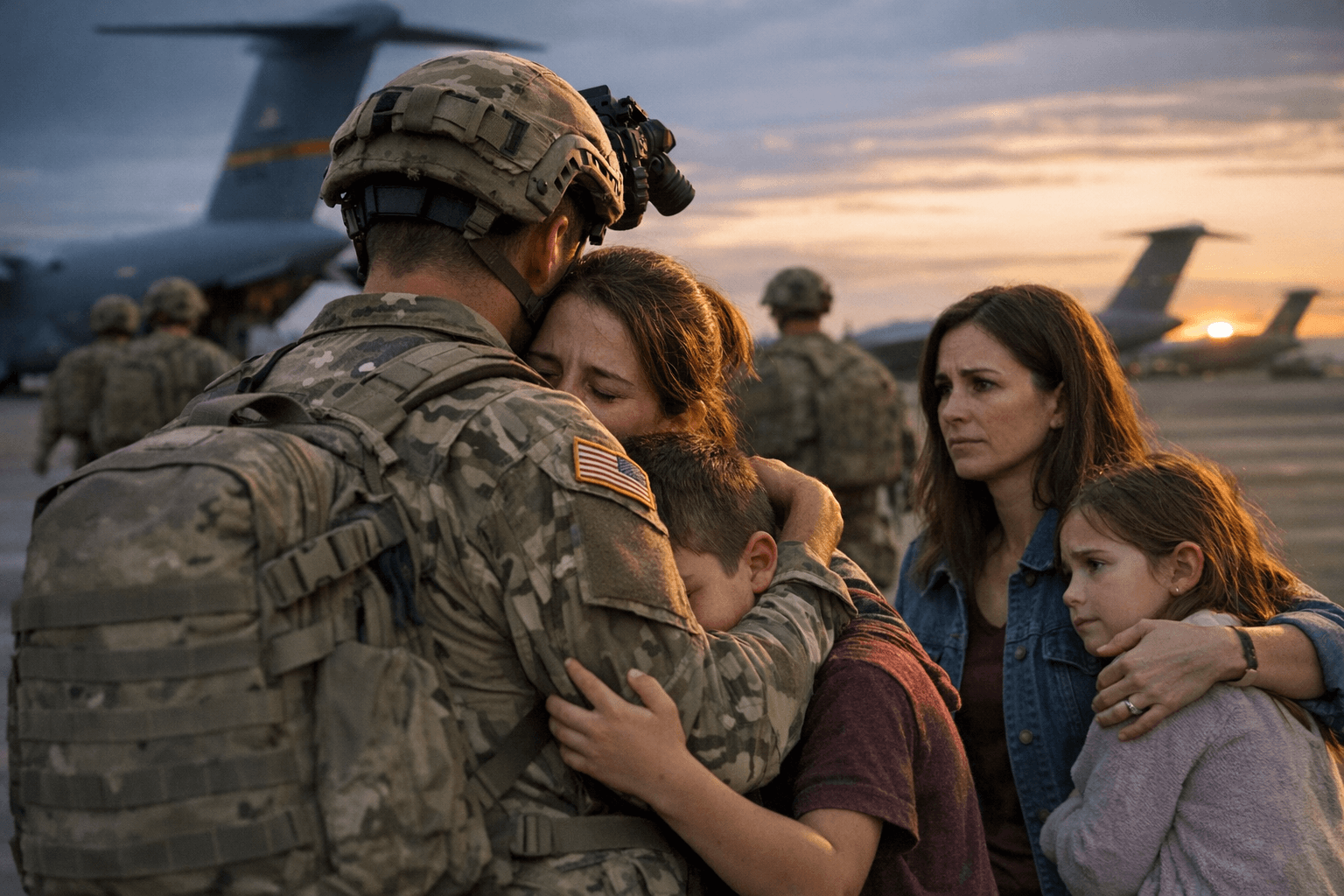
Nearly five weeks into Operation Epic Fury, the United States has committed warships, carrier air wings, and thousands of ground forces to a conflict whose full scope has yet to be plainly explained to the men and women being asked to fight it, or to the families waiting at home.
The operational risks are not abstract. The Pentagon has been planning limited ground raids inside Iran involving special operations and conventional infantry troops. A Washington Post report from late March outlined the specific dangers those troops would face: Iranian drones and missiles, direct ground fire, and improvised explosive devices. These are not hypothetical worst cases; they are the documented threats on the battlefield to which the 82nd Airborne Division soldiers, approximately 2,000 of whom were ordered to begin moving to the Middle East on Tuesday, will be exposed.
The Trump administration has deployed U.S. Marines to the Middle East as the war stretches into its fifth week, and has also been planning to send thousands of soldiers from the Army's 82nd Airborne to the region. The plans, which fall short of a full invasion, could involve raids by special operations and conventional infantry troops, exposing U.S. personnel to Iranian drones and missiles, ground fire, and improvised explosives.
That is the reality on the ground. It deserves to be stated clearly, publicly, and repeatedly by the officials who ordered it.
On Tuesday, the Pentagon ordered approximately 2,000 soldiers from the U.S. Army's 82nd Airborne Division to begin moving to the Middle East. These are not career bureaucrats or defense contractors. They are fathers, daughters, recent graduates, and long-serving NCOs with families tracking news reports for any detail about where their loved ones are headed and what they will face when they get there. The least those families are owed is an honest accounting of the mission's purpose and its dangers.
The strategic buildup alone signals the magnitude of what is underway. On February 13, sources confirmed that the USS Gerald R. Ford was en route to the Middle East, creating an uncommon two-carrier deployment in the theater at a time of heightened tensions with Iran. The USS Abraham Lincoln's carrier air wing conducted strikes on Iran on March 14. That level of force projection carries commensurate risk for the personnel operating it.
Governments at war have always been tempted to manage public perception rather than inform it, to soften casualty projections, frame objectives in the most optimistic light, and delay difficult disclosures. The historical costs of that tendency are well documented. What is less often acknowledged is the moral injury it inflicts on service members and their families when the reality of combat diverges sharply from what they were led to expect.
Honesty is not a threat to morale. The men and women of the 82nd Airborne are trained professionals who understand danger. Their families are not fragile; they are partners in a sacrifice the country has asked them to make. What undermines morale, and erodes the bond between the military and the public it serves, is the suspicion that the stakes were hidden, the risks downplayed, and the mission poorly defined from the start.
The extent of military and civilian casualties in the conflict is uncertain, as is the trajectory of the conflict. That uncertainty is precisely why transparency matters most now, before ground operations expand further and the distance between official statements and operational reality becomes impossible to close.
This article was produced by Prism’s automated news system from verified source data, official records, and press releases, then run through automated quality and moderation checks before publishing. The system is built and supervised by the people who set the standards it runs under. Read our full AI policy.
Did this article answer your question?

