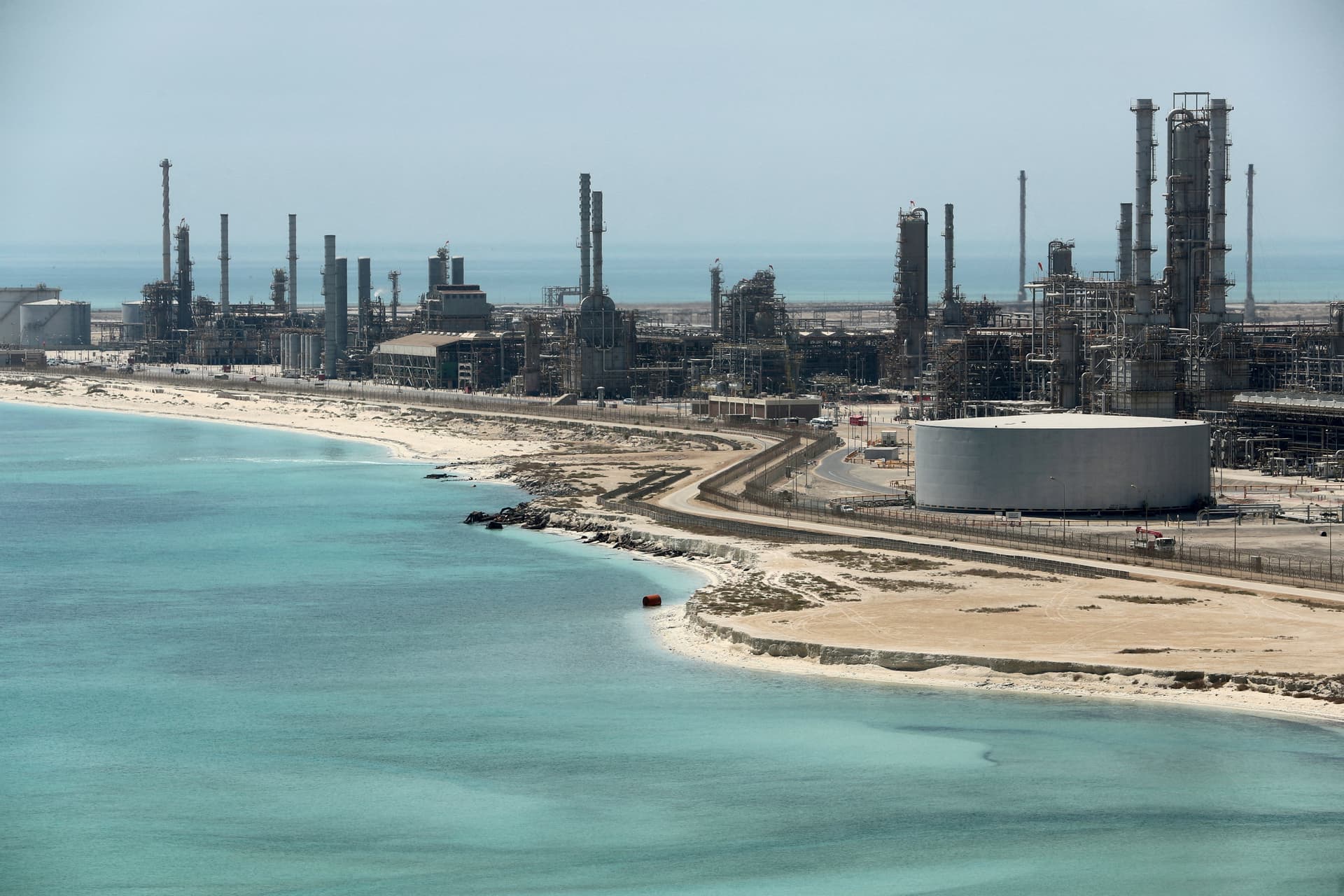
Hormuz Closure Rattles Asia and Europe, but U.S. Faces Fallout Too
Gasoline surpassed $4 a gallon as the Hormuz closure drives what the IEA calls the worst oil supply disruption in market history, putting Fed rate hikes back on the table.
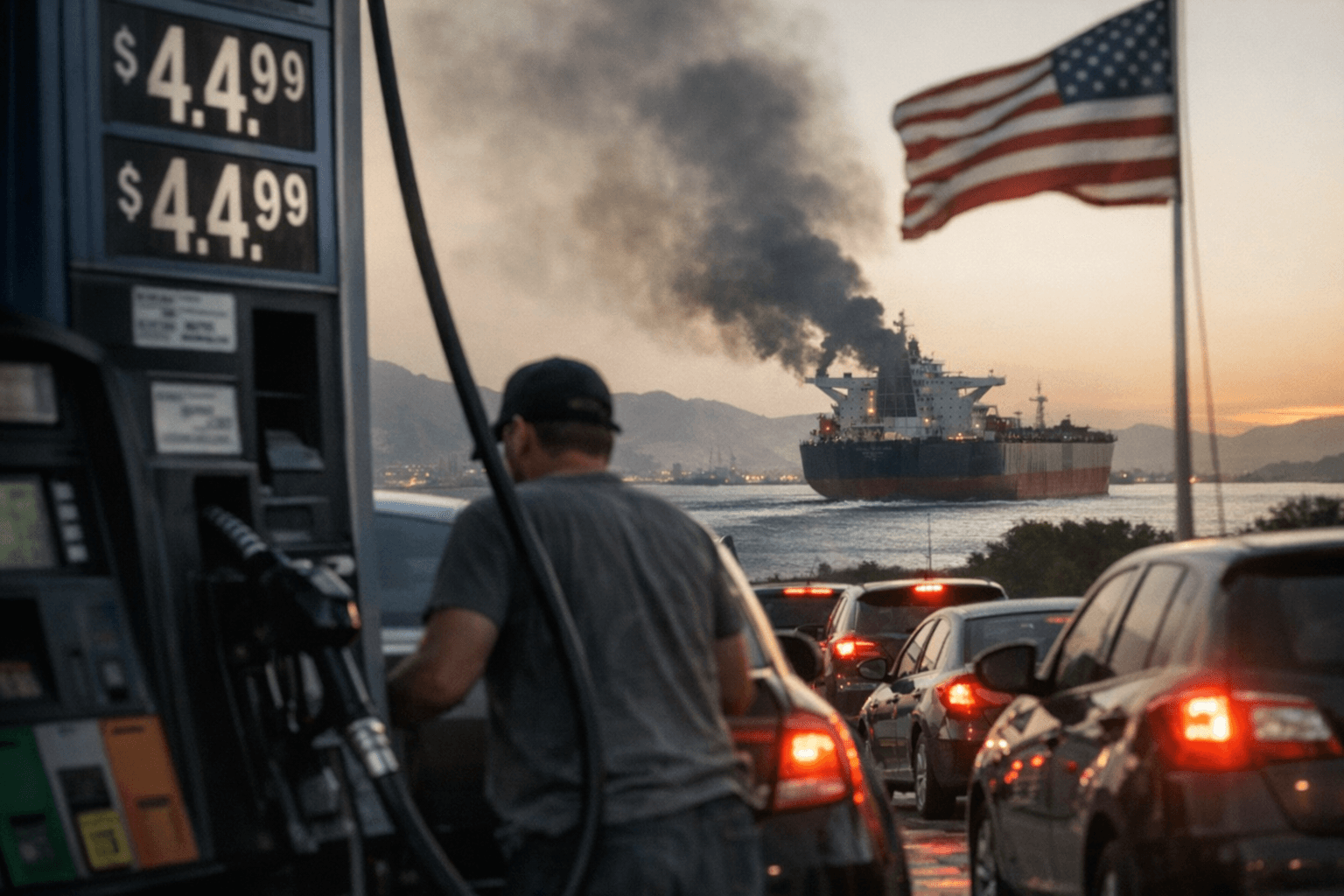
American drivers watching the pump tick past $4 a gallon are getting their first direct lesson in what happens when a narrow waterway 7,000 miles away stops moving oil. The closure of the Strait of Hormuz on March 4, following U.S. and Israeli airstrikes on Iran under Operation Epic Fury on February 28, stranded oil and LNG exports and sent Brent crude surging past $120 per barrel, forcing QatarEnergy to declare force majeure on all exports. The International Energy Agency has characterized it as "the largest supply disruption in the history of the global oil market."
About a fifth of the world's oil and liquefied natural gas normally passes through this narrow waterway. The consequences for Asia and Europe, both far more dependent on Persian Gulf crude than the United States, have been severe. But the notion that Americans are insulated is already being tested at every gas station from San Diego to suburban Atlanta.
U.S. gasoline prices rose 7.5 percent to $3.20 per gallon in the immediate aftermath of the closure, then climbed above $4 per gallon, the highest since late 2023. Both Brent crude and WTI pierced $110 per barrel on April 2, with gasoline prices nearing $4.50 a gallon as the disruption entered its second month with no resolution in sight. West Texas Intermediate stood at $67 a barrel on February 27; it was trading near $112 by late March.
Fuel is only part of the kitchen-table math. Jet fuel and diesel prices have skyrocketed, stock markets have tumbled, and recession odds have climbed. Susan Spence, who regularly surveys factory managers for the Institute for Supply Management, said higher fuel prices are already driving up costs everywhere: "Anything that travels, whether it's over the road in the U.S. or ocean freight, it's going to increase." Stuck behind the strait alongside oil are fertilizer, helium, sulfur, and plastics feedstocks. Around a third of global seaborne methanol trade passes through Hormuz, disrupting a key chemical feedstock for resins, coatings, and plastics with knock-on effects across chemical value chains. Some plastics prices have already risen 15 percent, and companies inside supply chains are buying up as much product as they can in anticipation that conditions will worsen.
The pain is not uniform across U.S. regions. California may be hit hardest among American states, while Texas and Midwest refiners that import energy from the Persian Gulf can turn to alternative suppliers whose crude flows they are equipped to process. For the spring planting season, the timing could hardly be worse: urea prices at the New Orleans fertilizer hub have already risen from $475 per metric ton to $680 per metric ton. "Not great timing for the planting window in the Midwest for soy and corn," said Darrell Fletcher, managing director of commodities at Ohio-based Bannockburn Global Forex.
Policymakers are deploying their limited tools. The IEA took the unprecedented step of announcing it would release 400 million barrels of oil from reserve. OPEC+ pledged to increase oil output by 206,000 barrels per day to mitigate shortages. Analysts have been blunt about what those measures can accomplish. "Releases of SPR are usually shown in the literature as moderating swings of prices rather than effectively capping those prices," said one analyst, noting that the current release was expected to provide only some relief through end of March.
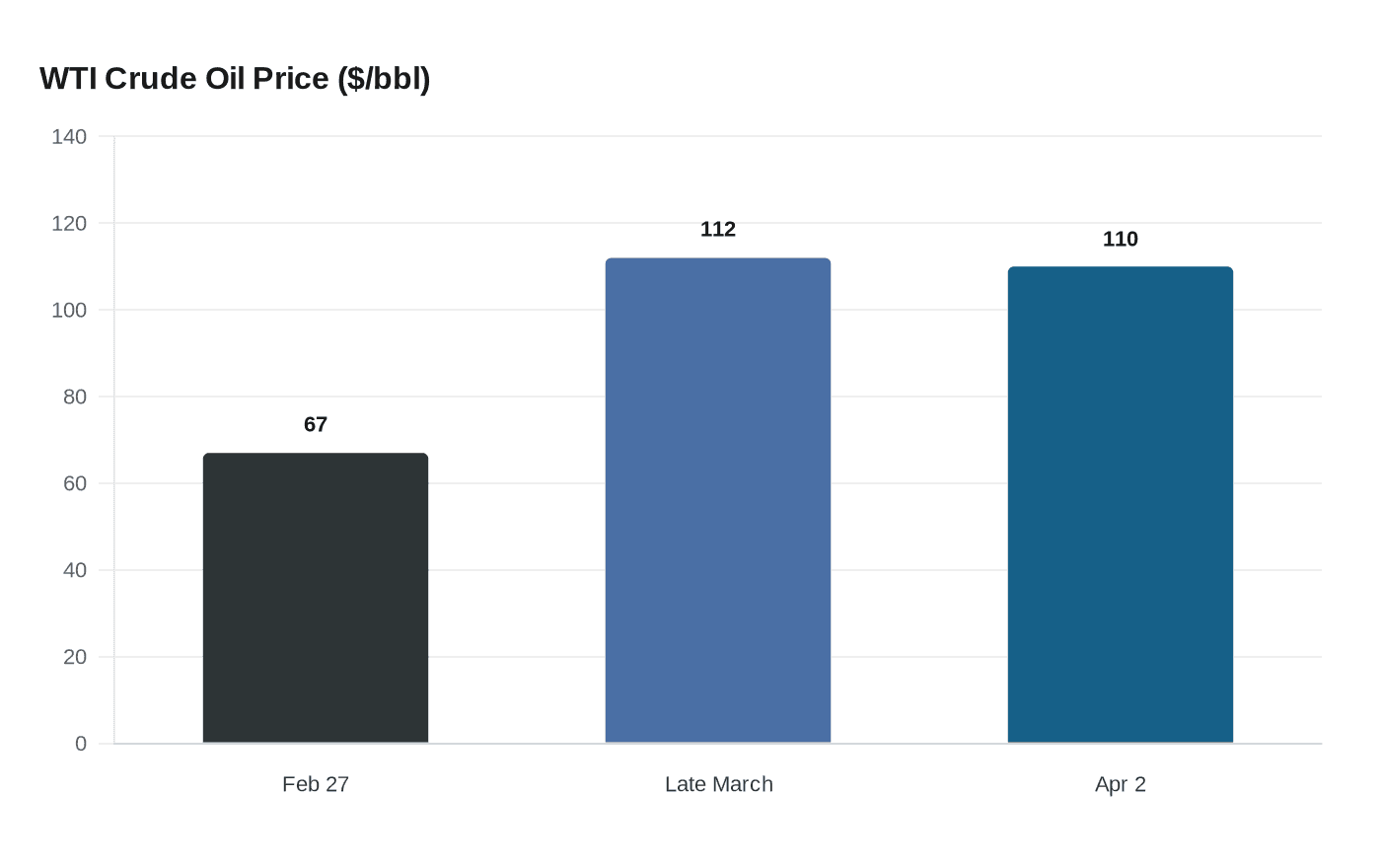
The duration of the closure is now the central variable. Al Salazar of energy research found that for every additional month the strait stays closed, oil prices move up $10 to $15 a barrel. The emerging view from oil industry executives and analysts is that the economic and market fallout could escalate sharply if the strait is not reopened within roughly the next one to three weeks. Bloomberg Economics projections show that at oil around $110 a barrel, the euro area faces about 1 percentage point of added annual inflation and 0.6 percent off GDP. At $170 a barrel, the impact roughly doubles, a stagflationary shock that could shift the path ahead for central banks. Wall Street is already pricing that risk: the war caused gasoline prices to jump $1 per gallon in three to four weeks, shifting Fed expectations from two rate cuts in 2026 to potentially one rate hike. The 10-year Treasury yield spiked from below 4 percent to nearly 4.5 percent as markets priced in higher inflation.
Trump extended the deadline for Iran to open the strait by 10 days to April 6, after saying talks were "going very well." U.S. investors remain skeptical. The White House says it believes the president's military strategy will soon end the Iranian threat, but all agree there is no substitute for reopening the strait. With every barrel of crude that fails to clear Hormuz, the argument that America can watch this crisis from a safe distance becomes harder to sustain.
This article was produced by Prism’s automated news system from verified source data, official records, and press releases, then run through automated quality and moderation checks before publishing. The system is built and supervised by the people who set the standards it runs under. Read our full AI policy.
Did this article answer your question?