Hormuz Closure Threatens Food, Medicine, Smartphone Supplies Beyond Oil
Urea prices jumped 32% in a single week after Hormuz closed, threatening food, medicine and smartphone supplies far beyond oil markets.

Urea, the world's most widely used solid fertilizer, hit $683 per metric ton at the New Orleans import hub on March 5, up from $516 the week before. That 32% spike in a single week captures, in one price, how the effective closure of the Strait of Hormuz has sent shock waves far beyond the oil markets that typically dominate the headlines.
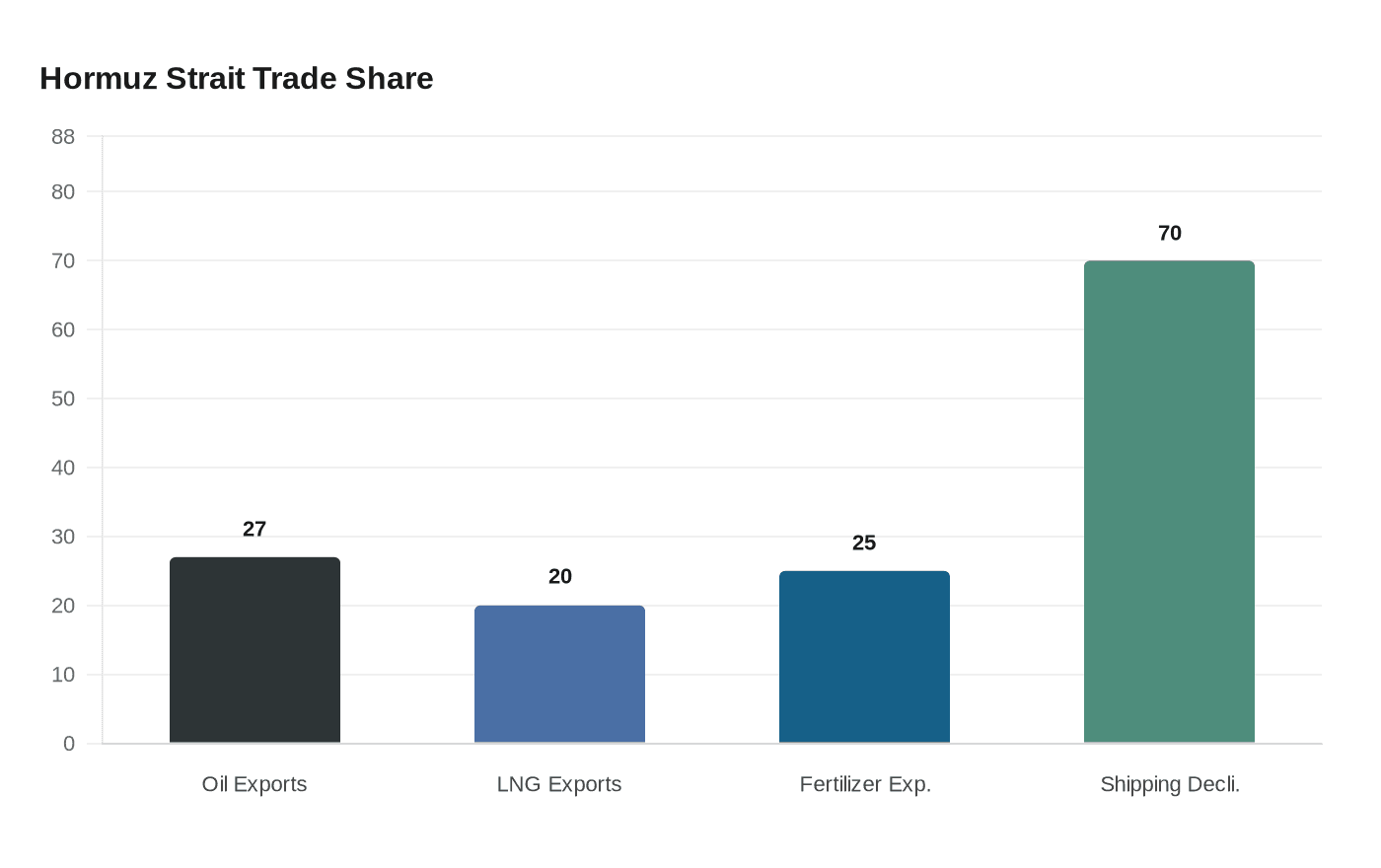
The crisis began on February 28, 2026, when joint U.S.-Israeli strikes on Iran, which included the killing of Supreme Leader Ali Khamenei, prompted the Islamic Revolutionary Guard Corps to issue warnings prohibiting vessel passage through the strait and launch retaliatory missile and drone attacks on Gulf shipping. Drone and rocket strikes on tankers have made maritime insurance costs prohibitive, resulting in a more than 70% decline in shipping through the Strait since the conflict began.
The immediate economic fallout runs well beyond crude oil. About 27% of the world's oil exports, 20% of global liquefied natural gas exports, and between 20% and 30% of global fertilizer exports, including urea, ammonia, phosphates, and sulfur, pass through the Strait. Qatar, Saudi Arabia, Bahrain and Oman together produce a combined 15 million metric tonnes a year of urea, diammonium phosphate and anhydrous ammonia. Countries such as India, the U.S., Brazil and Australia rely heavily on those exports to maintain agricultural yields.
The cost structure of fertilizer makes a Hormuz disruption uniquely dangerous for food supplies. Natural gas makes up around 70% of the production cost of nitrogen fertilizers, meaning an oil-market spike spills directly into fertilizer prices. Joseph Glauber, senior research fellow at the International Food Policy Research Institute, said "the bigger impact on consumer prices will not be the impact on agricultural commodities but the fact that energy is a big portion of the total retail food bill." Writing for IFPRI, Glauber warned that "higher oil prices and energy prices more generally could raise retail costs as post-farmgate transportation and processing costs increase. This could refuel food price inflation over time."
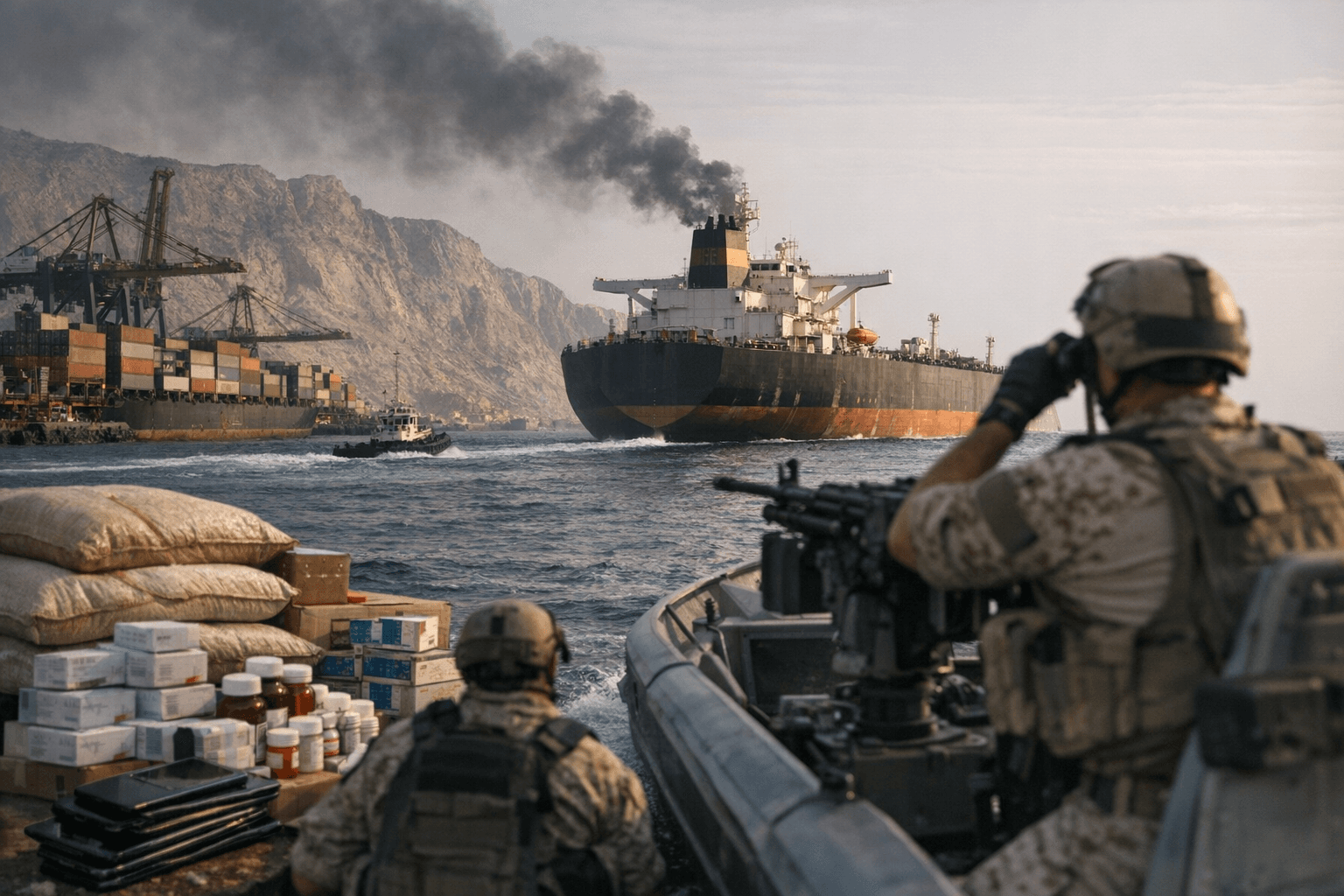
If hostilities in the Strait are prolonged, staple food products such as wheat, corn, bread, pasta and potatoes could carry higher price tags at supermarkets. Perishable items such as dairy products and seafood could also be affected. Meanwhile, prices of soybean oil and animal feed may also rise, which could force farmers to change their production plans.
At least a million metric tons of fertilizer are already physically stranded in the Gulf, with major producers declaring force majeure. A vessel from the Persian Gulf to the U.S. Gulf Coast takes roughly 30 days, meaning supply disrupted now will miss peak March and April planting. A total of 54 agricultural groups have written to President Trump calling for "much-needed market relief for America's farmers" amid surging fuel and fertilizer prices, noting that "the closure of the Strait of Hormuz sent fuel and fertilizer prices skyrocketing" just as planting season began in earnest.
Svein Tore Holsether, the CEO of Yara International, one of the world's biggest fertilizer companies, said in a recent interview that a prolonged closure of the Strait for a year would have a "catastrophic" impact. "Given the importance of fertilizer, this is something that can seriously impact crop yields if the war continues for an extended period," he said.
Wolfe Research chief economist Stephanie Roth estimated the disruption could raise "food-at-home" inflation by roughly 2 percentage points, adding about 0.15 percentage points to headline inflation in the U.S. on top of roughly 0.40 percentage points from energy alone.
The geopolitical response has moved slowly. EU foreign ministers discussed extending the bloc's naval mission Aspides to the Strait of Hormuz at a meeting in Brussels, as the Iran war pushed global energy prices up. But EU foreign policy chief Kaja Kallas said ministers showed "no appetite" to expand the mission to the Strait for the time being. A total of 22 countries, including the United Kingdom, France, Germany, Japan, Bahrain and the United Arab Emirates, have since signed a statement declaring willingness to "contribute to appropriate efforts to ensure safe passage" in the Strait.
The economic damage is proving uneven: energy-importing developing countries in South Asia, Africa, and parts of the Middle East face the steepest food price increases, while countries such as India and Pakistan are showing much larger welfare losses than advanced economies. The World Food Programme has warned the world could see record levels of food insecurity in 2026 if the Iran war continues. With planting season already under way and nearly a million tonnes of fertilizer stranded at sea, the window to limit that damage is narrowing by the week.
This article was produced by Prism’s automated news system from verified source data, official records, and press releases, then run through automated quality and moderation checks before publishing. The system is built and supervised by the people who set the standards it runs under. Read our full AI policy.
Did this article answer your question?


