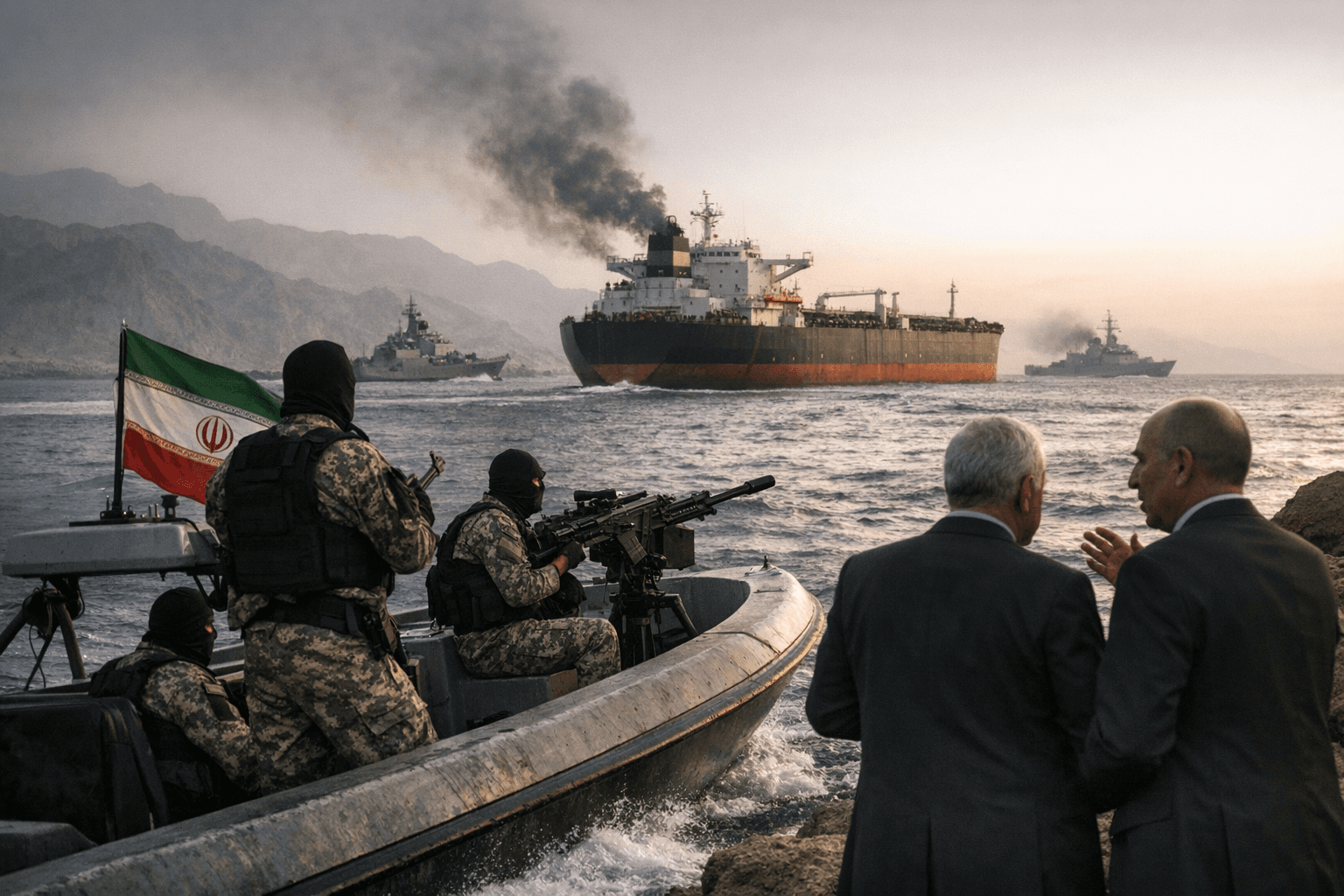
Hormuz Strait could become flashpoint in Trump pressure campaign on Iran
A blockade in the Strait of Hormuz would be less a wall of ships than a grinding campaign of escorts, minesweeping, and pressure on Iranian traffic. The shock would hit far beyond the Gulf.

Why Hormuz is the pressure point
The Strait of Hormuz is the narrowest and most dangerous place to squeeze Iran economically. It borders Iran and Oman, and it sits on the route for a vast share of the world’s oil and gas trade. In 2025, about 20 million barrels per day of crude oil and oil products moved through it, roughly a quarter of global seaborne oil trade, while the Congressional Research Service says about 27% of the world’s maritime trade in crude oil and petroleum products passes through the strait and about 20% of global LNG trade does as well.
That is why even a limited disruption matters. The International Energy Agency says 3.5 million to 5.5 million barrels per day of pipeline capacity could potentially reroute some crude around the strait, but that would only soften the blow, not erase it. Oil, gas, helium, fertilizers, and other cargoes would all face delays and risk if shipping lanes around Hormuz were constrained.
How a U.S. blockade would likely work
A true blockade would not look like a simple line of destroyers blocking the water. Recent reporting and official descriptions point instead to a more layered operation built around naval escorts, surveillance, and mine-clearing, with the goal of controlling risk and keeping traffic moving under pressure. Reuters reported on April 8 that Trump said U.S. ships and aircraft would remain around Iran, and on April 11 reporting said two Navy ships had transited the strait for a mine-clearing mission.
That detail matters because mines are among the fastest ways to shut down confidence in a chokepoint. Destroyers are not ideal mine hunters, which means the Navy would have to lean on improvised combinations of sensors, patrols, and specialized clearing work while protecting merchant routes and deterring attacks. In practice, the blockade effort appears aimed at Iranian ports and traffic linked to Iran rather than at sealing the entire strait, which is a much harder military problem and one that would immediately raise the risk of a wider fight.
The rules of engagement in a setting like this would likely be built around three priorities: protect U.S. and partner ships, intercept or shadow suspect vessels, and avoid accidental escalation that could trigger a direct exchange. That balance is delicate in a passage where the margin for error is measured in minutes, not days. Any move that looks like a routine stop or escort can turn into a confrontation if either side thinks a ship is being seized, mined, or used for coercion.
What the chokepoint carries, and what happens if it is squeezed
The Strait of Hormuz is not just an oil lane. The IEA says about 80% of the crude that transits it is destined for Asia, tying the passage to the fuel security of major importing economies. The larger regional economy depends on it too, which is why disruption would spread into freight, insurance, refinery operations, and the movement of industrial inputs well beyond the Persian Gulf.
The IEA’s March 12, 2026 oil market report described the Middle East war as the largest supply disruption in the history of the global oil market. It said crude and oil product flows through the Strait of Hormuz had plunged from around 20 million barrels per day before the war to a trickle, Gulf countries had cut total oil production by at least 10 million barrels per day, more than 3 million barrels per day of regional refining capacity had already shut, and IEA members agreed on March 11 to release 400 million barrels from emergency reserves.
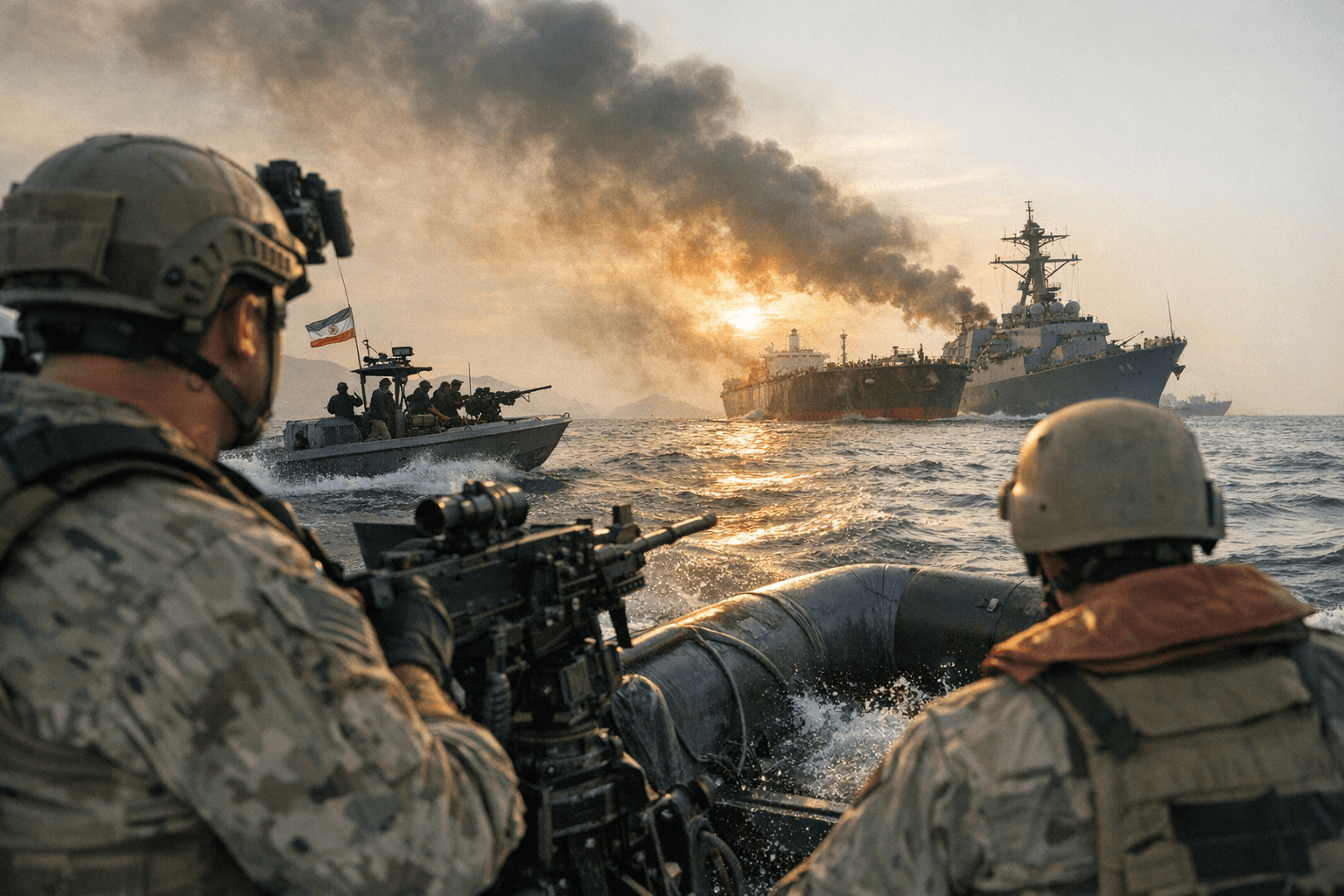
That sequence shows how fast a shipping crisis becomes a market crisis. A blockade does not need to be absolute to cause damage: delays, rerouting, insurance spikes, and fears of further escalation can tighten supply just as effectively as a formal closure. Even where alternate pipelines exist, the 3.5 million to 5.5 million barrels per day of possible rerouting capacity leaves a large portion of traffic exposed to disruption.
How Iran could answer, and why that would widen the war
A U.S. blockade would almost certainly be read in Tehran as more than a shipping measure. The most immediate Iranian response would be to challenge the credibility of the blockade itself, because that is where leverage lies. Any step that threatens commercial traffic in the strait, whether by mines, harassment, or attacks on the security envelope around tanker routes, would quickly force the United States to choose between backing off and escalating.
That is the danger built into the geography. The strait is too important to abandon, but too exposed to police cleanly without continuous military presence. Once naval escorts and mine-clearing operations start, any Iranian counter-move can pull the conflict outward, from the channel itself to the ports, coastal waters, and energy infrastructure that feed it.
The history of the passage makes that risk easier to see. The strait has been militarily contested before, including during the Tanker War in the 1980s, and historical coverage notes that Britain once used naval power to block Iranian oil tankers from passing through the strait. That precedent is a warning: when great powers turn Hormuz into a pressure point, the costs rarely stay confined to shipping.
Why the economic shock would travel far beyond the Gulf
The immediate casualties of a blockade would be markets that rely on speed and confidence. Reuters-based coverage and energy analysis have pointed to gasoline, diesel, fertilizer, helium, and broader supply chains as obvious pressure points, while Bloomberg and CNBC reported concern that prices would rise if the blockade tightened. That is because the strait is not just a regional artery, it is a global one, and every delay at the choke point transmits stress into tanks, ports, and factories across several continents.
The larger lesson is that a blockade around Hormuz would be both a military operation and an economic shock test. It would force U.S. planners to manage a narrow passage bordered by Iran and Oman, protect a trade route carrying around 20 million barrels a day, and respond to any Iranian retaliation that could widen the conflict in hours. In that setting, the real contest is not only over ships in the water, but over how much of the world economy can absorb the strain before the politics break first.
Sources:
Know something we missed? Have a correction or additional information?
Submit a Tip