Horus Heresy studio paints reveal Dark Mechanicum palettes and treacherous icons
Studio painters revealed Celestra Grey bases, Khorne/Mephiston accents, verdigris copper panels and oil-weathering recipes for Dark Mechanicum in a Horus Heresy studio feature.
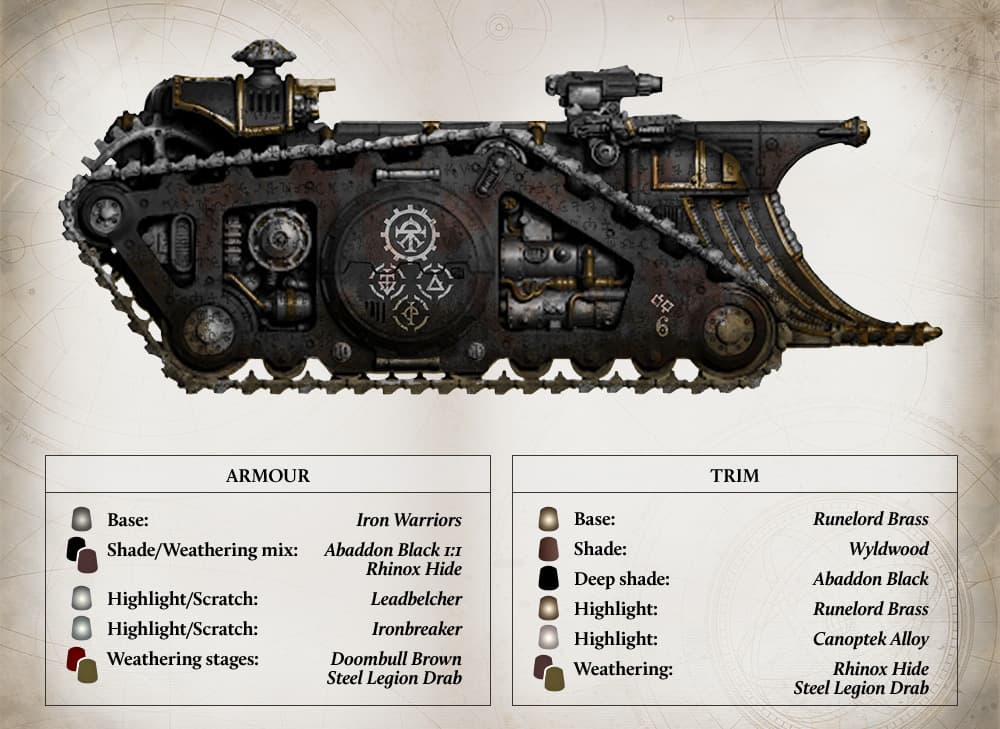
Studio painters handed tabletop painters a clear playbook for corrupted Mechanicum finishes in "Heraldry of the Dark Mechanicum - Part One," described in the feature as "a detailed, image-driven exploration of Dark Mechanicum colour schemes, icons, and paint ap". The piece, published on Warhammer Community on 24 February 2026, pairs concrete paint recipes with icon work that hobbyists can replicate on the new Legions Imperialis and Age of Darkness kits.
The editorial framing pushes a restrained, lore-first approach to Traitor colour. Frontline Gaming distilled that philosophy in its section "The Philosophy Behind Traitor Mechanicum Colours": "At their core, Mechanicum forces stick to reds, blacks, whites, and metallics. However, the Traitor Mechanicum pushes that palette into much darker territory. Instead of clean Martian red, these armies lean into blackened iron, corroded brass, and stained steel. Importantly, the studio stresses restraint. Even when experimenting, staying within a controlled range keeps the army visually cohesive and recognisably Mechanicum."
Studio painters then walk readers through specific recipes and techniques. Dom details a Loyalist-rooted variant tied to Forge World of Metalica: "My Mechanicum models represent Loyalist units originating from the Forge World of Metalica. I was inspired by the striking Adeptus Mechanicus colour scheme associated with that world, so I decided to try and create an Age of Darkness-era variant of that heraldry, a possible precursor to the later colours seen in the 41st Millennium. I used Celestra Grey as a base colour and a combination of Khorne Red and Mephiston Red on the weapons and markings. [...]"
Other studio voices show the Traitor end of the spectrum. Owen says: "I wanted to paint the miniatures to align with a Dark Mechcanicum force, and I had a lot of fun coming up with a new colour scheme for them. I stuck to black as the main colour—common across many Dark Mechcanicum Taghmatas—and created a verdigris copper look on several other panels. This gave the units a distressed, aged look that makes them feel positively ancient. [...]"
Practical step-by-step technique appears in Chris's Castellax breakdown. For his bolt cannon-armed Castellax he wrote: "The simplicity of a bolt cannon-armed Castellax really reflects the utilitarian nature that the Iron Warriors bring to warfare. I painted them using the same techniques as the rest of my army – undercoating with Leadbelcher, followed by a wash of Basillicanum Grey, and finished with a drybrush of Runefang Steel. Just a few hazard stripes at the end and these cats are ready to mow down a legion of Loyalist dogs!"
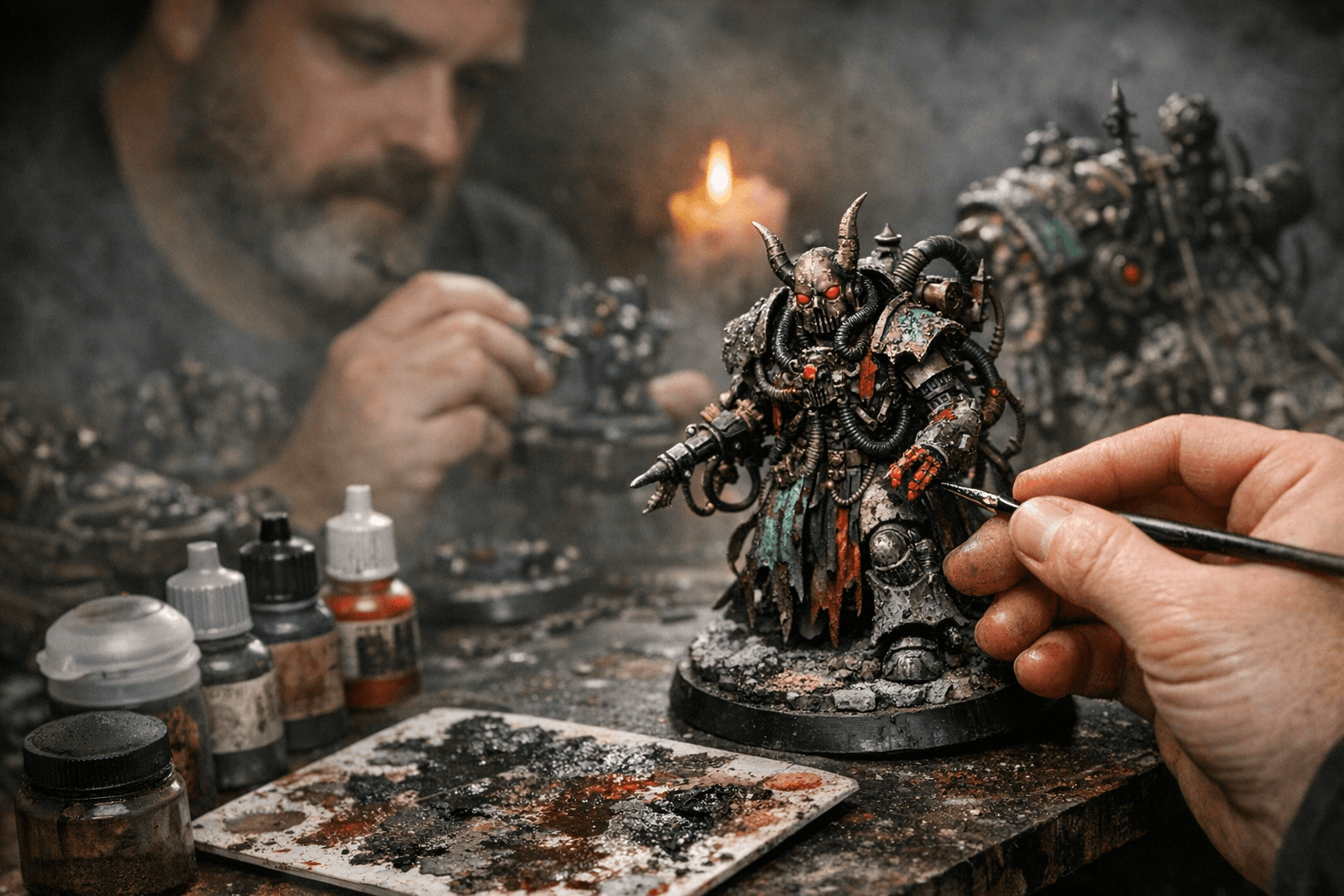
Luke closes the studio roster with a weathering-focused Traitor recipe: "I wanted to paint my Mechanium to fit in with my Traitor forces, so I chose black as their predominant colour. I based these in Corvus Black to give a dark but not fully black base, and then used oil paints to shade and weather some scratchy damage for highlights."
Frontline Gaming picks up the forward roadmap in "Chaos Dedication and the Road Ahead," noting that later Heresy engines become dedicated to Chaos powers and introduce "blues, greens, marble whites, and blood soaked blacks," often bearing a hybrid Chaos Mechanicum sigil. With Forge World specific heraldry teased as coming next, now is the practical moment to roster test paint choices and plan a heretical Mechanicum army that balances studio restraint with the darker materials and techniques the feature enumerates.
Know something we missed? Have a correction or additional information?
Submit a Tip