House GOP Recess Prolongs DHS Funding Lapse, Disrupting Airports and Border Operations
TSA absenteeism hit a shutdown high of 11.83% as House Republicans left for recess without voting on the Senate's bipartisan DHS funding bill.
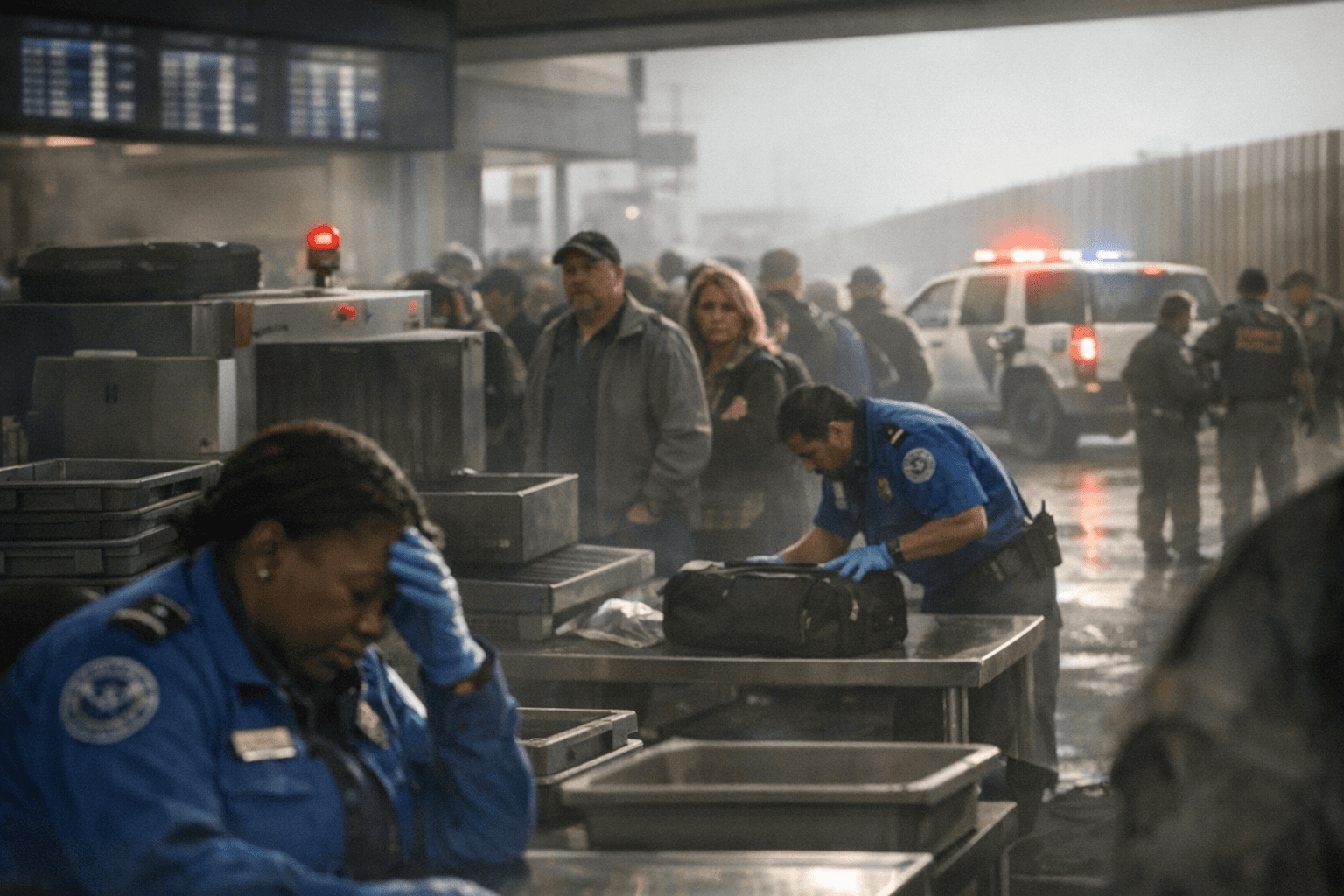
With the House of Representatives on scheduled recess and no vote on the horizon, a partial Department of Homeland Security funding lapse that began in February stretched into its seventh week as of April 6, straining airports from Houston to Atlanta and leaving tens of thousands of federal workers in pay limbo.
The Senate passed a bipartisan funding measure by unanimous consent on April 2, extending a previous attempt in late March to reopen most of the department. The bill funds the TSA, FEMA, the Coast Guard, and the Cybersecurity and Infrastructure Security Agency, but excludes Immigration and Customs Enforcement and significant portions of Customs and Border Protection, an omission that has made the legislation a nonstarter for House conservatives. Speaker Mike Johnson rejected the Senate's approach, and the House instead passed its own 60-day funding measure on March 27 by a vote of 213 to 203, a bill Senate Democrats immediately characterized as dead on arrival.
The operational toll has been measurable. TSA screener absenteeism peaked at 11.83 percent during the shutdown, translating to more than 3,450 personnel absent on a single day. The highest call-out rates were recorded at George Bush Intercontinental Airport in Houston, Hartsfield-Jackson Atlanta International Airport, and Baltimore/Washington International Thurgood Marshall Airport, three of the nation's busiest hubs during the spring travel season. President Trump signed an executive order directing DHS to pay TSA workers using unspent funds from a separate legislative vehicle, but lawmakers and union representatives argued that measure offered only temporary relief without resolving the underlying statutory gap.
House Democratic Leader Hakeem Jeffries publicly demanded that Johnson recall lawmakers from recess to address the impasse. "The first thing that needs to happen is that the House of Representatives under the leadership of Speaker Johnson and Republicans need to bring us back into session so we can actually reopen the Department of Homeland Security," Jeffries said in televised remarks. Senate Minority Leader Chuck Schumer separately characterized House-driven funding proposals as "dead on arrival" in the upper chamber.
The procedural deadlock turned substantially on the demands of the House Freedom Caucus, whose chair, Representative Andy Harris of Maryland, insisted any DHS funding bill must restore ICE and CBP appropriations and attach a federal voter identification requirement before his members would support it. That position effectively blocked acceptance of the Senate's more targeted package.
Senate Majority Leader John Thune and Johnson proposed a two-track solution in early April, pairing a near-term appropriations bill for most of DHS with a subsequent reconciliation measure to fund ICE and CBP under rules requiring only a simple majority. Whether that framework could produce a signed bill before the spring travel rush hits full stride remained unresolved as of April 6, with no floor vote scheduled and both chambers away from Washington.
This article was produced by Prism’s automated news system from verified source data, official records, and press releases, then run through automated quality and moderation checks before publishing. The system is built and supervised by the people who set the standards it runs under. Read our full AI policy.
Did this article answer your question?

