House Intel Chair Crawford Addresses Claims U.S. Forces Were Unprepared for Iranian Attack
Six U.S. service members killed in a March 1 drone strike at Port Shuaiba are at the center of a growing dispute over whether their unit was left defenseless.
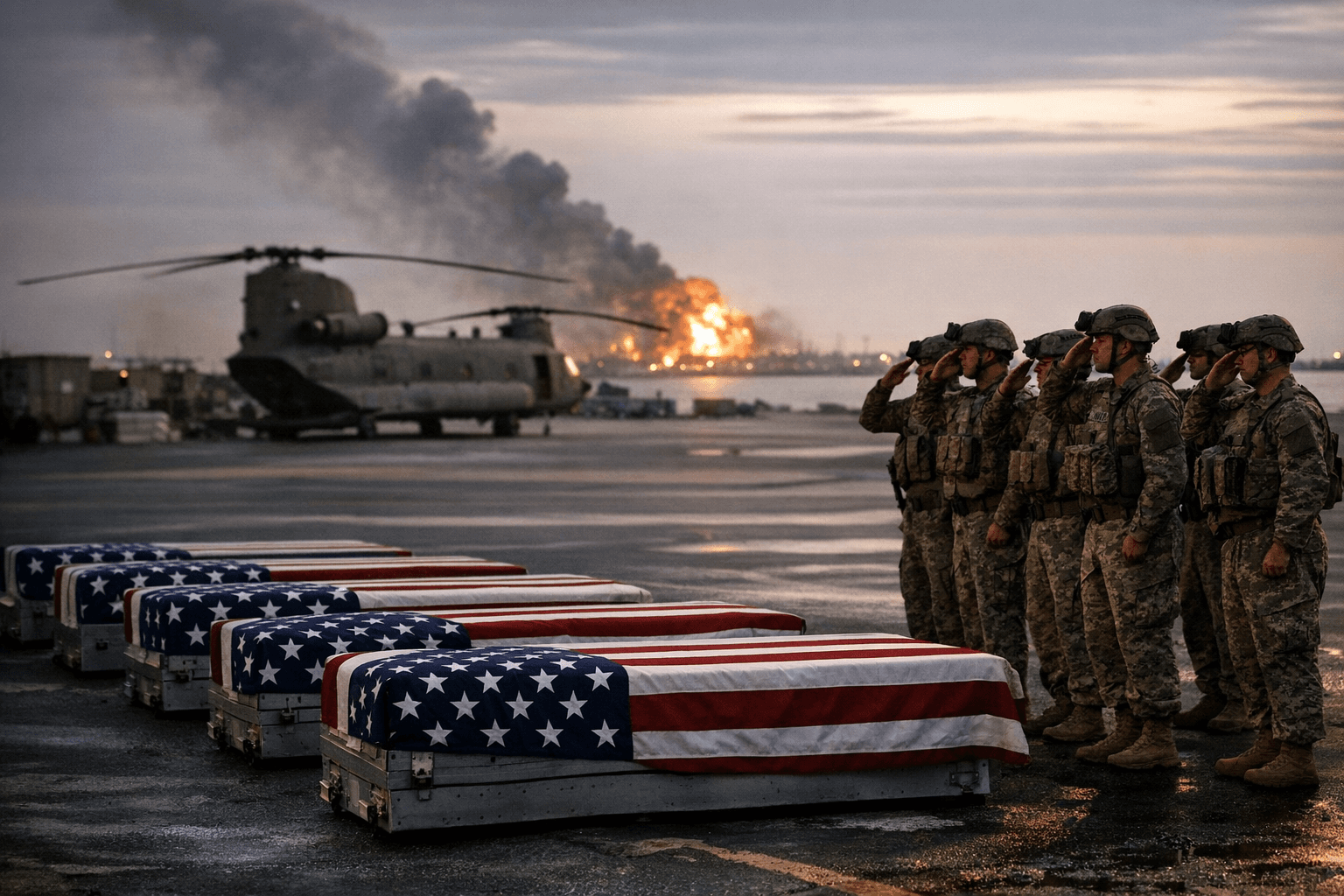
House Intelligence Committee Chairman Rick Crawford, an Army veteran from Arkansas, faced questions on CBS News' "The Takeout" about accounts from soldiers who survived the deadliest Iranian strike on U.S. forces since the war began, with survivors directly contradicting the Pentagon's version of what happened at a tactical operations center in Kuwait on March 1, 2026.
Six members of the Army's 103rd Sustainment Command were killed and more than 20 wounded when an Iranian Shahed drone struck their worksite at Port Shuaiba, south of Kuwait City. The blast injured more than 35 soldiers severely enough to require evacuation to medical facilities in the United States or Germany, and it has now produced a sharp and public dispute between those who survived it and the Pentagon officials who described it.
Defense Secretary Pete Hegseth characterized the strike at a March 2 press briefing as the work of a "squirter," suggesting a single drone had slipped through the defenses of a fortified position. Survivors, speaking publicly for the first time, called that account a deliberate distortion. "Painting a picture that 'one squeaked through' is a falsehood," one injured soldier said. "I want people to know the unit was unprepared to provide any defense for itself. It was not a fortified position."
The soldiers said they were protected by little more than a thin layer of vertical standing blast barricades that did not provide cover from above. "From a bunker standpoint, that's about as weak as one gets," one soldier said. When asked to describe the drone defense capability at the site, the same soldier was blunt: "I mean, I would put it in the 'none' category. From a drone defense capability… none."
In the hours before the attack, incoming missile alarms had signaled the crew of about 60 troops to take cover in a cement bunker while a ballistic missile flew overhead. Around 9:15 a.m., an all-clear alert sounded. Officers removed their helmets and returned to their desks in a wood and tin workspace about the width of three trailers. Approximately 30 minutes later, the Shahed drone detonated in the middle of their worksite.
The aftermath was harrowing. Survivors described "head wounds, heavy bleeding, lots of perforated eardrums, and then just shrapnel all over, so folks are bleeding from their abdomen, bleeding from arms, bleeding from legs." Witnesses told CBS News that soldiers administered aid to themselves, jerry-rigging bandages, braces and tourniquets, and commandeered civilian vehicles to transport the injured to the hospital.
One soldier, who like the others spoke on condition of anonymity because of rigid military media restrictions, said the post was on a known list of Iranian targets. "We moved closer to Iran, to a deeply unsafe area that was a known target," the soldier said. "I don't think there was a good reason ever articulated."
About one week before the launch of Operation Epic Fury, most American soldiers and airmen stationed in Kuwait had been relocated to positions in Jordan and Saudi Arabia, further from Iranian missile range. For several dozen members of the 103rd Sustainment Command at Port Shuaiba, however, there was a different set of orders. Their mission was to manage the flow of munitions, equipment, and personnel across the Middle East theater, a logistical function that kept them in place as the region moved toward open conflict.
Pentagon spokesman Sean Parnell pushed back in March, writing that "every possible measure has been taken to safeguard our troops, at every level."
The strike on the base killed six U.S. service members, making it the deadliest Iranian strike of the first five weeks of the joint U.S.-Israeli military campaign in Iran. In 40 days since the start of Operation Epic Fury, the conflict has left 13 U.S. service members killed and 381 others wounded, according to data from U.S. Central Command. Crawford's appearance on "The Takeout" brought those figures, and the growing gap between official accounts and soldier testimony, squarely into the congressional oversight arena.
This article was produced by Prism’s automated news system from verified source data, official records, and press releases, then run through automated quality and moderation checks before publishing. The system is built and supervised by the people who set the standards it runs under. Read our full AI policy.
Did this article answer your question?

