House Nears Vote on Aviation Safety Bill After Deadly Potomac Crash
The House is poised to vote on a safety bill born from the Potomac crash, but critics say Congress may still be moving too slowly.
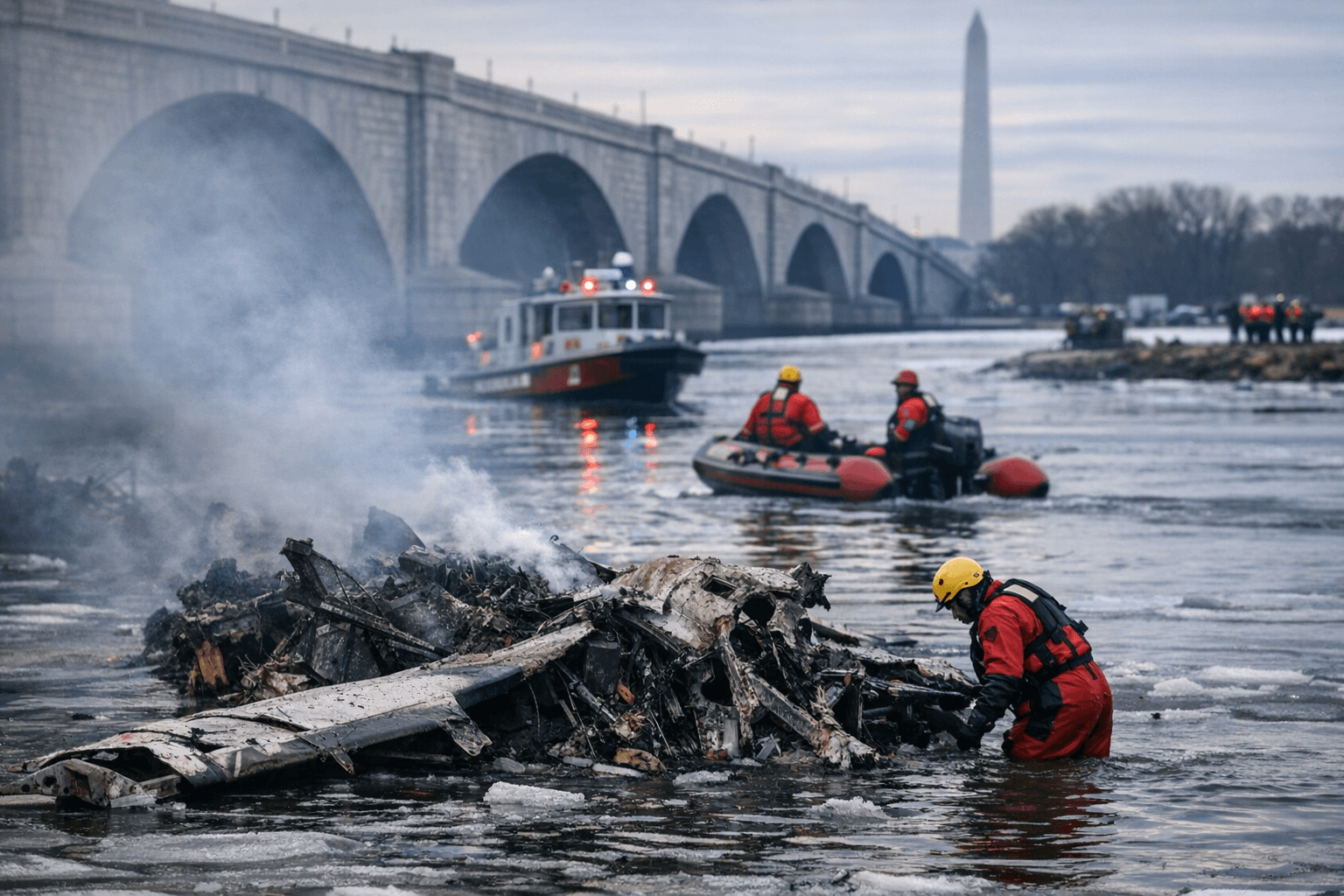
The House moved toward a decisive aviation safety vote on April 14, with lawmakers weighing whether the ALERT Act would deliver the kind of reform the Potomac River collision exposed, or only a belated response to 67 deaths near Ronald Reagan Washington National Airport. The January 29, 2025 crash involved an American Airlines regional jet operated by PSA Airlines and an Army Black Hawk helicopter, and the National Transportation Safety Board later said it revealed systemic failures in airspace design, safety oversight and risk management by the Federal Aviation Administration and the U.S. Army.
The NTSB’s final report, released January 28, 2026, said the collision occurred at 8:48 p.m. Eastern time about a half mile southeast of the airport, as the jet was on final approach to Runway 33 and the helicopter was moving through an FAA-designated corridor. The board said all 64 people aboard the jet and all three Army crewmembers died, and it called the disaster the nation’s deadliest aviation accident since November 2001. After the crash, the NTSB issued urgent recommendations on March 11, 2025 aimed at reducing helicopter traffic risks near Reagan National, including route design and separation changes.
House bill H.R. 7613, introduced February 20, 2026, is the chamber’s answer. Congress.gov says the ALERT Act would require certain aircraft to carry collision-mitigation technology and would also address helicopter route safety, air traffic control procedures, and Defense Department airspace safety. A House committee version says the measure was revised to incorporate controller training and the use of broadcast surveillance data such as ADS-B and TIS-B. The House Armed Services Committee said the bill was designed to address all 50 of the NTSB’s final recommendations.
Supporters say the House package tracks the safety board’s core warning more closely than an earlier Senate-backed bill, the ROTOR Act, which the House defeated on February 24 by one vote short of the two-thirds threshold required under the rule being used. Senate Commerce Committee Chairman Ted Cruz said the House missed the margin by a single vote. Senators Tammy Duckworth and Mark Warner criticized that outcome, noting the Senate had approved the ROTOR Act unanimously in 2025 and warning that delay could leave the airspace problem unresolved.
The House vote will come under rules that do not allow amendments, forcing lawmakers to accept the ALERT Act as written or reject it outright. It also needs two-thirds support to move on to the Senate, leaving the chamber with a narrow test: whether to convert the Potomac collision into durable safety reform, or keep debating after one of the worst aviation disasters in decades has already exposed how fragile the system was.
This article was produced by Prism’s automated news system from verified source data, official records, and press releases, then run through automated quality and moderation checks before publishing. The system is built and supervised by the people who set the standards it runs under. Read our full AI policy.
Did this article answer your question?

