House Speaker Johnson Urges Congress to Codify Trump's AI Framework Into Law
Speaker Mike Johnson told a room of Silicon Valley executives and lawmakers that Congress must codify Trump's AI framework into law, naming child safety and beating China as the top two imperatives.
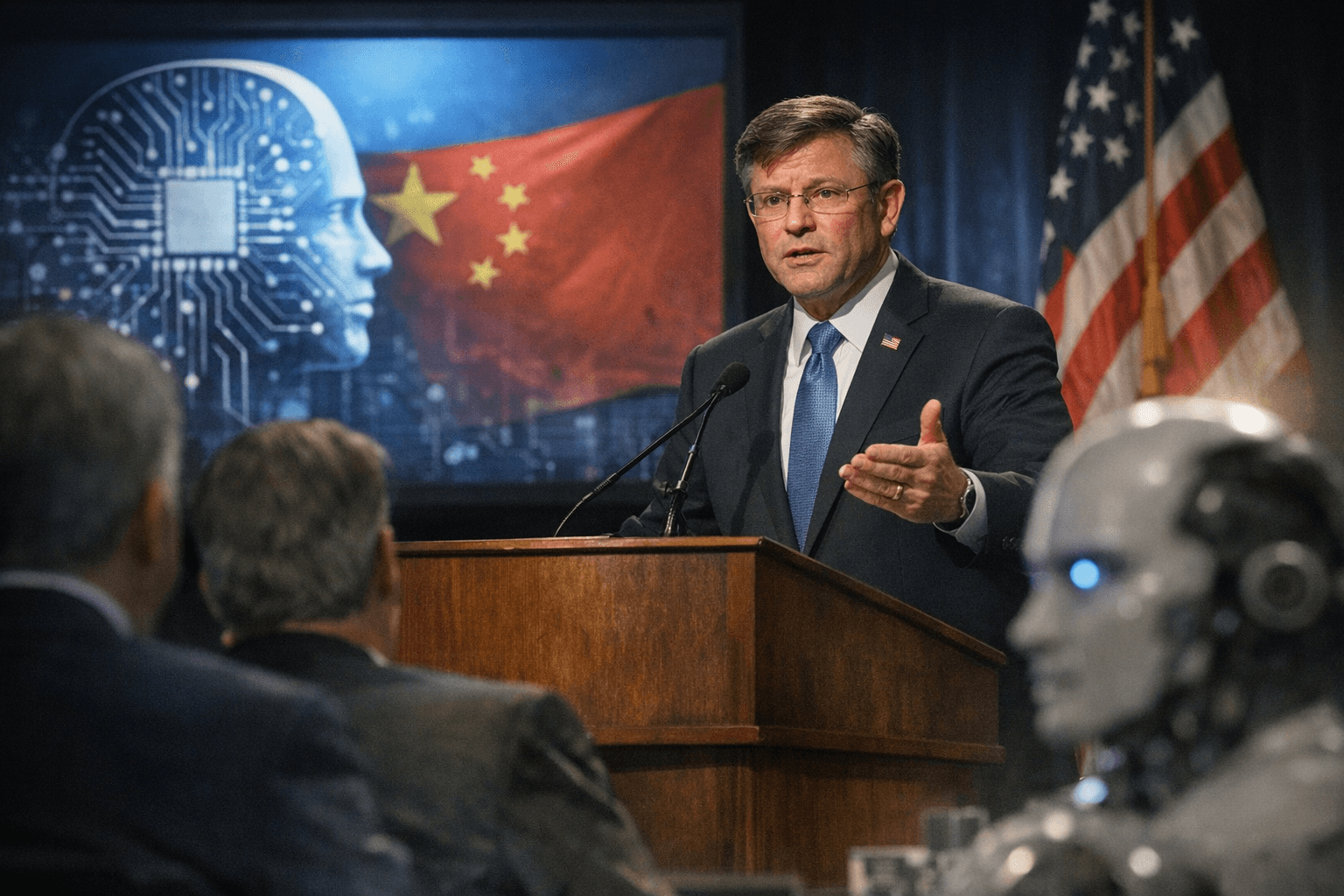
Speaker Mike Johnson stood before one of Washington's most influential gatherings of technology and government power on Tuesday and gave Congress a three-point mandate: pass a single national AI law, protect children online, and win the race against China before regulatory incoherence costs the United States its lead.
Johnson spoke at the Hill and Valley Forum, an annual bipartisan meeting of lawmakers and private sector leaders convened to shape American AI innovation. This year's forum drew a particularly high-profile audience, with newly announced speakers including J.P. Morgan CEO Jamie Dimon and other leaders from technology, investment, and public service. Executives from OpenAI, Alphabet and Google were also present for discussions on America's AI leadership and the strategic imperative of maintaining it against China's growing capabilities.
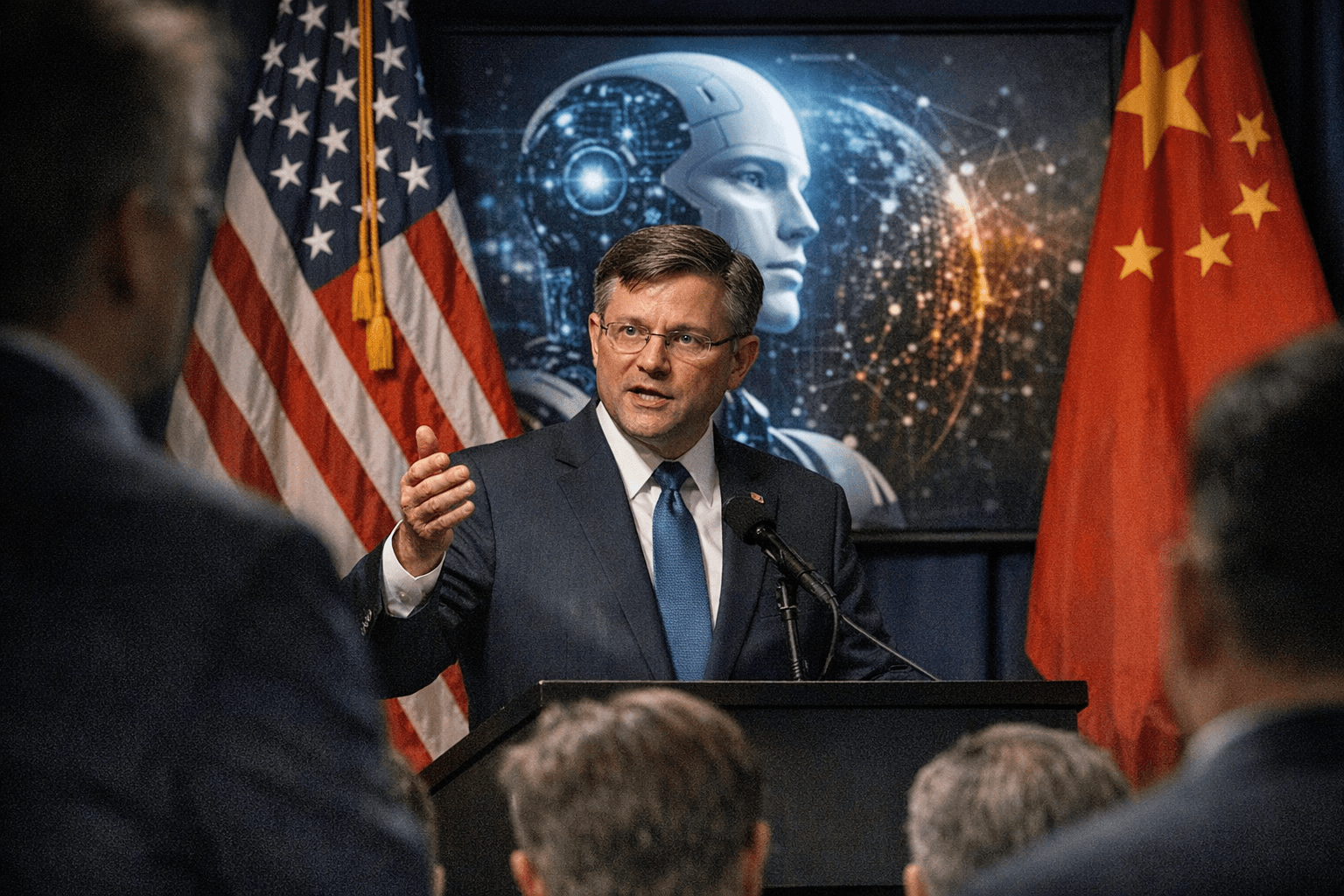
Johnson told attendees on Capitol Hill that Congress had "three things" it needed to accomplish, beginning with delivering "a single national framework that protects children, safeguards communities, supports creators, and avoids a patchwork of state regulations." He argued that "constant shifts in policy don't just confuse the market, they run contrary to our national interest."
The Speaker's remarks came just four days after the White House released the blueprint Johnson was now urging Congress to enshrine. The administration unveiled a comprehensive framework to regulate artificial intelligence at the federal level, outlining seven main priorities in a four-page proposal and urging lawmakers to approve a single national AI law that would limit state regulation. Specifically, the framework calls on Congress to overrule and preempt state AI laws that the White House believes would "impose undue burdens," instead fostering a "minimally burdensome" federal regulatory environment.
That preemption priority has already fallen short of legislative backing twice this Congress; it was removed from the GOP budget reconciliation bill last summer and never officially made it into the annual defense policy bill. The push to codify the framework now faces the same structural challenge: the proposal would need to be drafted as legislation by congressional lawmakers and passed by both chambers to affect any meaningful change.
The White House proposal would also urge Congress to codify Trump's ratepayer protection pledge, which would require tech firms to supply or pay for the electricity they use for data centers they operate. Amazon, OpenAI, and Google have already signed the pledge.
Johnson was not the only Republican leader to back the framework publicly. Majority Leader Steve Scalise, Energy and Commerce Committee Chairman Brett Guthrie, Judiciary Chairman Jim Jordan, and Science, Space and Technology Chairman Brian Babin all said they would work to enact Trump's AI framework. On the Senate side, Sen. Marsha Blackburn released a sweeping 300-page discussion draft of the "TRUMP AMERICA AI Act," which seeks to codify President Trump's executive orders on AI. Despite sharing priorities, the two documents disagree on copyright, developer liability, and Section 230.
A February YouGov poll found that 63 percent of Americans think AI will lead to fewer jobs, a figure that underscores the public health and economic anxiety surrounding the technology Congress is now racing to govern. The White House acknowledged that "some Americans feel uncertain about how this transformative technology will affect issues they care about, like their children's wellbeing or their monthly electricity bill," and argued that "strong federal leadership" is required to ensure public trust in how AI is developed and used in daily life.
Whether Johnson's three-point directive translates into a floor vote before those anxieties deepen is now the central question hanging over Capitol Hill's AI agenda.
This article was produced by Prism’s automated news system from verified source data, official records, and press releases, then run through automated quality and moderation checks before publishing. The system is built and supervised by the people who set the standards it runs under. Read our full AI policy.
Did this article answer your question?

