House tie defeats bid to block Trump from deploying troops to Venezuela
House fails to pass resolution barring Trump from sending troops to Venezuela after a 215–215 tie; narrow vote underscores GOP divisions and looming congressional scrutiny.
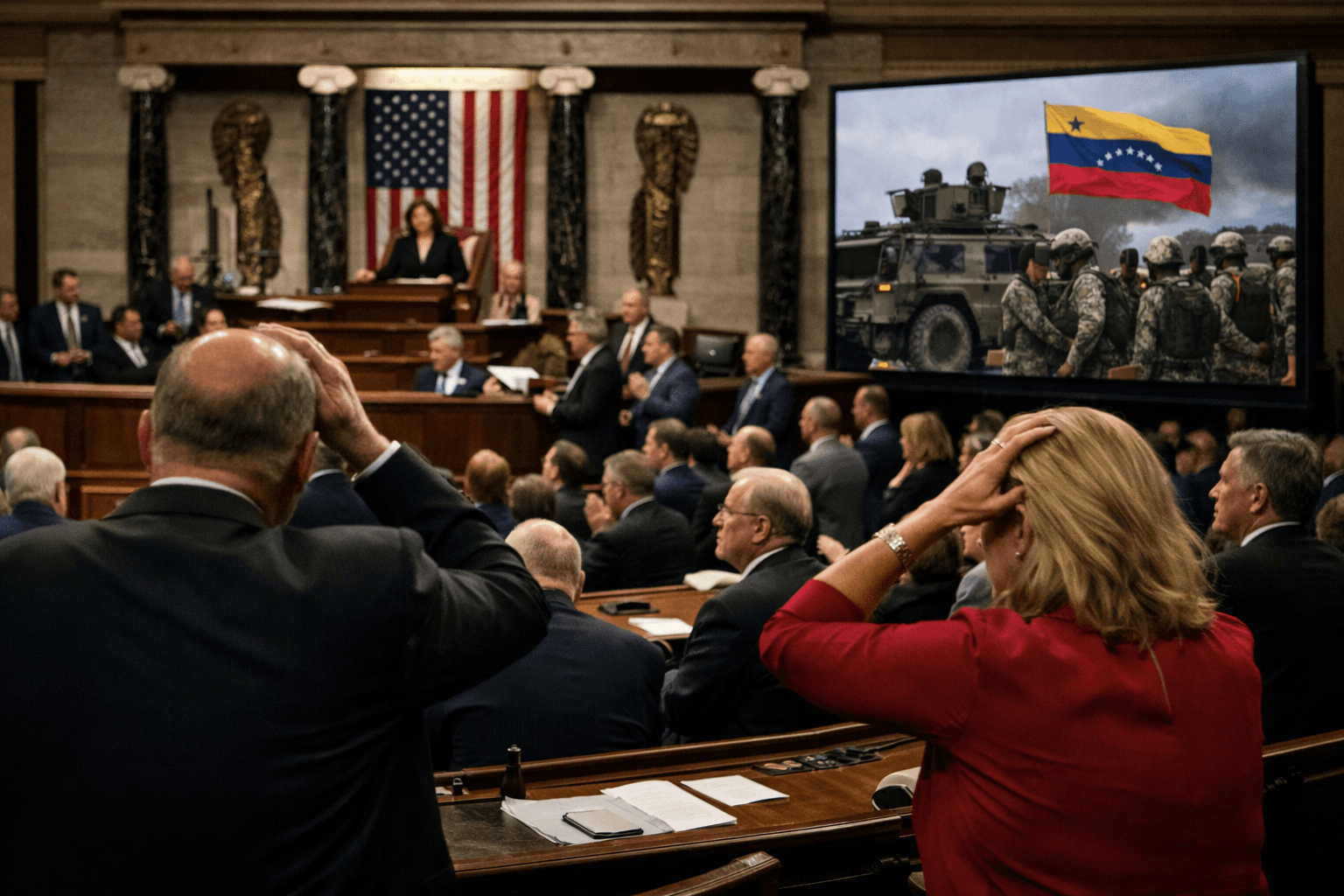
A 215–215 tie in the U.S. House of Representatives on Thursday defeated a Democratic-backed war powers resolution that would have barred President Donald Trump from sending U.S. military forces to Venezuela without explicit congressional authorization. The result left the measure short of the majority needed for passage and highlighted fractures within the Republican majority.
Republican leaders kept the roll call open for more than 20 minutes while Representative Wesley Hunt (R-Texas), who had been campaigning for a U.S. Senate seat outside Washington, rushed back to cast what party leaders described as the decisive vote. Two House Republicans, Rep. Don Bacon (Neb.) and Rep. Thomas Massie (Ky.), joined all House Democrats in supporting the resolution.
The measure would have directed the president to remove any U.S. forces from Venezuela and would have forbidden new deployments absent congressional approval. Democrats argued the step was necessary to reassert Congress’s constitutional role and to prevent an administration from taking unilateral military action in the Western Hemisphere.
“Donald Trump is reducing the United States to a regional bully with fewer allies and more enemies. This isn’t making America great again. It’s making us isolated and weak,” said Rep. Gregory Meeks, the top Democrat on the House Foreign Affairs Committee, during floor debate.
Republican leaders cast the effort as an attempt by Democrats to constrain the president’s flexibility on national security. The tied outcome underscored tensions for Speaker Mike Johnson, whose narrow control of the chamber has already invited intra-party fights over strategy and discipline.
The House vote followed a similar confrontation in the Senate the prior week, when a related war powers measure produced a tie until Vice President J.D. Vance cast the deciding vote. Last week’s vote hinged on last-minute discussions in which the administration persuaded two senators to withdraw earlier support for constraints on presidential action. Senators were told by administration officials that there were no U.S. boots on the ground in Venezuela and that the White House would seek congressional approval before major military operations.
Sen. Marco Rubio committed to a briefing next week before the Senate Foreign Relations Committee, according to sources, setting up further oversight after both chambers recorded razor-thin margins on measures designed to restrict military options in the region. The House episode comes amid broader controversy over administration posture toward Caracas, including reports of closed-door briefings earlier in January and public demonstrations tied to Venezuelan opposition activities and meetings between opposition figures and U.S. officials.
Beyond the immediate gridlock in Congress, the episode raises legal and diplomatic questions about the use of force and U.S. standing in Latin America. Lawmakers pressing for congressional authority framed the debate as one about the Constitution and about restoring trust with regional partners alarmed by talk of direct U.S. intervention. Critics warned that perceived unilateral action could further isolate the United States and complicate multilateral efforts to address Venezuela’s political and humanitarian crisis.
With sharp margins in both chambers and commitments to additional briefings and oversight, the conflict over war powers and Venezuela appears likely to return to Capitol Hill. Lawmakers and diplomats alike will be watching for clearer administration disclosures about any military plans and for how Congress chooses to reassert its role on matters of war and peace in the hemisphere.
This article was produced by Prism’s automated news system from verified source data, official records, and press releases, then run through automated quality and moderation checks before publishing. The system is built and supervised by the people who set the standards it runs under. Read our full AI policy.
Did this article answer your question?

