Housing Crisis Pushes Residents to City Outskirts as Tourists Take Prime Spots
Cape Town's Airbnb listings surged 190% since 2022 near the city centre, pricing out locals earning less than the cost of a single one-room flat.
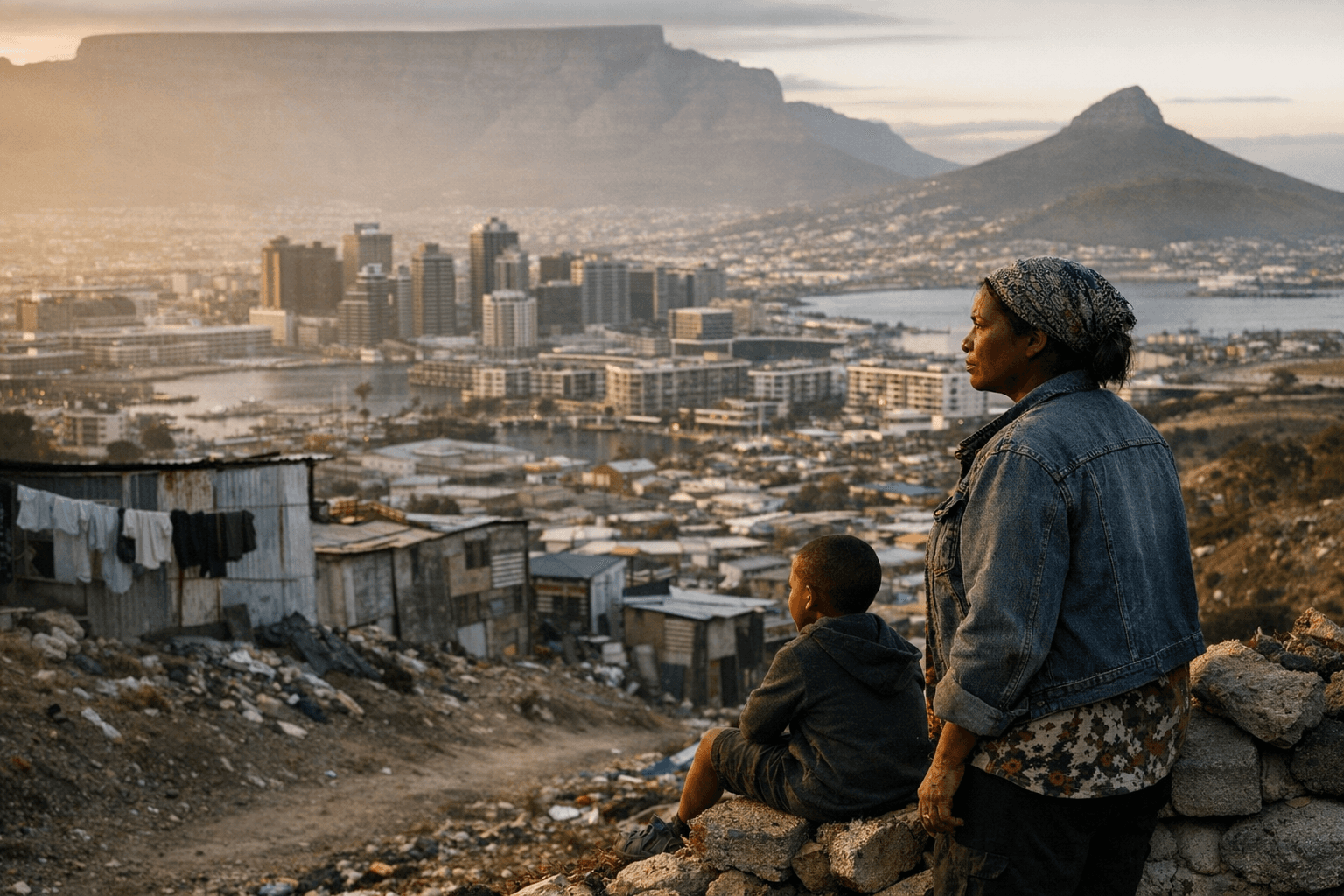
Cape Town's rise to the top of the world's most desirable city rankings has come with a brutal trade-off: the residents who built its working-class neighborhoods are steadily being forced out, replaced by tourists paying nightly rates that far exceed what most locals earn in a month.
Airbnb listings in touristy locations like the city centre and the Atlantic seafront increased by 190 percent since 2022, according to Jens Horber of the housing activism group Ndifuna Ukwazi. "Long-term rental units have been converted into tourist accommodation, removing units from the housing supply, raising rental costs and pushing out locals from neighborhoods where they can no longer afford to live," Horber said.
Cape Town has more short-term rental units than larger cities like Barcelona and Berlin, which see up to five times more visitors per year. In 2025 alone, the city welcomed approximately 3.3 million international travellers, according to Airports Company South Africa. Meanwhile, Airbnbs near the District Six Museum, the landmark commemorating apartheid-era forced removals, average around R1,500 a night.
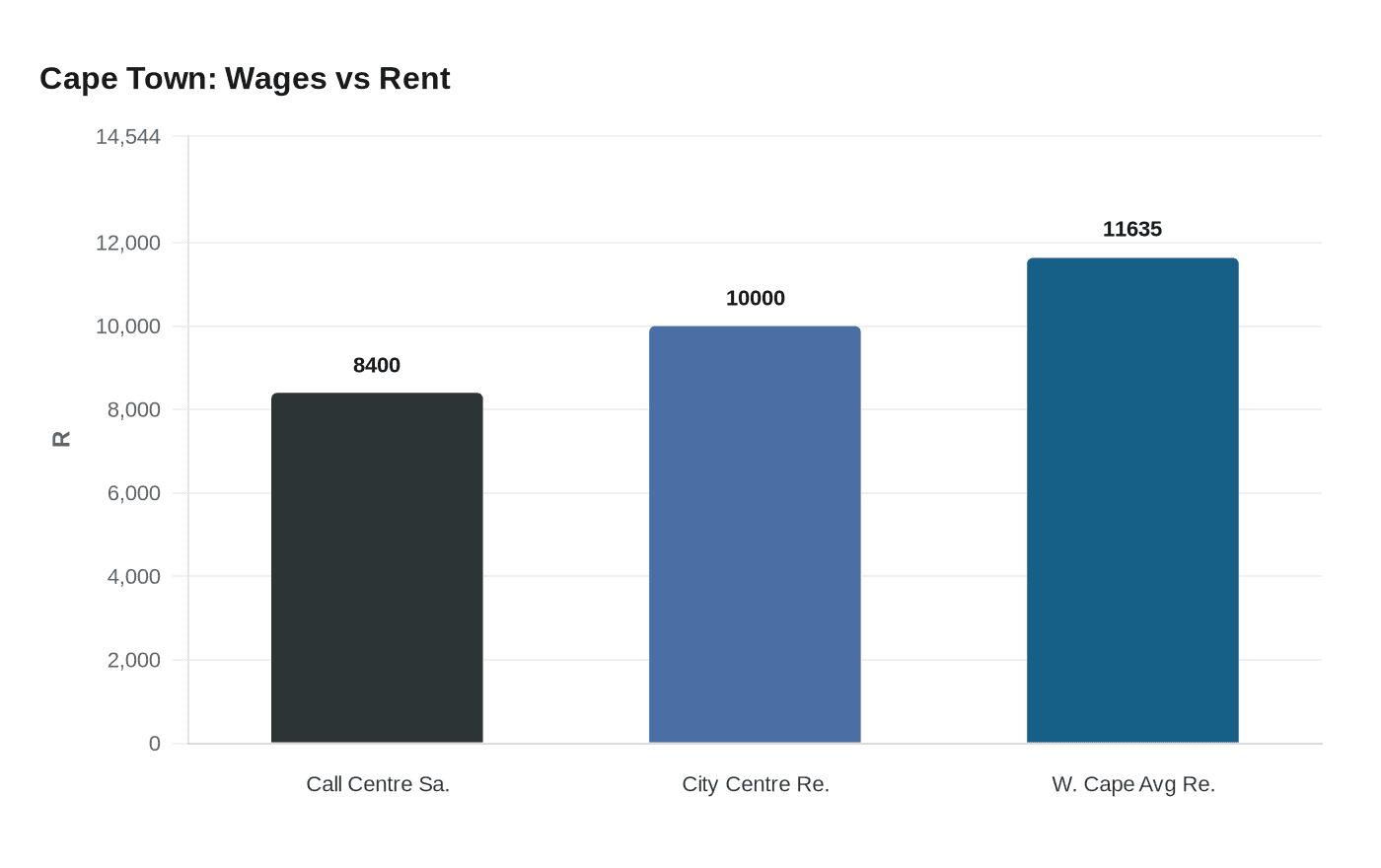
The gap between tourist spending power and local wages defines the crisis. Accommodation near the city centre starts at around R10,000 a month for a one-room flat. That figure is out of reach for Fundisa Loza, 46, whose monthly salary of R8,400 goes to her night-shift work at a call centre in the central business district, about a 20-minute walk from where she and her two daughters, aged 12 and 18, now live in an illegally occupied building. "My income doesn't allow me to pay Cape Town's exorbitant rent prices," Loza said.
According to the PayProp Rental Index for the third quarter of 2025, the average rental price in the Western Cape increased to R11,635. About 76 percent of Capetonians earn under R22,000 a month, making even average rental prices a precarious stretch for most households.
The historically working-class neighborhood of Woodstock, roughly five kilometers from the Victoria and Alfred Waterfront, has borne the worst of this pressure. Shalner Ching, 45, noted that younger generations once lived in houses inherited from their parents but have now rented or sold those properties, further thinning the available stock for long-term residents. In Bo-Kaap, homes that once housed generations of the same families are increasingly sold to foreign investors or converted into short-term rentals. Younger residents are finding it even harder to remain in the neighborhood their families have called home for decades, in some cases for centuries.
Sheikh Dawood Terblanche, chair of the Bo-Kaap Civic and Ratepayers Association, said that "rising property prices and short-term rentals are displacing long-term residents, including the elderly."
The response from city government has drawn sharp criticism. The government provides housing on the outskirts of the city, far from jobs, services, and opportunities, a pattern that critics argue deepens spatial apartheid rather than solving the underlying crisis. A Constitutional Court ruling in early 2025 underscored this tension, with the court emphasizing that locality matters and that access to the city cannot be ignored when residents are displaced from economic hubs.
Over 3,000 people signed a petition on Change.org arguing that the rise of digital nomads has driven a gentrification of the city which is "akin to modern-day colonisation." Cities including Amsterdam, Barcelona, and New York have responded to similar pressures by imposing stricter short-term rental rules, including caps on annual rental days. Cape Town has yet to follow suit, leaving the city's most vulnerable residents to absorb the cost of its global popularity.
This article was produced by Prism’s automated news system from verified source data, official records, and press releases, then run through automated quality and moderation checks before publishing. The system is built and supervised by the people who set the standards it runs under. Read our full AI policy.
Did this article answer your question?


