Houston launches first downtown MLK Unity Parade as groups unite
Houston held its first MLK Unity Parade downtown today as two longtime parade groups joined the city, bringing street closures and celebration to the area. The partnership reshapes civic choreography and affects downtown travel for residents.
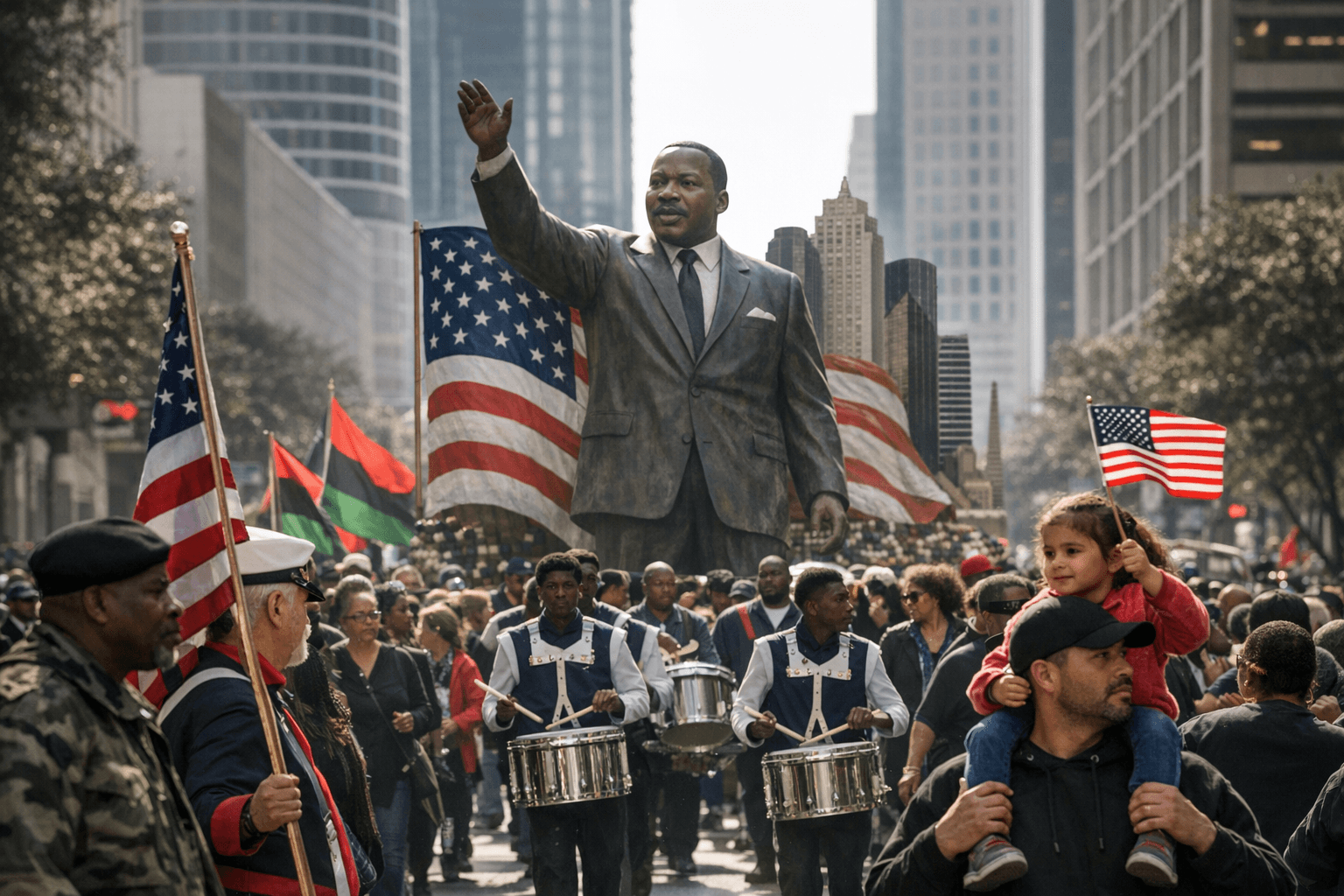
Houston staged the Martin Luther King Jr. Unity Parade downtown today as the city teamed with two longtime parade organizations to present a single event honoring King’s legacy. The Black Heritage Society and the MLK Grande Parade, which for roughly three decades ran separate processions, combined efforts with city agencies to produce the inaugural unity parade, which began at 10 a.m.
The route started at Smith Street and McKinney Street and included marching bands, floats, dance troupes and other community groups. Grand marshals for the event included Mayor John Whitmire, broadcaster Madd Hatta and community leader Charles Stamps. Organizers implemented staged street closures on Smith Street curb lanes, McKinney Street, Walker Street and portions of Lamar at various times between early morning and midafternoon to accommodate the parade and related activity.
The consolidation of two parallel annual events has immediate practical effects for downtown residents and businesses. Commuters and delivery drivers needed to reroute around downtown during closure windows; residents along the route faced periods of restricted vehicular access while pedestrian traffic and festival activity increased. For retailers and restaurants near the corridor, the parade brought additional foot traffic for several hours, even as morning supply runs and scheduled appointments required last-minute adjustments.
From a municipal planning perspective, the unity parade represents a potential efficiency gain. Running a single, larger event instead of two separate parades reduces duplicated demands on police, street crews and permitting processes. That can lower logistical complexity and may free city resources for other services on future holiday weekends. The partnership also amplifies a symbolic civic message: combining traditions that operated separately for about 30 years reflects a trend toward consolidated community events and coordinated public engagement.
Policy implications are practical as well as cultural. Coordinated planning between nonprofit parade groups and city departments requires detailed traffic management, public safety staffing and sanitation scheduling. Those operational choices affect downtown mobility and the timing of public transit and commercial activity for the day. Officials will likely evaluate traffic patterns and economic activity from today’s event to determine whether the unity model should become the standard going forward.
For Harris County residents, the immediate takeaway is to expect downtown closures and plan travel accordingly when city events are announced. Longer term, the unified parade could mean fewer overlapping celebrations, more concentrated civic visibility for Martin Luther King Jr. commemorations and streamlined use of municipal resources in years ahead.
Sources:
Know something we missed? Have a correction or additional information?
Submit a Tip