Houthi Rebels Join Iran-Israel War, Launching Missiles Toward Israel
Yemen's Houthi rebels entered the Iran-Israel war Saturday, firing ballistic missiles toward Israel and threatening the strait that carries 12% of global trade.
Maersk, the Danish shipping giant widely regarded as a barometer of global trade, had already stopped sending vessels through the Bab el-Mandeb Strait. Then Yemen's Houthi rebels made the company's caution look prescient.
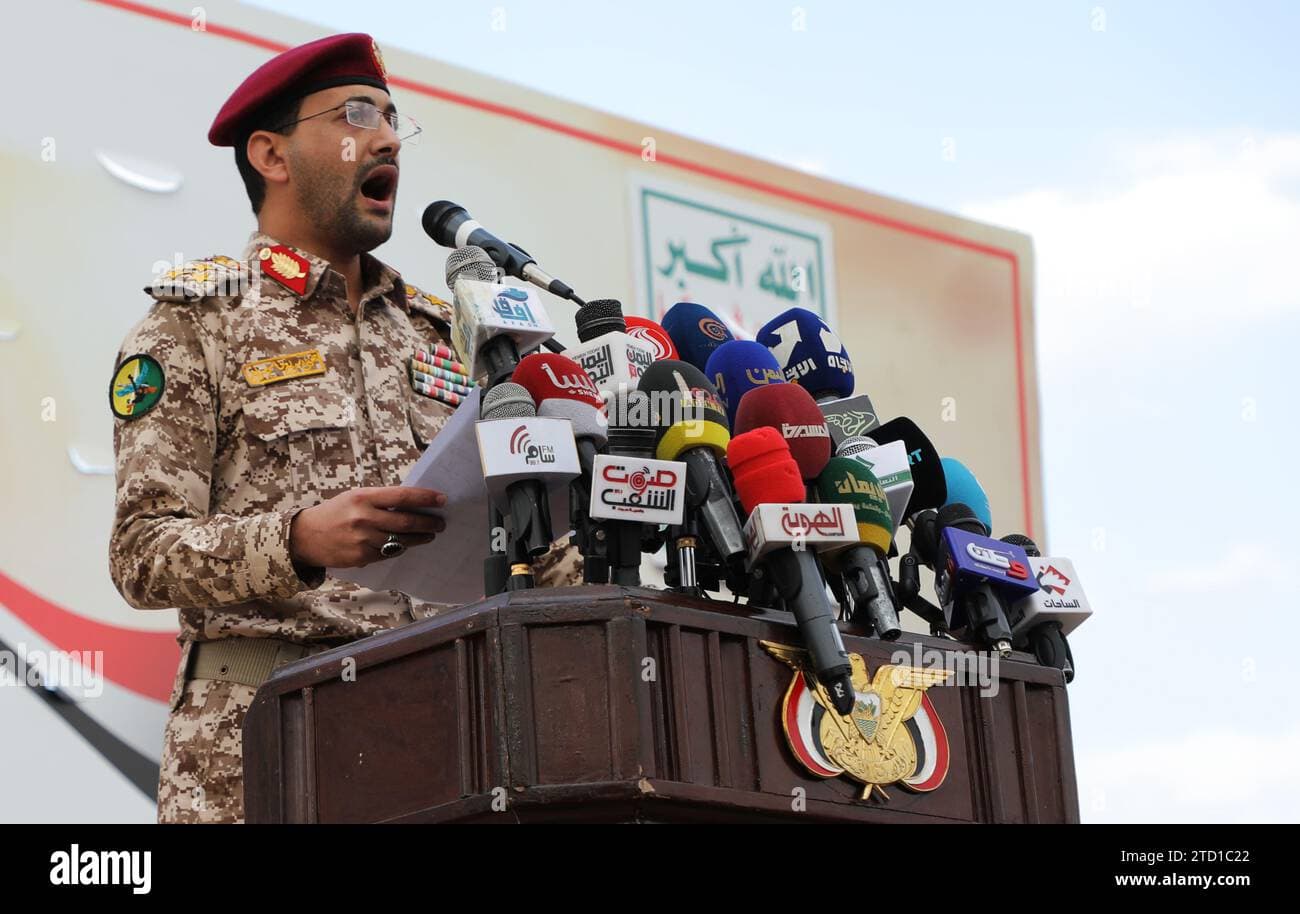
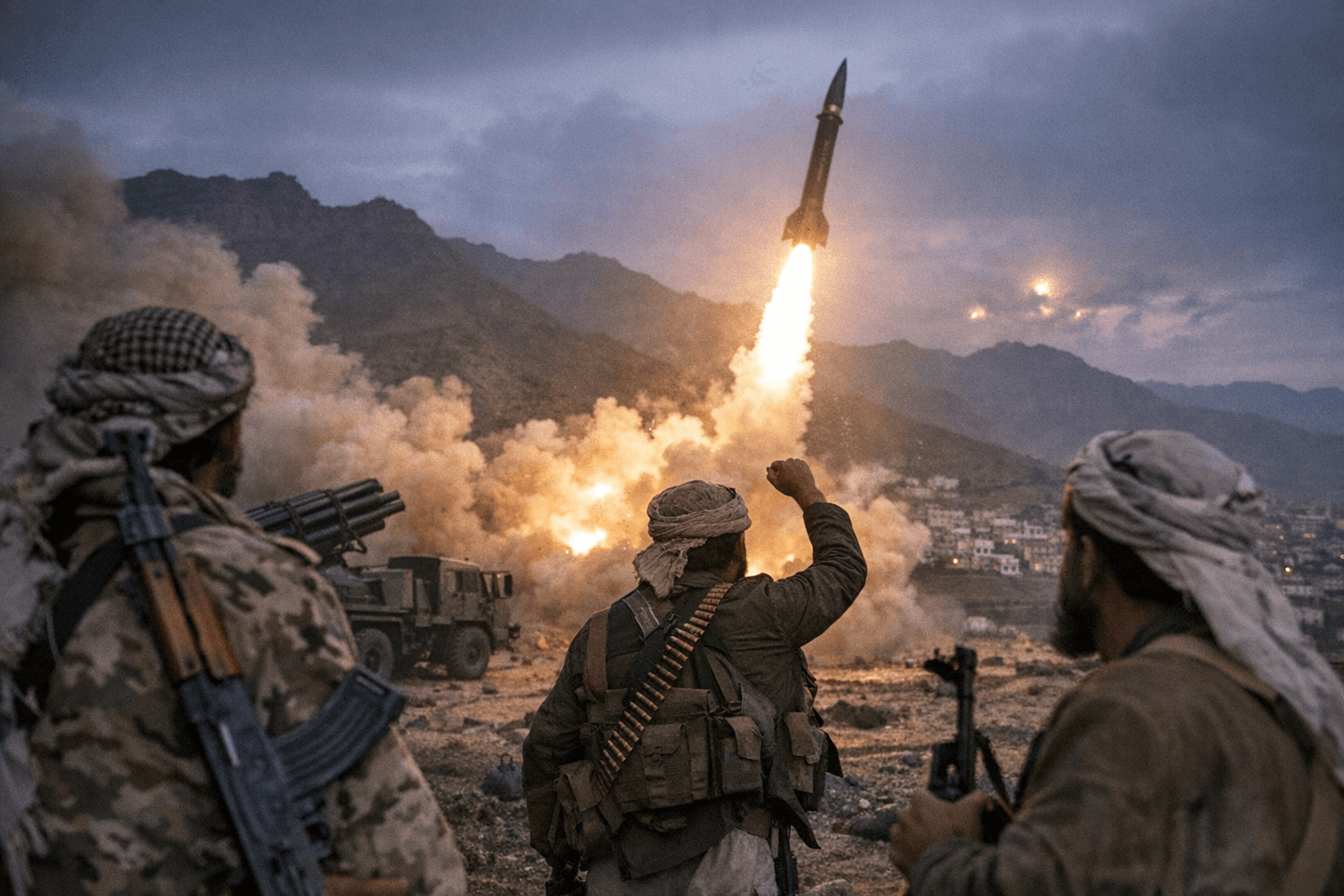
Houthi military spokesman Brig. Gen. Yahya Saree announced in a prerecorded statement aired on the group's Al-Masirah satellite television that its forces had launched ballistic missiles toward Israel, marking the first time the Tehran-backed militia entered the monthlong U.S.-Israeli war against Iran directly. "The Yemeni Armed Forces ... have carried out the first military operation using a barrage of ballistic missiles targeting sensitive Israeli military sites," Saree said in a post on X. Israel's military said it identified a missile launched from Yemen and that its aerial defenses intercepted the threat.
The entry of the Houthis brought immediate focus back to the Bab el-Mandeb Strait, the narrow chokepoint separating the Arabian Peninsula from the Horn of Africa through which about 12% of the world's trade typically passes. Maersk had already paused future trans-Suez sailings through the strait until further notice earlier in March, citing the Middle East situation. Analysts told CNBC that the Houthis could attempt to choke off that maritime traffic entirely, adding a new layer of pressure on supply chains already strained by the war.
The group has done it before. Between November 2023 and January 2025, the Houthis attacked more than 100 merchant vessels with missiles and drones, sinking two, in what they described as a solidarity campaign with Palestinians in Gaza. That campaign forced shipping companies to reroute around Africa's Cape of Good Hope, adding weeks and thousands of dollars per voyage, and sent insurance premiums surging.
This time, the broader conflict has multiplied the pressure points. The Iran-Israel war has threatened global supplies of oil, natural gas and fertilizer and disrupted air travel. Iran's grip on the strategic Strait of Hormuz has shaken markets and prices across the region. More than 3,000 people have been killed since fighting escalated following U.S. and Israeli airstrikes against Iranian targets on Feb. 28. The United States and Israel continue to strike Iran, whose retaliatory attacks have targeted Israel and neighboring Gulf Arab states.
American military exposure is growing on multiple fronts. About 2,500 U.S. Marines arrived in the region Saturday. At least 10 U.S. service members were injured in a separate Iranian attack on an air base in Saudi Arabia, according to a U.S. official. And the USS Gerald R. Ford, the nuclear-powered aircraft carrier, arrived in Croatia on Saturday for repairs, complicating any plans for a Red Sea deployment. The history is instructive: the USS Dwight D. Eisenhower was attacked in the Red Sea in 2024, and the USS Harry S. Truman came under attack there in 2025.
Pakistan said regional powers planned to meet Sunday to discuss how to end the fighting. Iran expressed skepticism about those diplomatic efforts. Saree said the Houthi strikes were timed to coincide with attacks by Iran and Hezbollah, though he declined to identify which specific sites in southern Israel were targeted.
The Houthis have controlled Yemen's capital, Sanaa, since 2014. Saudi Arabia launched a war against them the following year on behalf of Yemen's exiled government; that conflict has since settled into an uneasy ceasefire. With ballistic missiles now capable of reaching Israel and a strategic chokepoint under their shadow, the group's return to a regional war carries consequences measured not just in military engagements but in the price of goods moving through one of the world's busiest maritime corridors.
This article was produced by Prism’s automated news system from verified source data, official records, and press releases, then run through automated quality and moderation checks before publishing. The system is built and supervised by the people who set the standards it runs under. Read our full AI policy.
Did this article answer your question?


