Houthis declare ban on Israeli ships in Red Sea amid Iran war
A Houthi ban on Israeli ships could slow Red Sea trade, reroute cargo around Africa and deepen pressure on Gulf energy flows already strained by war.
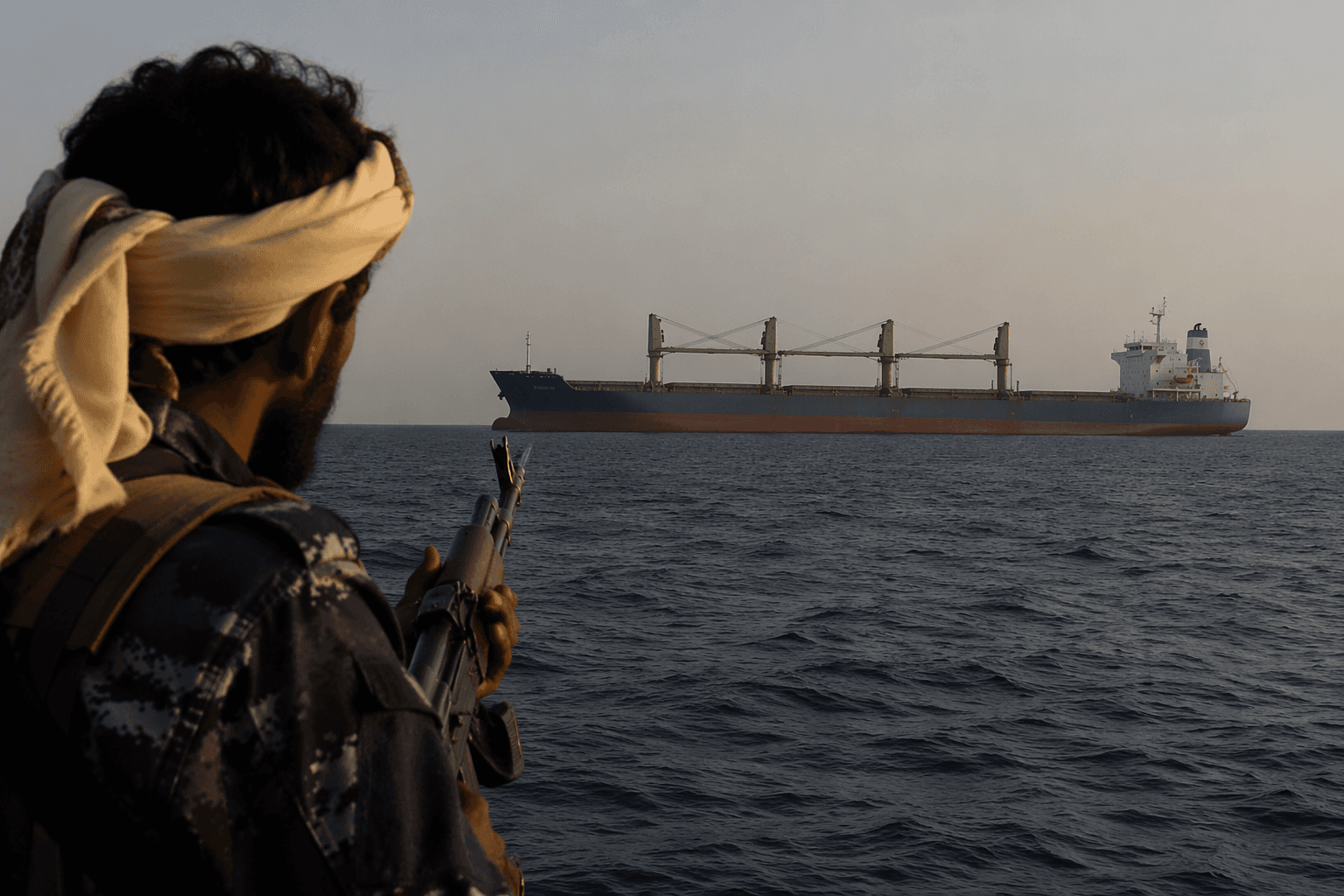
A Houthi ban on Israeli shipping in the Red Sea threatens to turn one of the world’s most important trade lanes into another cost center for carriers, with longer routes around southern Africa, slower deliveries and more pressure on energy flows already strained by war. The move also raises the stakes for U.S. allies around the Gulf, where Red Sea routes have become a relief valve for crude exports bypassing the Strait of Hormuz.
On Monday, June 8, the Iran-aligned Houthis said they would impose a “complete and total ban” on Israeli maritime navigation in the Red Sea after launching an attack on Israel. A Houthi source told Reuters the step was “a first step” and said escalation could lead the group to stop any ships heading to Israel. Earlier in the day, the Houthis fired rockets at central Israel, and they warned that Israeli-related movements in the waterway would be treated as legitimate military targets.
The economic risk is immediate because the Red Sea links Europe and Asia through the Suez Canal. During the Israel-Hamas war, Houthi attacks forced major carriers including Maersk and Hapag-Lloyd to divert around Africa, a longer and more expensive passage that pushed up costs and delivery times. A sustained threat could again drive cargo around southern Africa, squeezing supply chains from consumer goods to industrial inputs and reviving the disruption that had already rippled through global shipping.
The energy picture is equally volatile. Reuters said Iran’s closure of the Strait of Hormuz since the Feb. 28 attacks by Israel and the United States had already disrupted most oil and other energy exports from the Gulf, while Saudi Arabia has diverted more than 70% of its normal daily crude exports to the Red Sea port of Yanbu. The United Arab Emirates has also moved some crude through Fujairah outside Hormuz, showing how quickly Gulf producers have been forced onto narrower, more exposed routes.
Taken together, the move looks like both a symbolic escalation in the Iran war and a materially consequential threat to shipping. The Houthis, who control much of Yemen, have signaled that the ban could widen if the conflict escalates, which means the Red Sea is once again being used as leverage against Israel and its allies at the same time that the wider Middle East is trying to keep trade and energy flows moving.
This article was produced by Prism’s automated news system from verified source data, official records, and press releases, then run through automated quality and moderation checks before publishing. The system is built and supervised by the people who set the standards it runs under. Read our full AI policy.
Know something we missed? Have a correction or additional information?
Submit a Tip