Houthis Launch Second Attack on Israel in 24 Hours, Vow More Strikes
Debris from intercepted Houthi missiles lightly wounded 11 people near Jerusalem as Yemen's militant group vowed strikes "until the criminal enemy ceases its attacks and aggression."
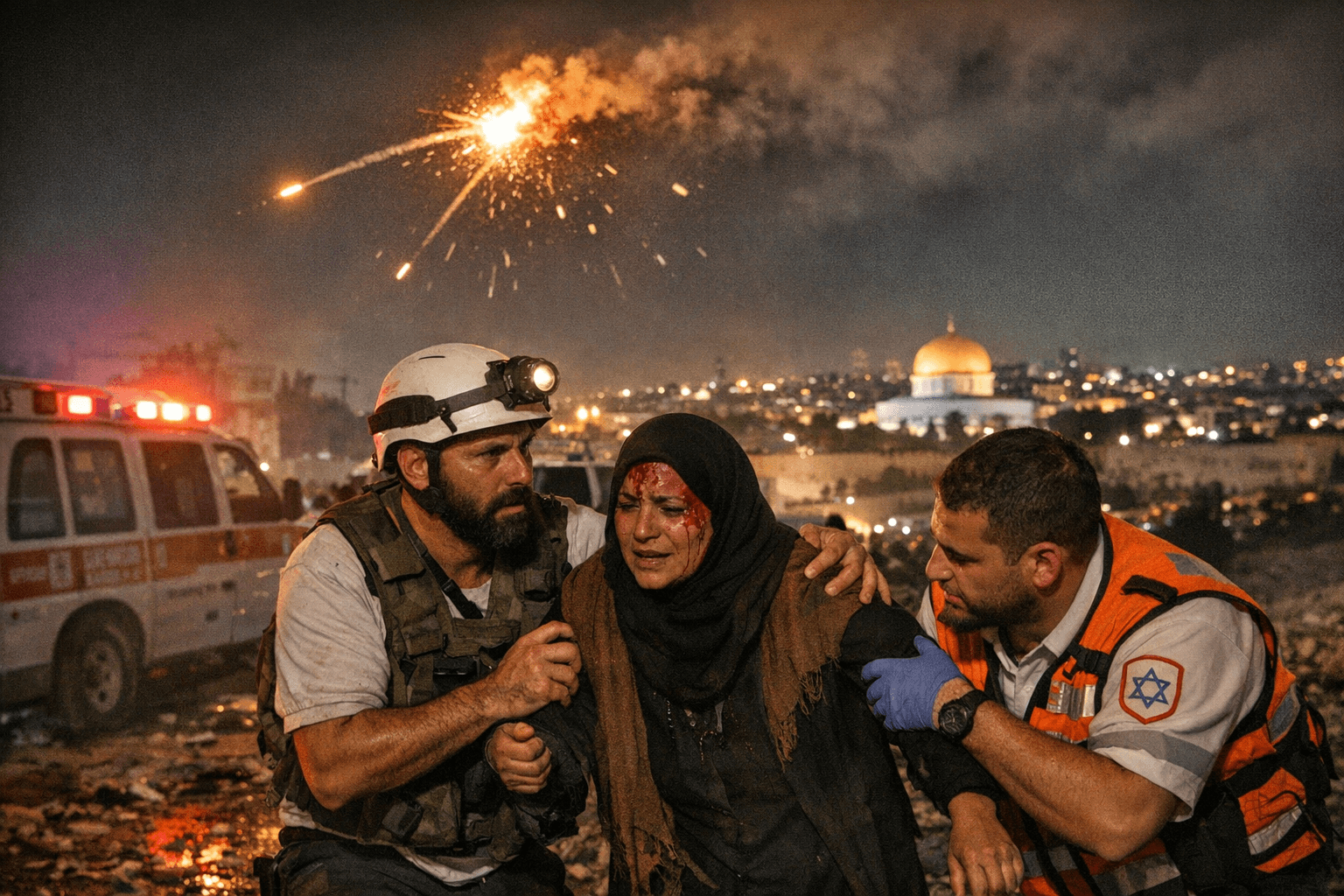
Eleven people were being treated for light wounds in Eshtaol, a town near Jerusalem, even as an Israeli security official said both Houthi missiles fired that day had been intercepted without causing harm. The gap between those two statements captured the compressed and chaotic nature of March 28: Yemen's Iran-aligned Houthi movement struck Israel for a second time in less than 24 hours, and its military spokesperson, Yahya Saree, was already on television promising more.
In a televised speech also posted to his Telegram account, Saree confirmed the group had launched "a barrage of cruise missiles and drones" targeting "several vital military sites" belonging to Israel. He said the strikes "successfully achieved its objectives," that they "coincided" with military operations conducted by Iran and Hezbollah, and that further attacks would come "in the coming days until the criminal enemy ceases its attacks and aggression."
Israel confirmed it had intercepted a missile coming from Yemen. The Israeli security official said both missiles were stopped and "no injuries or damage was caused." But Israel's national emergency service Magen David Adom separately confirmed that falling debris from one of those interceptions lightly wounded 11 people and damaged several buildings in Eshtaol, with some injured from the force of the explosion and others hurt while running to shelters. The two accounts were not formally reconciled by Israeli authorities.
The reach of the launches was visible well beyond the impact zone: missile traces appeared in the sky above Hebron in the occupied West Bank. The Houthis had previously demonstrated they could operate far from Yemen's borders, attacking commercial vessels in the Red Sea in support of Hamas after October 7, 2023, significantly disrupting maritime routes around the Arabian Peninsula. Their return to offensive operations against Israel, now constituting entry into the broader Iran-Israel war, raises the prospect of renewed chokepoints along the Bab el-Mandeb Strait, through which ships must pass to reach the Red Sea and Suez Canal.
The wider regional picture shifted sharply on Saturday. The USS Tripoli, an American amphibious assault ship carrying 3,500 sailors and Marines, arrived in the Middle East, US Central Command confirmed, as the Pentagon weighed its next steps. Iran agreed to allow 20 Pakistani ships to pass through the Strait of Hormuz; Pakistan's Foreign Minister Ishaq Dar said his country has been acting as a mediator in negotiations between Tehran and Washington.
The toll from parallel fronts in the conflict continued to mount. Israeli air strikes in Lebanon have killed more than 1,100 civilians, including 120 children. The Israeli military also struck a media car in the southern Lebanese town of Jezzine, killing three journalists: Ali Shoeib of Al Manar TV, and Fatima and Mohamed Fetoni of Al Mayadin. A drone separately struck fuel tanks at Kuwait International Airport, triggering a massive blaze, while geolocated footage confirmed damage to an engineering university in Tehran.
With Saree's vow already logged and a second launch executed within 24 hours of the first, the structure of what the Houthis are promising is a sustained campaign, not a symbolic one-off.
This article was produced by Prism’s automated news system from verified source data, official records, and press releases, then run through automated quality and moderation checks before publishing. The system is built and supervised by the people who set the standards it runs under. Read our full AI policy.
Did this article answer your question?


