How Buckley v. Valeo reshaped campaign finance after Watergate
Watergate triggered strict new limits on money in politics, but Buckley v. Valeo turned spending into protected speech and set the template for billionaire influence.
The reform response to Watergate
Watergate left Congress with a blunt political lesson: corruption was no longer an abstraction, and money had to be pulled back from the center of federal elections. The Federal Election Campaign Act Amendments of 1974 were Congress’s answer, and they moved aggressively. They capped individual contributions to a single candidate at $1,000 per election, limited political committees to $5,000, set an annual $25,000 aggregate contribution cap for individuals, and imposed spending ceilings of $10 million for presidential primaries and $20 million for the general election.
Congress also created the Federal Election Commission in 1975 to administer and enforce those rules. In theory, the new regime was meant to restore public trust by limiting both how much donors could give and how much campaigns could spend. In practice, the reforms immediately triggered a constitutional fight that would define campaign finance for decades.
Buckley v. Valeo and the constitutional turn
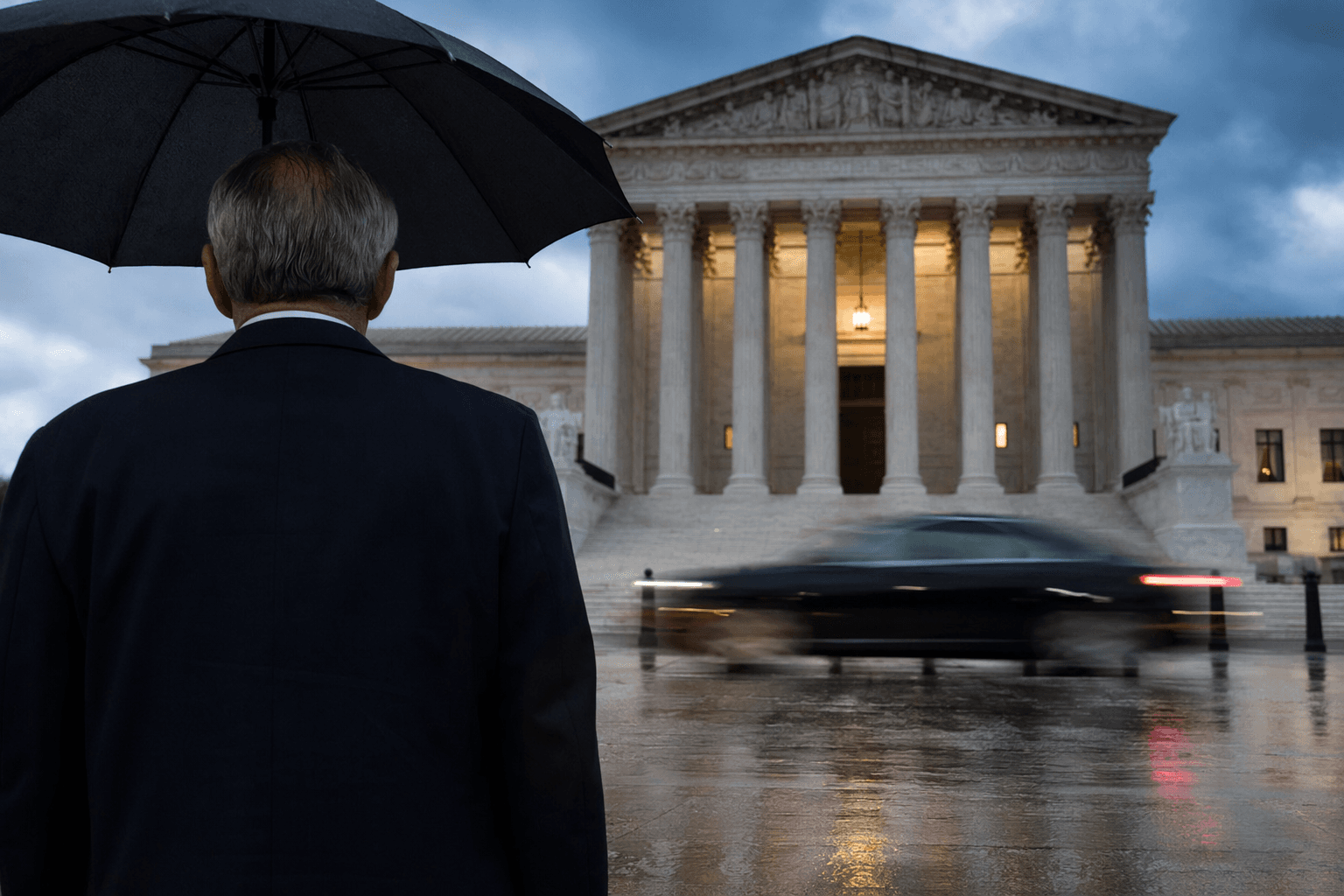
That fight reached the Supreme Court of the United States in Buckley v. Valeo, argued on November 10, 1975, and decided on January 30, 1976. The case came directly out of the post-Watergate reform drive, with the Court reviewing whether Congress had gone too far in trying to restrain the role of money in elections.
The Court drew a line that still structures the law today. It upheld contribution limits and disclosure requirements, accepting Congress’s anti-corruption rationale. But it struck down limits on independent expenditures, candidate personal and family spending, and overall campaign expenditures, treating those restrictions as violations of the First Amendment. That distinction, between contributions and expenditures, became the foundational framework for modern campaign-finance law.
Why the spending limits fell
Buckley did more than invalidate a few specific provisions. It changed the legal language of political power by treating expenditure limits as a burden on political expression. Once spending was cast as protected speech, the most aggressive anti-corruption tool Congress had used after Watergate was cut down at the constitutional root.
The result was a narrower understanding of what government could regulate. Congress could still cap direct donations and demand disclosure, but it could not set broad ceilings on how much a candidate, donor, or independent spender could pour into political advocacy. The decision made the law’s architecture look balanced on paper, yet it created a structural asymmetry: giving could be limited, but spending could be defended as expression. That asymmetry is still the core tension in campaign-finance battles.
The modern system Buckley helped create
The long-term effect of Buckley is visible in the way campaign money flows now. Because the Court protected independent expenditures and rejected total spending caps, wealthy individuals gained room to spend far beyond what a direct contribution limit would otherwise allow. That is why campaign-finance watchers trace today’s “right to spend” doctrine back to Buckley’s treatment of expenditures as speech.
This legal foundation matters because modern political influence is often built not through the direct donation that Buckley allowed Congress to cap, but through money routed into outside spending networks, super PACs, and other vehicles that sit farther from formal campaign control. Those structures are part of the debate Buckley set in motion: if independent spending is constitutionally protected, then the richest actors in politics can exert influence at a scale that looks very different from the donor limits Congress imposed after Watergate.
The practical consequence is a system in which billionaires can shape the political environment without always appearing as traditional contributors. The law still polices direct gifts to candidates, but Buckley left room for the kind of spending that can amplify messages, drown out rivals, and shape what campaigns can afford to say. In that sense, the case did not simply limit reform. It helped define the modern marketplace of political power.
Why the case still matters to voters
For voters, Buckley explains why campaign-finance fights keep returning to the same conflict: anti-corruption rules versus First Amendment protections. Supporters of stricter limits see the Watergate reforms as a necessary attempt to prevent wealthy interests from buying access. Critics of those limits point back to Buckley and argue that political spending is a form of protected participation, not corruption.
That debate has not faded. It still animates disputes over super PACs, outside spending, and the influence of major donors. Later Supreme Court campaign-finance cases continued to cite Buckley as controlling precedent on expenditure limits, which shows how durable the decision became. What began as a response to Richard Nixon-era scandal ended up shaping the basic legal boundaries of modern elections.
What Buckley left in place, and what it took away
Buckley did not erase all reform. It preserved contribution limits and disclosure rules, both of which remain central tools in campaign-finance law. Those rules still matter because they impose at least some transparency and restraint on direct donor-candidate relationships.
But Buckley took away Congress’s broader ability to limit the total size of campaign spending. That meant the post-Watergate reform package lost its most sweeping deterrent against concentrated political money. The public may still see contribution caps on one side and disclosure on the other, but the biggest financial forces in elections increasingly operate in the space the Court defined as protected expenditure.
The legacy after Watergate
The history here is not just about a 1976 case. It is about how a reform effort born from scandal was narrowed by constitutional doctrine and then reused, year after year, to justify ever-larger political spending. The Federal Election Commission was created to enforce the new rules, but Buckley set the limits of what enforcement could achieve.
That is why the case still matters in 2026. The United States lives with a campaign-finance system that retains donation caps while allowing vast independent spending, a structure rooted in the Court’s decision to separate contributions from expenditures. Buckley v. Valeo did not end the fight over money in politics. It gave that fight the legal framework that now governs how billionaire influence enters American elections, and it remains the key precedent behind the system voters confront today.
This article was produced by Prism’s automated news system from verified source data, official records, and press releases, then run through automated quality and moderation checks before publishing. The system is built and supervised by the people who set the standards it runs under. Read our full AI policy.
Did this article answer your question?

