How One Correspondent Stays Online as Russia Tightens Its Internet Grip
VPN bans, app blackouts, and mobile shutdowns are reshaping life in Moscow. NYT correspondent Valerie Hopkins explains how she stays connected as Russia's crackdown intensifies.
The moment you step outside, the internet disappears
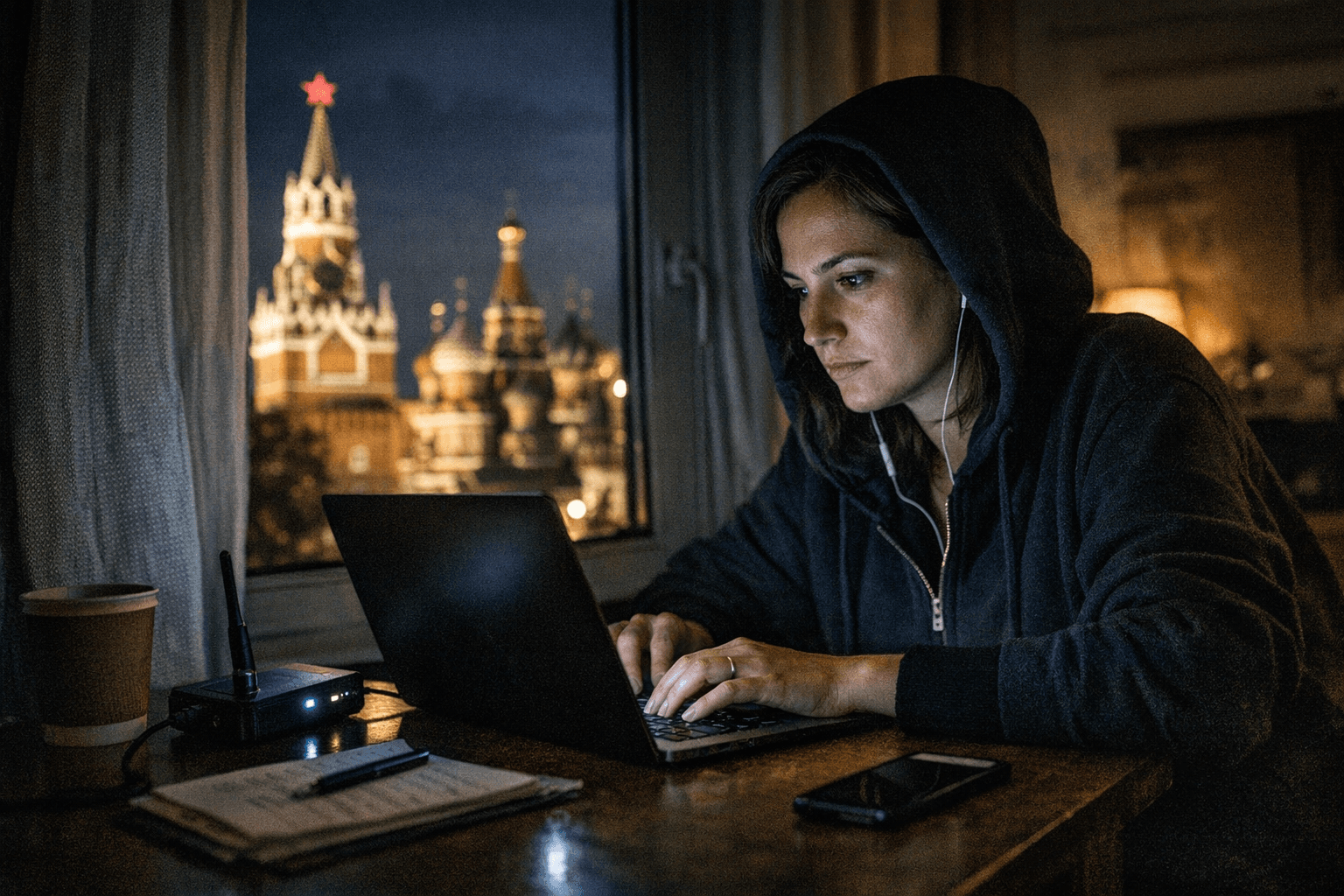
For Valerie Hopkins, the New York Times correspondent who has reported from inside Russia since August 2022, the new daily ritual starts before she leaves her apartment. Moscow residents now take screenshots of addresses, routes, and maps before heading out, because the moment they step into parts of the city center, mobile internet simply stops working. Large parts of Moscow have been grappling with intermittent or near-total mobile internet disruptions since the first week of March 2026, the latest and most severe phase of what diplomats have taken to calling Russia's "great crackdown."
The Kremlin's stated explanation is security: authorities say mobile internet shutdowns are necessary to counter the threat of Ukrainian drone attacks guided by cellular signals. Regions across Russia have lived with these disruptions for months on exactly those grounds. But Moscow, the capital, had been largely spared until March, and the scale and duration of the current blackouts have fueled speculation that something more fundamental is underway. As one Muscovite told CNN: "It feels like the ground is being pulled out from under our feet." For a city that runs on apps, the outage is not an inconvenience; it is a structural disruption.
What breaks first
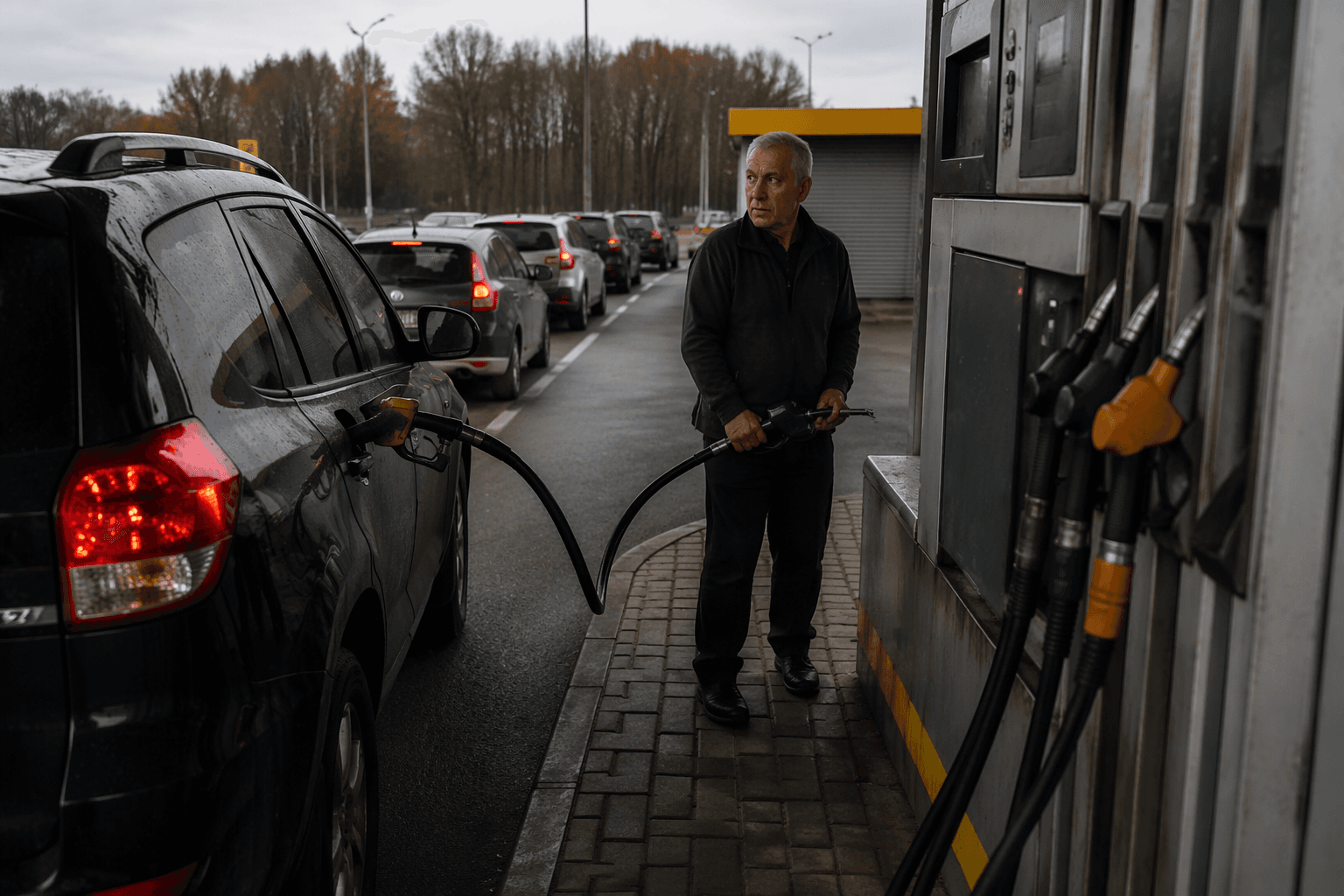
The first things to fail in a mobile blackout are the services people rely on without thinking. Navigation apps go dark. Ride-hailing and food delivery services become unreachable away from a fixed Wi-Fi connection. One Moscow resident described to NBC News how she could no longer continuously monitor her diabetic 8-year-old son's blood sugar levels, which required an unbroken data stream. Cashless payments, transit apps, and QR-based ticketing all falter when mobile connectivity vanishes. Businesses, particularly logistics and delivery operations built around always-on data, are losing millions as a result. Unlike the sweeping internet blackout imposed in Iran, Russia's outages spare Wi-Fi connections, meaning people with access to a fixed network can still function. For those outdoors, on the metro, or away from home, the smartphone becomes, as one viral meme put it, "a ping-pong paddle."
The VPN arms race
For journalists, foreign nationals, and the millions of Russians who still want access to blocked platforms, the workaround has always been a VPN. But that tool is now under direct assault. On March 31, 2026, Digital Development Minister Maksut Shadayev announced that the government would begin a sweeping new crackdown on VPN usage. It is not the first such announcement, but this time the infrastructure to enforce it is real.
Government Decree No. 1667, passed in late October 2025, gave the communications regulator Roskomnadzor the ability to block content directly using deep packet inspection (DPI) technology installed across every operator's network node, rather than routing orders through individual telecom providers. Sarkis Darbinyan, a cyber lawyer and expert at RKS Global, described the result: Roskomnadzor has effectively become a "super-regulator" that can block "virtually any service or application" at the infrastructure level.
The numbers reflect that newfound capability. By mid-January 2026, Roskomnadzor had restricted access to 439 VPN services, a figure 70 percent higher than its October 2025 total. By February 2026, that count had climbed to 469. Since December 2025, the agency has also been targeting specific tunneling protocols, including SOCKS5, VLESS, and L2TP, effectively closing off many of the technical routes that privacy-conscious users relied on. Advertising VPN services has been banned since September 2025, with fines for legal entities reaching 500,000 rubles.
The tools still used by the most technically determined users include Amnezia VPN, a self-hosted, open-source application designed specifically for censorship-heavy environments, whose code can be independently audited for security. The U.S.-backed Open Technology Fund estimates that 4 million users inside Russia have received VPN access through services including Psiphon and nthLink. But the window narrows with each update to the blocking regime, and for a foreign correspondent filing time-sensitive copy from Moscow, the reliability of any single tool can no longer be assumed.
The wartime information frame
Russian authorities have been consistent in describing internet controls as a national security matter. The drone threat is real: Ukrainian forces have used mobile-guided drones to strike targets deep inside Russian territory. But the Chatham House analysis of the Moscow blackouts is direct about the secondary function: the outages are part of a broader campaign to sever independent sources of information and dismantle horizontal communication networks, protecting the regime from civil unrest and eliminating foreign influence channels.
The sequencing supports that reading. YouTube, Instagram, Facebook, Signal, and Discord have all been blocked. WhatsApp calling features are suppressed. Telegram, the country's most widely used messaging platform and a critical channel for independent media and opposition voices, is reportedly set for full blocking as of April 1, 2026. As a replacement, authorities have pushed MAX, a state-backed messenger app that comes pre-installed on every device sold in Russia and that the Federal Security Service (FSB) is widely believed to monitor. By February 2026, MAX had reached 77.5 million monthly users, a figure driven partly by its mandatory integration into government portals, school communication systems, and public services. Privacy concerns are severe enough that some senior officials reportedly use separate SIM cards and dedicated devices rather than trust the app themselves.
What it means for correspondents and foreign companies
For foreign journalists, the practical stakes are immediate. The ability to communicate securely, to file over encrypted connections, and to access foreign platforms is not a convenience but a professional and legal necessity. Reporting from within Russia has always required operational discipline around device security and network access. The systematic blocking of VPN protocols, combined with unpredictable mobile blackouts, means that even the most prepared correspondent cannot guarantee a stable connection at any given moment.
The implications extend to international businesses that have remained in Russia. Banking applications, enterprise communication tools, and cloud services hosted outside Russia become inaccessible without workarounds that are themselves increasingly criminalized. The emerging digital architecture, described by analysts as Russia's "IT curtain," mirrors the logic of China's Great Firewall: a closed domestic network populated by state-approved substitutes, insulated from the global internet and from the information flows it carries.
Freedom House rated Russia's internet "not free" with a score of 17 out of 100 in December 2025. The trajectory since then suggests that score will only fall further. For Hopkins and the correspondents who remain inside the country, staying online has become as much a part of the job as finding sources. The correspondent's toolkit now includes a rotating set of VPN clients, offline navigation data, and a clear understanding of which connections will survive and which will not when the next blackout begins.
This article was produced by Prism’s automated news system from verified source data, official records, and press releases, then run through automated quality and moderation checks before publishing. The system is built and supervised by the people who set the standards it runs under. Read our full AI policy.
Did this article answer your question?