How opponents can contain Messi, Mbappe, Haaland and Kane
Stopping these four is not one job but four. Messi needs central lanes denied, Mbappe needs space behind sealed, Haaland needs supply cut, and Kane needs his link play blunted.
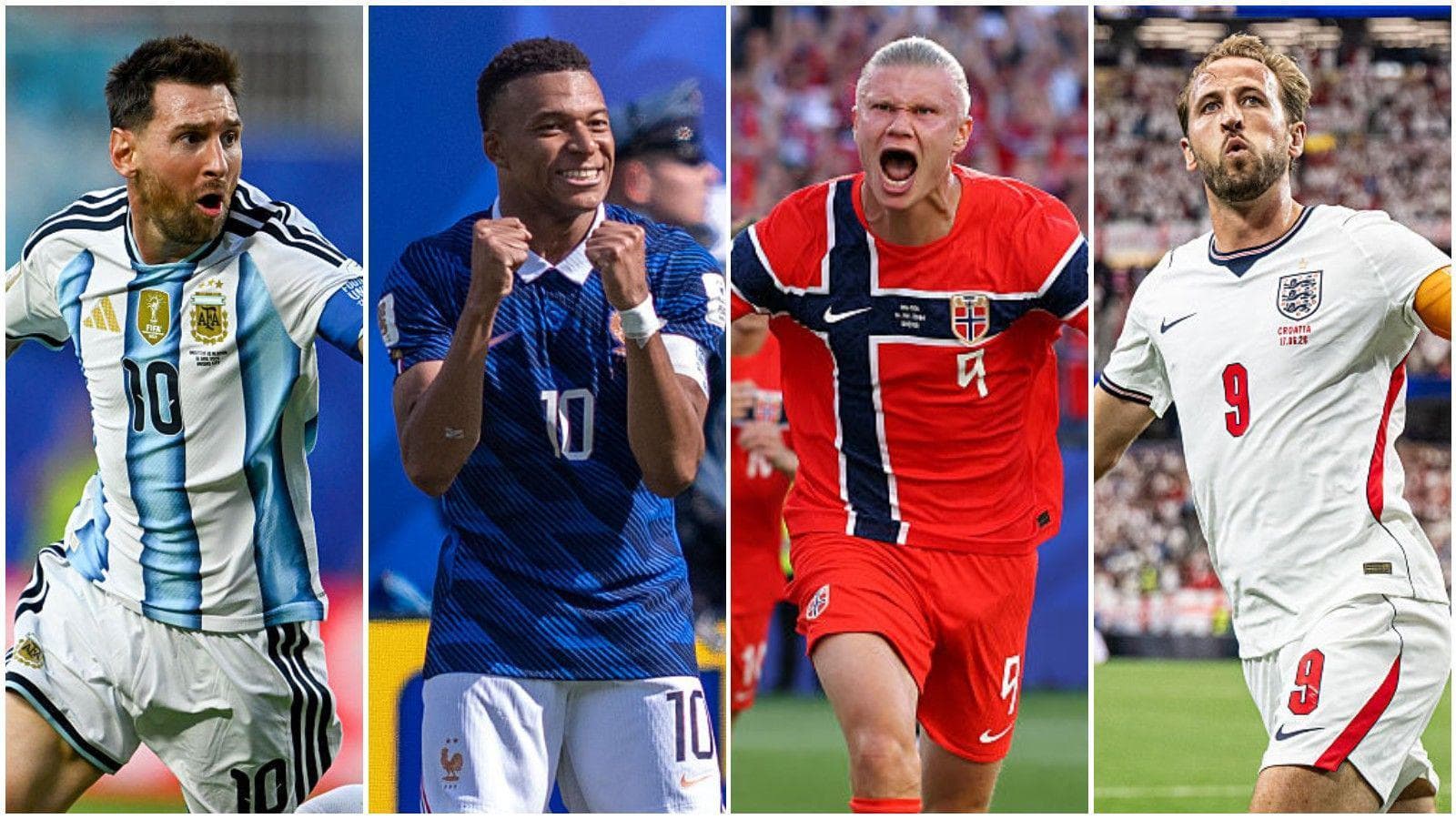
Lionel Messi, Kylian Mbappe, Erling Haaland and Harry Kane do not break a defense in the same way, which is why no single tactical script works against all four. FIFA’s numbers make the scale clear: Messi has a record 26 World Cup appearances and 16 goals, Mbappe has 14 World Cup goals and a record four in World Cup finals, and Kane enters the tournament with 78 goals in 112 international appearances for England as of 4 June 2026. Haaland sits in the same elite category without needing the same profile, because his threat is simpler and in some ways more brutal: he is a finisher who can turn one delivery into one goal.
Why this is four different defensive puzzles
The first mistake opponents make is treating star power as a generic problem. Messi’s danger comes from his ability to collect the ball in crowded central spaces and still decide the final action, while Mbappe punishes any line that opens behind it. Haaland asks whether a team can survive the box game, and Kane asks whether defenders can cope when a striker steps away from the six-yard area and starts linking play instead.
The records underline that difference. FIFA says Messi and Pele are tied on the World Cup goal-contribution record at 21, with Messi’s total split into 13 goals and 8 assists. Behind them sit Miroslav Klose, Ronaldo and Gerd Muller, which places Messi not just among scorers but among the most complete attackers in tournament history. Mbappe, meanwhile, is not only a goalscorer but a knockout-stage specialist, with eight goals in eight knockout games and joint leadership in that phase’s scoring charts.
Messi: cut the central supply, not just the shot
Messi is the hardest to contain when he is allowed to face the game from between the lines. FIFA’s count of 26 World Cup appearances and 16 goals tells you he has already seen every defensive shape the tournament can produce, and his 2026 opener, in which he scored a hat-trick, showed that experience can still be lethal under pressure. The best answer is not to chase him everywhere, but to narrow the lanes that feed him.
That means forcing him away from the central corridor and limiting the service that lets him choose between passing and finishing. Defenses that stay compact in front of him, screen the passing lanes into his feet, and accept that he will drift rather than dominate every touch are usually in better shape than those that step out recklessly. The point is to make Messi receive the ball in less dangerous positions, then make the next pass difficult rather than the first touch.
Mbappe: protect the space behind the line
Mbappe creates a different panic. His threat is vertical, immediate and ruthless, which is why FIFA’s figures matter so much: 14 World Cup goals, four in World Cup finals, and eight goals in eight knockout-stage matches. FIFA also reported that he started the 2026 tournament with a double against Senegal, a reminder that he can punish hesitation from the opening whistle.
Containing Mbappe is less about possession and more about structure. Back lines have to stay connected, the space behind the full-backs must be protected, and every turnover has to be treated as a potential sprint race. If a team gets stretched in transition, Mbappe is the type of forward who can end the game before the defense has even reset, which is why the first defensive priority is often to deny the pass that launches him rather than the run itself.
Haaland: starve the box, not the highlight reel
Haaland is the cleanest finisher of the group in profile, and that changes the defensive math. FIFA and UEFA both place him among the tournament’s elite attackers, and FIFA’s round-up grouped him with Mbappe and Messi as players who began their tournaments with a bang. Against a striker like that, the danger is not constant dribbling or elaborate buildup, but a short sequence that ends with him receiving the ball in a scoring zone.
The response is to choke off the supply line into the area. Teams need to be alert to crosses, cutbacks and early balls into the box, because Haaland’s value lies in arriving at the decisive point faster than the defense can recover. If he is forced away from the central channels and made to work for service, the job becomes more manageable. If he is allowed to set his body in front of goal, the margin for error disappears.
Kane: deny the turn, then track the return
Kane presents the most layered challenge of the four because he is not only a scorer, he is also a connector. UEFA lists him on 78 goals in 112 international appearances as of 4 June 2026, numbers that reflect both longevity and consistency. What makes him different is that he can drop into midfield, link the attack and still arrive in the box to finish the move.
That means defenders cannot simply follow him blindly or ignore him when he leaves the penalty area. The better plan is to stay disciplined through the middle, keep the center-backs organized and prevent Kane from receiving on the half-turn with time to pick a pass or release a runner. If he is allowed to drift untracked and face forward, England gain an extra playmaker who still has the instincts of a striker.
The broader lesson for knockout football
The common thread is not brute force, but control of space and timing. Against Messi, the task is to reduce central service and make him play through traffic. Against Mbappe, it is to seal the space behind the line and survive the transition. Against Haaland, it is to stop the supply that feeds the box. Against Kane, it is to keep his link play from opening the field and then to recover quickly when he drops deep.
That is why stopping these four is less about heroics than discipline. FIFA’s records show why each one belongs in the same conversation, but the tactical answer is different every time. The teams that last in World Cup football are the ones that understand that elite forwards do not just test a defense once, they test whether it can solve four separate problems under the pressure of one tournament.
This article was produced by Prism’s automated news system from verified source data, official records, and press releases, then run through automated quality and moderation checks before publishing. The system is built and supervised by the people who set the standards it runs under. Read our full AI policy.
Know something we missed? Have a correction or additional information?
Submit a Tip