How PSG Outfoxed Slot's Tactical Tweaks in Champions League Quarter-Final
Slot's 3-4-3 gamble created the very gaps it was meant to close: PSG exposed a man-to-man back three across 70% possession and 18 shots in a 2-0 first-leg rout.
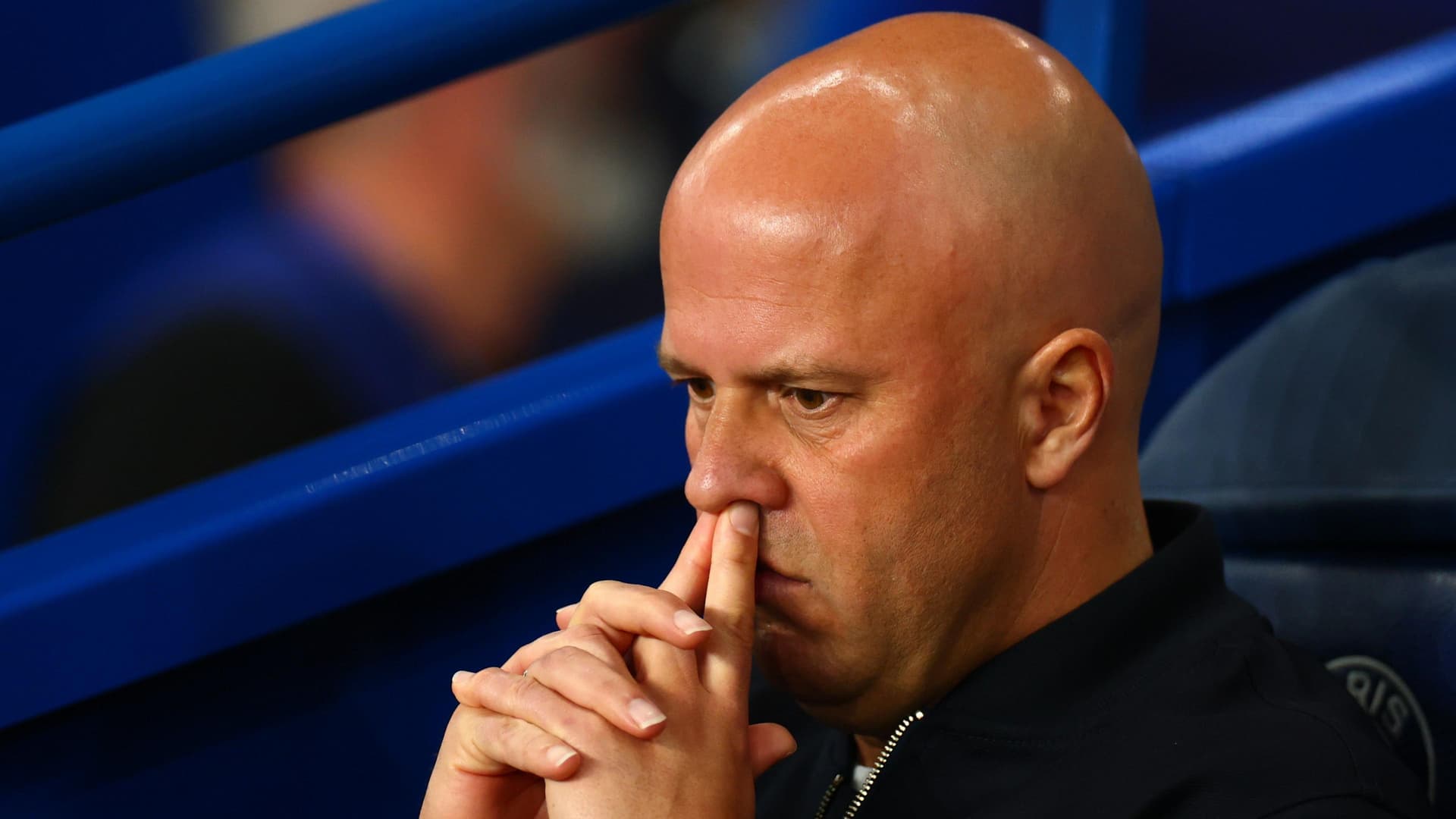
Paris Saint-Germain's 2-0 victory over Liverpool in the Champions League quarter-final first leg at the Parc des Princes on April 8 was not simply a story of superior talent. It was a masterclass in exploiting the structural contradictions that a reactive tactical change can create against elite opposition. Arne Slot arrived in Paris having been humiliated 4-0 by Manchester City the previous Saturday and, in an obvious attempt to stop the bleeding, dismantled the back four that is fundamental to his entire system. What followed confirmed that even well-intentioned shape changes, when improvised under duress, can produce exactly the chaos they were designed to prevent.
The Shape Change That Backfired
Slot deployed a 3-4-3 formation, slotting Joe Gomez in as a third centre-back alongside Virgil van Dijk and Ibrahima Konaté, while Jeremie Frimpong and Milos Kerkez operated as wing-backs. Mohamed Salah, arguably Liverpool's most dangerous attacking outlet, was dropped to the bench entirely, sitting unused for over an hour as the situation deteriorated around him. The intent was clear: flood the defensive zones, deny PSG's wide threats, and absorb pressure. The execution produced the opposite effect.
As Jamie Carragher explained bluntly on CBS Sports Golazo, the back five made Liverpool actually more exposed than a standard back four would have. "They were actually more open with the back five than they would be with the back four," Carragher said, "because they went man-to-man all over the pitch and the three centre-backs had to cover the width of the pitch." When a defensive structure forces your centre-backs to track wide runners across the full horizontal plane of the pitch, the compact block you were trying to build dissolves. Rather than producing defensive solidity, Slot's tweak created individual accountability in a system the players had barely rehearsed at this level, with PSG's relentless movement designed precisely to punish it.
Sequence One: Doué's Opener and the Width Problem (11th minute)
The first goal arrived just eleven minutes in and illustrated the structural vulnerability immediately. PSG worked the ball to Désiré Doué on the left side of Liverpool's box, where he was, in theory, surrounded by red shirts. Dembélé showed sharp technique on the edge of the area, drew attention, and flicked the ball left to Doué. The problem was not the individual error in isolation but the spacing: with the three Liverpool centre-backs stretched horizontally to track PSG's rotating front line, Doué found a pocket of space that should not have existed under a conventional block. His deflected shot looped off Ryan Gravenberch and over Giorgi Mamardashvili into the net. The deflection helped, but the room to receive and shoot in a supposedly crowded box was the real indictment. Liverpool had been breached not by a moment of individual brilliance but by a system that forced its own defensive lines to cover too much ground.
Sequence Two: Kvaratskhelia's Surgical Finish and the Midfield Tracking Failure (65th minute)
The second goal was less fortunate and more surgical. It ended a 27-pass move, the fourth longest before a goal in the Champions League this season, and it exposed the other critical consequence of Slot's shape: without Salah providing counter-attacking threat, Liverpool's midfield trio had nothing to think about except defending, yet still they were undone by a simple run.
João Neves threaded a precise through-ball into the channel behind Liverpool's defence. Gravenberch, who should have tracked Khvicha Kvaratskhelia's run from deep, failed to do so. The Georgian forward timed his movement perfectly, rounded compatriot Mamardashvili, and passed the ball calmly into the net. Kvaratskhelia had now scored in four consecutive Champions League knockout stage appearances, a feat not achieved since Karim Benzema across the 2021-22 campaign. The sequence demonstrated precisely how PSG's fluid interplay stressed Liverpool's man-marking responsibilities: while Liverpool defenders were occupied tracking Dembélé and Doué's rotations in front of them, Neves found the moment to slip the ball in behind, and Kvaratskhelia exploited the gap that Gravenberch's positional failure had left open.
Sequence Three: The Dembélé Corridor and Hakimi's Underlapping Runs
Beyond the two goals, a recurring theme in the first half showed how PSG consistently found corridors between Liverpool's wing-backs and the three-man defensive line. Ousmane Dembélé, operating primarily on the right, would drift infield to pull Kerkez centrally, while Achraf Hakimi drove beyond into the space the wing-back had vacated. The combination was a consistent source of danger. Dembélé blazed over from close range in the 53rd minute after a Nuno Mendes cutback, and the Ballon d'Or winner hit the post late in the game having already squandered two other clear chances. PSG finished with 18 attempts to Liverpool's three, with the Reds failing to register a single shot on target. PSG held 70% of the possession. As former England goalkeeper Paul Robinson put it: "In Hakimi, Mendes, Kvaratskhelia, and Doué, Arne Slot knew the problems his team would have in the wide areas."
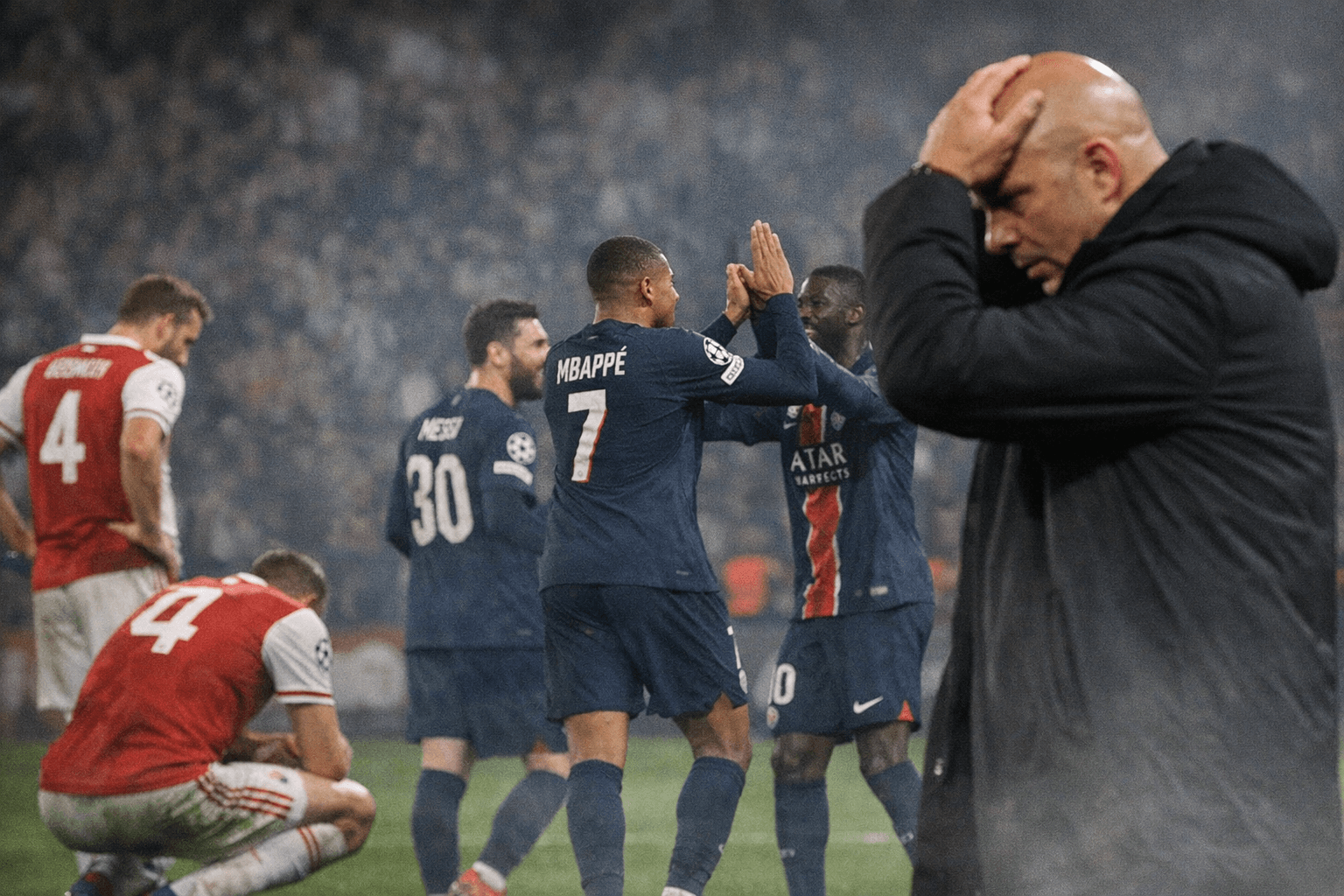
The Wider Managerial Lesson
The failure of Slot's shape change carries a lesson that extends beyond this single match. At elite European level, reactive formation changes made under psychological duress rarely deliver structural stability because they introduce uncertainty into a squad without providing the training ground repetition that makes a system function. Liverpool's centre-backs had barely operated in a three-man line at this level under Slot's management. Van Dijk, one of the most decorated defenders in Premier League history, looked visibly uncomfortable in a role that forced him to operate laterally rather than command his defensive zone. Konaté's performance, meanwhile, drew pointed criticism from Carragher, who argued that Van Dijk had been let down by his centre-back partner's inability to handle the demands of the new shape.
Slot acknowledged after the final whistle that his team were "in survival mode for large parts of the game" and admitted Liverpool were lucky to leave Paris with only a two-goal deficit. His own reading of the situation was stark: "If you reflect on the whole game, I think we are lucky with only losing 2-0." Luis Enrique, characteristically composed, noted that PSG are simply accustomed to opponents reshaping around them. "Teams have a habit of changing the way they play against us," the PSG coach said.
What Must Change at Anfield
Liverpool face PSG in the second leg on April 15 requiring at minimum a 3-0 victory to advance on aggregate. The arithmetic alone demands that Slot abandon the conservative instinct that produced a toothless display in Paris. Several adjustments are non-negotiable.
- Return to a back four. The three-centre-back experiment needs to end. Liverpool's defenders are not equipped by habit or recent match practice to operate in a structure that demands wide coverage and man-to-man responsibilities simultaneously. A back four at least restores the defensive compactness the squad understands.
- Salah must start. Keeping the all-time leading African scorer in Champions League history (50 goals) on the bench for 70 minutes while his team produced zero shots on target was indefensible. Slot's reasoning, that Salah would struggle to spend 20-25 minutes defending in his own box, inadvertently confirmed that the system was built for survival rather than victory. Anfield requires a system built to win.
- Florian Wirtz must be central to the attacking structure. The German showed flashes of quality in Paris, producing a delightful scooped pass in behind the PSG defence and a composed through-ball for Hugo Ekitiké. He needs the ball far more frequently than Slot's conservative setup allowed.
- Alexander Isak's return is significant. The Swedish forward, back from a four-month absence with a fractured fibula, made a late substitute appearance in Paris. His ability to stretch a high defensive line could change Liverpool's dynamic entirely at Anfield if deployed from the start.
The second leg on April 14 will be played in front of a crowd with a history of extraordinary atmospheres in European eliminator matches. But Anfield's noise cannot compensate for structural deficiencies in the system Slot selects. The lesson from Paris is that improvised caution against PSG's fluid, relentless movement creates more vulnerability than it resolves. Liverpool's only viable path to the semi-final runs through a clear tactical rethink, and Slot's willingness to acknowledge his own error is now the most important decision left in this tie.
This article was produced by Prism’s automated news system from verified source data, official records, and press releases, then run through automated quality and moderation checks before publishing. The system is built and supervised by the people who set the standards it runs under. Read our full AI policy.
Did this article answer your question?
.jpg&w=1920&q=75)