How The Lazy Dungeon Master Simplifies Dungeons & Dragons Prep
The Lazy Dungeon Master is a practical roadmap for running consistent, fun Dungeons & Dragons sessions with minimal, high-impact preparation. It lays out concrete techniques, scene goals, NPC motivations, a handful of reliable encounters, cheat-sheets, index cards, and an improv mindset, that help you respond to player choices quickly and keep sessions focused and engaging.
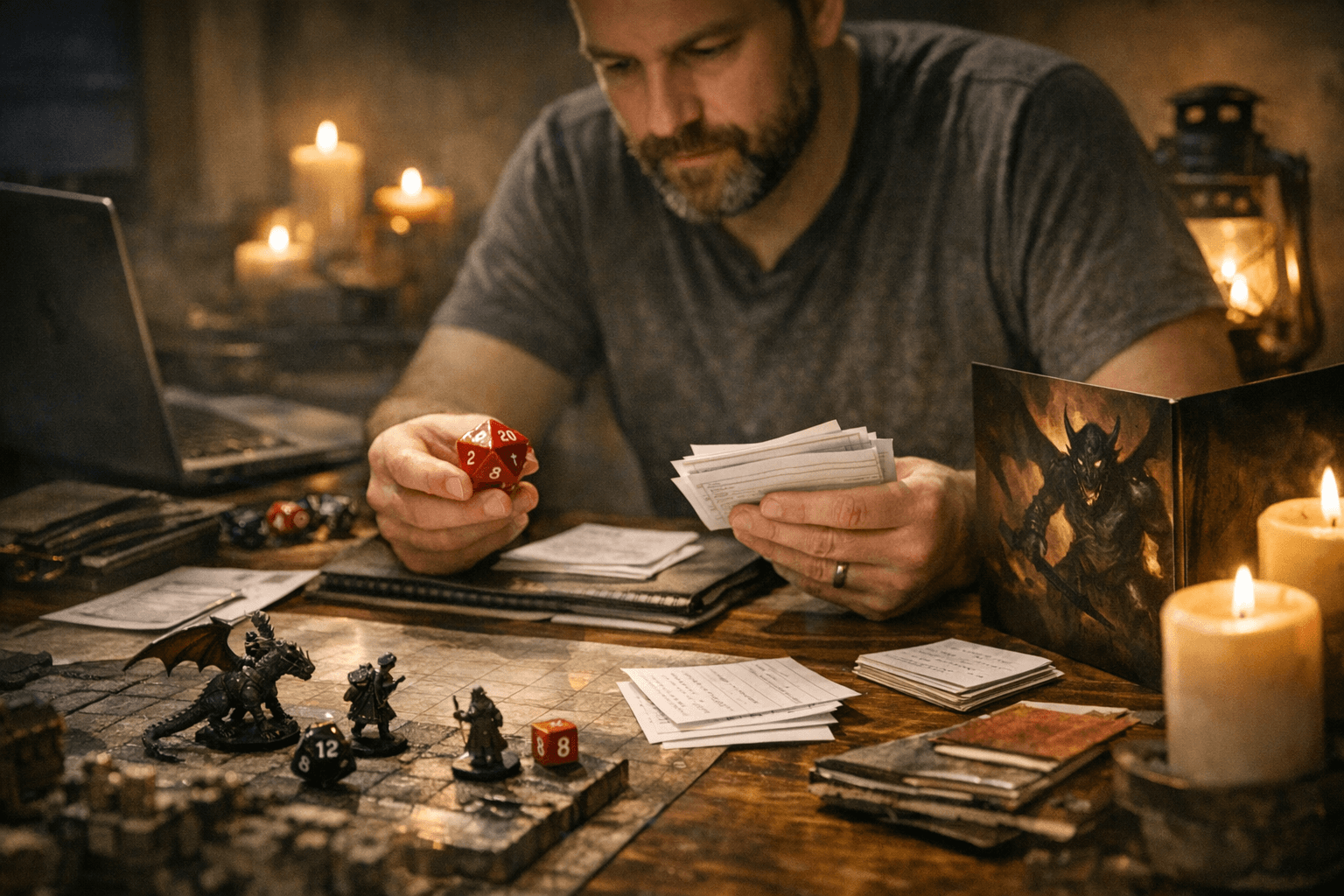
The Lazy Dungeon Master presents a clear alternative to exhaustive worldbuilding: prepare less, but prepare smarter. The guide distills tabletop prep into a short list of reusable tools that prioritize player-facing choices over scripted narratives. That shift matters because it reduces lead time and stress while increasing the chances that your prep will actually see play during a session.
Start with scene goals. Decide what each potential scene needs to accomplish, a discovery, a choice, a threat, and build a one-line objective rather than a scene-by-scene script. Pair that goal with simple NPC motivations so characters feel driven without requiring detailed biographies. Keep a small pool of reliable monsters and encounter frameworks that you know how to run quickly; familiarity lets you scale challenge and improvise on the fly.
Use concise cheat-sheets and random generators to free your headspace. Name lists, one-word motivations, and short motivation tables let you draw instantly when players put you on the spot. Index cards or a single cheat-sheet for each NPC or location keep essential facts at your fingertips. The guide emphasizes short encounter frameworks, setup, twist, payoff, over sprawling multi-stage combats, so you can adjust pacing mid-session without throwing everything else off.
Adopt the 'yes, and' improv mindset to keep scenes moving. Let players' choices direct the narrative, then add complications that matter to the scene goal. That technique preserves agency and reduces the need for rigid contingency plans. Practical tools in the guide include ready-to-use card layouts, examples of short encounter structures, and compact NPC note formats that you can copy into your own prep.
Appendix material and survey results give additional context on real DM prep time, showing that many GMs spend far less on effective sessions than they expect. That data supports a straightforward takeaway: consistent, playable prep beats pages of unused worldbuilding. The approach works for new DMs learning how to run session flow and for veterans who want to shave prep time without losing quality.
If you want to run smoother sessions with less lead time, apply these tactics at your next game. Pick scene goals before you write dialogue, limit NPC details to motivations and a few quirks, and keep a small set of encounter patterns you trust. Those changes make sessions more responsive, reduce burnout, and put player choices at the center of the table.
Know something we missed? Have a correction or additional information?
Submit a Tip

