How to Choose the Perfect Baby Shower Venue, From Studios to Backyards
The right baby shower venue is about more than square footage: knowing which contract clauses to push on and which fees to negotiate can save hundreds of dollars.
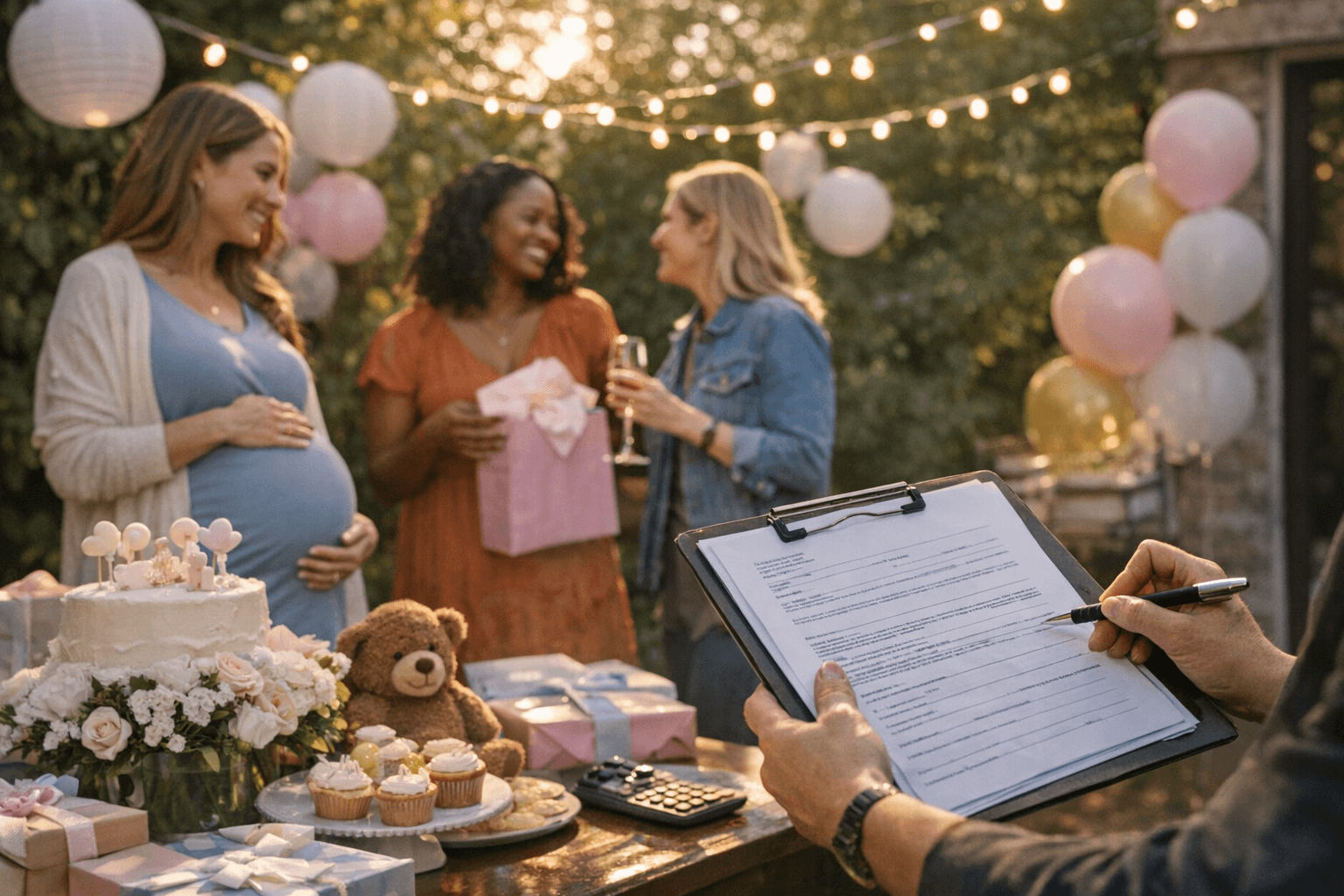
Booking a baby shower venue used to mean calling a restaurant and asking about a private room. Today, platforms like Peerspace, Tagvenue, and Giggster list hundreds of hourly-rental options in every major U.S. market, from minimalist photo studios to garden courtyards to private dining rooms. That access is genuinely exciting, but it also means hosts and planners are navigating lease-style contracts for a three-hour brunch. Getting the details right before signing protects the budget, the guest experience, and the person whose name is on the deposit.
Start With Guest Count and Vibe
Every other decision flows from two answers: how many people are coming, and what feeling should the event create? A seated lunch for 25 needs a fundamentally different space than a stand-and-mingle cocktail-style shower for 60. Before contacting a single venue, get a confirmed headcount and distinguish between seated capacity and standing capacity, since those numbers often differ by 30 to 50 percent. If any guests will join remotely, add Wi-Fi reliability and natural light for video calls to the requirements list. A windowless basement might photograph beautifully but turns into a flat, overexposed grid on a laptop screen the moment someone tries to Zoom in from another city.
Know Your Venue Types
The spectrum of available spaces is wide, and each category carries its own tradeoffs:
- Community rooms and church halls sit at the lower end of the pricing range and are well-suited to larger headcounts. They tend to be flexible about outside catering and décor but may lack the visual polish guests expect from curated spaces.
- Studio galleries and event studios are the blank-canvas workhorses of the hourly-rental market. A studio like Indigo Studio LA in Eagle Rock books at $65 per hour; stylish minimalist spaces like Studio V+V in Dallas run $140 per hour. These spaces reward hosts who want to build a custom aesthetic.
- Private dining rooms inside restaurants solve the catering problem instantly and often include a dedicated server, but they typically restrict outside food, alcohol, and décor. Pricing can be as low as $10 per person when in-house catering is included, though weekend minimums can push totals higher.
- Outdoor and backyard venues add greenery and natural light but introduce weather dependency. Confirm whether the property requires a special event permit from the city, and verify the force majeure or inclement weather clause in any contract before committing.
Hourly rates across U.S. markets generally fall between $50 and $400 per hour depending on location, capacity, and amenities. Weekend afternoons, the most popular window for baby showers, consistently command the highest rates in every market.
The Pre-Booking Checklist
Once a venue looks promising, work through each of these areas before signing anything:
- Permitted uses: Ask specifically whether the venue allows external catering, alcohol, amplified music, and décor installations such as balloon anchors. Many gallery spaces restrict adhesives and prohibit glitter outright, which can reshape the entire décor plan.
- ADA and accessibility: Confirm step-free access, restroom count, and stroller accessibility. For showers with older guests, check whether seating is available near restroom entries.
- Setup and teardown windows: This is where budgets quietly blow up. Confirm whether the hourly rate includes load-in and load-out time, or whether those windows are billed separately. If florals, a backdrop, and a dessert table are all arriving from different vendors, a one-hour setup window is almost never enough.
- Noise and curfew policies: If a DJ or playlist is part of the plan, ask about sound ordinances and negotiate an explicit event-end time. Running 20 minutes long at a noise-sensitive venue can trigger fines that dwarf the original per-hour rate.
- Insurance: Most venues require a Certificate of Insurance (COI) that names the venue as an additional insured. Most venues require at least $1 million in general liability coverage before they'll approve an event. Short-term event insurance policies covering cancellation and liability can be purchased quickly through providers like Thimble, which issues the COI immediately upon purchase.
Contract Clauses Worth Negotiating
The contract is where the real cost of a venue lives. Four line items deserve close attention:
1. Cleaning fee and damage deductible: Ask whether the cleaning fee is flat or conditional, and clarify what damage threshold triggers the deductible.
Request an itemized list of what "cleaning" covers so there's no ambiguity about glitter, wax, or food residue.
2. Overtime rates and grace periods: Most venues charge overtime in 30-minute increments at rates well above the base hourly price.
Negotiate a 15-minute grace period into the contract and build a realistic buffer into your run-of-show.
3. Cancellation and refund policy: The deposit schedule should be tied to explicit refund milestones.
A non-refundable deposit paid six weeks out on a venue that allows cancellation only 14 days prior is a significant financial exposure.
4. Force majeure and weather clauses: This matters most for outdoor venues.
A clause that offers only a reschedule credit rather than a refund can be limiting if dates are not flexible. Push for a cash-refund option tied to specific weather thresholds, such as a National Weather Service advisory.
Vendor Coordination and Logistics
A venue that works on paper can still become a logistical knot on the day if vendors arrive without clear instructions. Provide every vendor with a single logistics document that includes the venue address, load-in entrance location, available parking, and the name and phone number of the on-site contact. Confirm in advance where catering vehicles may park and for how long; in urban markets this alone can determine whether a caterer accepts the booking.
If the venue has a freight elevator or a specific loading dock, note the hours it operates. Vendors who arrive expecting ground-level access and find a service elevator that closes at noon will absorb that delay directly into your setup window.
Building a Venue Shortlist for Repeat Planners
For anyone organizing more than one event per year, whether as a professional planner or a workplace coordinator who handles team celebrations, the smartest investment is building a vetted shortlist of three to five reliable venues per market with known rates, contract terms, and staff contacts already on file. Venues often offer standby or repeat-client rates to hosts who book consistently, which improves margins and dramatically reduces the quoting time for each new event. That upfront investment in a shortlist pays dividends the moment a colleague announces a due date with six weeks' notice.
Selecting the venue first, rather than after catering or entertainment, anchors every other planning decision to a real set of constraints. Headcount, layout, vendor access, noise limits, and insurance requirements all flow from that single choice, which is why getting it right early is the one move that reliably keeps the rest of the planning process on track.
Sources:
Know something we missed? Have a correction or additional information?
Submit a Tip