How to Choose the Right Yoga Props for Safer, More Accessible Practice
Learn how to choose mats, blocks, straps, bolsters, and extras so your practice is safer, more accessible, and long-lasting.
Whether you teach, practice gently, or want to make your home studio more inclusive, the right props change poses from risky to reliable. Below are clear, practical choices and care tips to match props to needs, budget, and the planet.
1. Overview: why quality props matter
Quality props support alignment, protect joints, and make modifications possible for beginners, restorative classes, or injury-sensitive students. Good props reduce compensations, so knees, wrists, and necks stay safer, while helping people remain independent in their practice. Think of props as portable alignment cues that build confidence and capacity, not crutches.
2. Yoga mats, thickness and stability
Mat thickness affects comfort and balance: 1/16"–1/8" (~1.5–3 mm) suits studio and travel practice, while 1/4"–1/2" (6–12 mm) adds cushioning for joint sensitivity. Thicker mats protect knees and hips but can reduce stability in balancing asanas; choose based on how much standing balance versus padding you need. For regular practice invest in a mid-range mat with consistent thickness so you don’t trade safety for softness.
3. Yoga mats, material and grip
PVC mats offer reliable stick and durability but have environmental trade-offs; alternatives like TPE, natural rubber, and cork deliver different grip and odor profiles. Natural rubber gives excellent traction but can trigger latex sensitivity, always check materials if you or your students have allergies. Texture matters: a tactile surface or raised pattern helps prevent slipping, especially when hands or feet get slightly sweaty.
4. Yoga mats, portability and care
If you travel or commute with your mat, prioritize lightweight, rollable designs and washable surfaces to keep hygiene simple. Avoid leaving mats in hot cars, heat warps many materials and shortens lifespan. Look for mats that wipe clean easily or accept a machine-washable towel overlay for hot classes.
5. Blocks & bricks
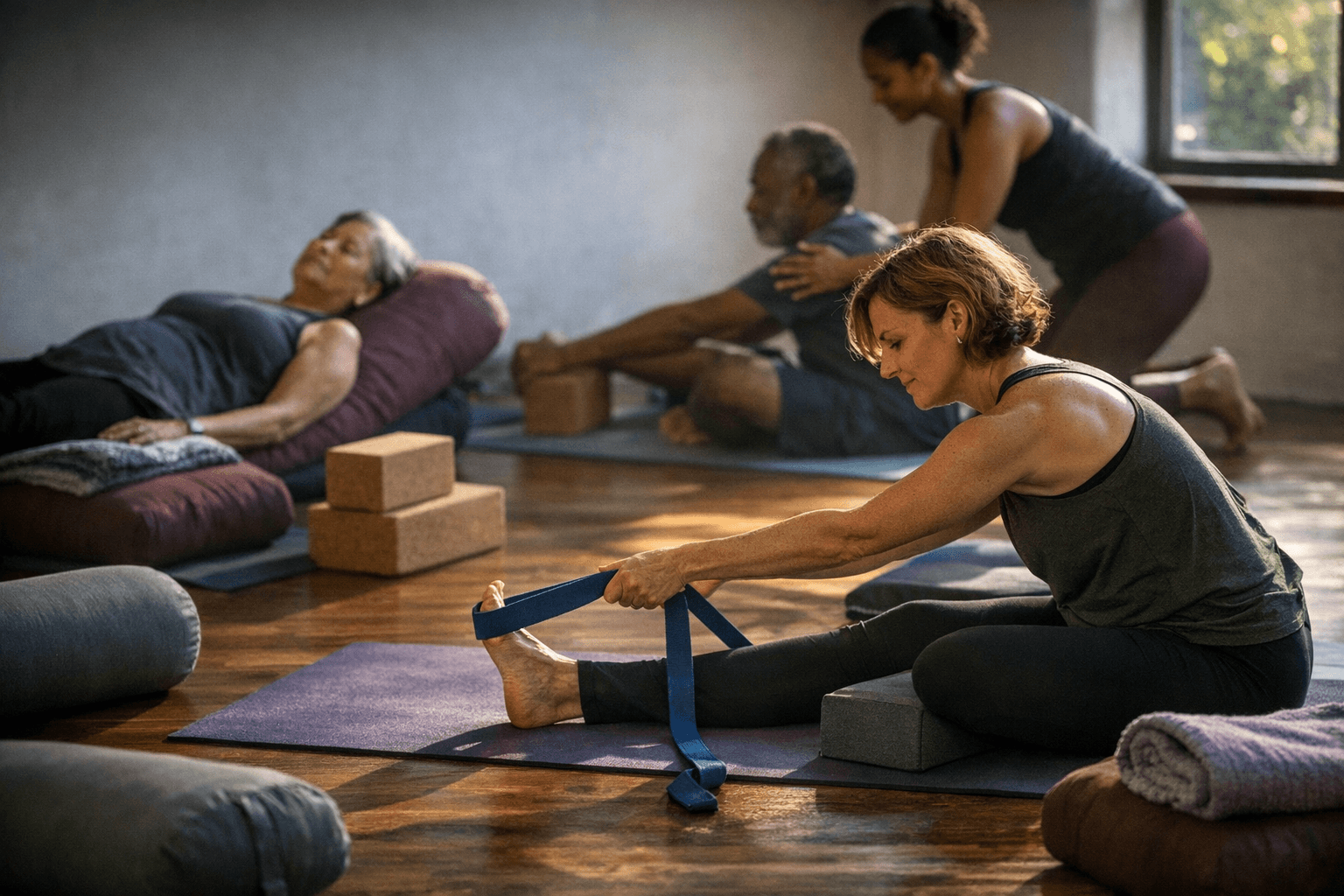
Blocks come in foam, cork, and hardwood: foam is light and forgiving, cork is firm and stable, and hardwood is the most durable. The standard 9"×6"×4" block covers most needs, while thinner 3" blocks fine-tune height for subtle alignment. Use blocks to bring the floor closer in forward folds, raise a seated cross-legged position, support hands in balancing postures, or stabilize restorative inversions.
6. Straps & belts
Most straps are 6–8 feet long, made of cotton webbing with D-rings or buckles for micro-adjustments, perfect for different limb lengths and bindings. Straps extend reach in hamstring stretches, help students safely work toward binds, and provide leverage during tricky transitions. Keep at least one cotton strap in class kits; it’s versatile, inexpensive, and easy to clean.
7. Bolsters, blankets, and cushions
Bolsters (cylindrical or rectangular) support chest-openers, restorative backbends, and seated comfort; choose denser fills for firm support or softer fills for gentle cradling. Folded blankets act as multi-use props, knee padding in kneeling postures, folded lumbar support, or stacked blocks for seat height. Eye pillows and lightweight weighted blankets are excellent cues for nervous system down-regulation during Yoga Nidra and restorative sequences.
8. Accessories & extras
Accessories make specific classes safer and cleaner: a non-slip microfibre towel improves grip for hot yoga and hygiene; grip socks help in barre or hybrid formats but avoid them in traditional barefoot mat classes unless the studio permits. Small extras like a lightweight strap or a thin travel block are inexpensive ways to adapt poses on the fly and welcome mixed-ability students.
9. Sustainability considerations
Natural rubber and cork biodegrade more readily than PVC; seek third-party certifications and transparent manufacturing claims when sustainability matters. Consider brand trade-in or recycling programs and think about end-of-life disposal when buying, long-lasting materials reduce environmental cost over time. Community studios can coordinate collection programs so used props don’t end up in landfill.
10. Budget tips and buying priorities
For beginners, start with a mid-range mat (avoid the cheapest slippery options), one foam block, and a 6–8 ft strap, this covers most foundational needs without overspending. If you practice frequently, prioritize a higher-quality mat because comfort and safety compound with regular use; buy specialty items (cork blocks, premium bolsters) as your practice evolves. Remember: investing a little more up front in core pieces often saves money and frustration later.
11. Care & cleaning
Wipe mats with gentle soap and water or a diluted vinegar solution; avoid harsh chemicals that degrade material and grip. Air-dry mats flat or draped over a rod and keep them out of prolonged direct sunlight to prevent warping and fading. For fabric props like straps and blankets follow label care, many will tolerate gentle machine washes while bolsters may benefit from removable covers.
12. Practice guidelines using props
Use props to discover alignment, not to avoid building strength, place a block under the hand in Triangle to keep a long spine while you gain flexibility. Teachers should encourage experimentation: different heights or fold patterns reveal new sensations and build proprioception. Props are about empowerment; aim to support independence so students can modify safely at home and in class.
Practical wisdom to take home: start with the mat, one block, and a strap, and test how each prop changes your alignment and comfort in a pose. Keep an eye on materials if sustainability or allergies matter, and commit to simple care routines so your props last. With the right kit, you’ll make poses safer, more accessible, and more enjoyable, for you and the community you teach or practice with.
Know something we missed? Have a correction or additional information?
Submit a Tip