How to Choose Your First Ping Pong Paddle for Control and Spin
Learn how to pick a first paddle that favors control and spin, including blade and rubber choices, buying tips, maintenance, upgrade signals, and beginner drills.
1. Paddle anatomy: blade, ply, and handles
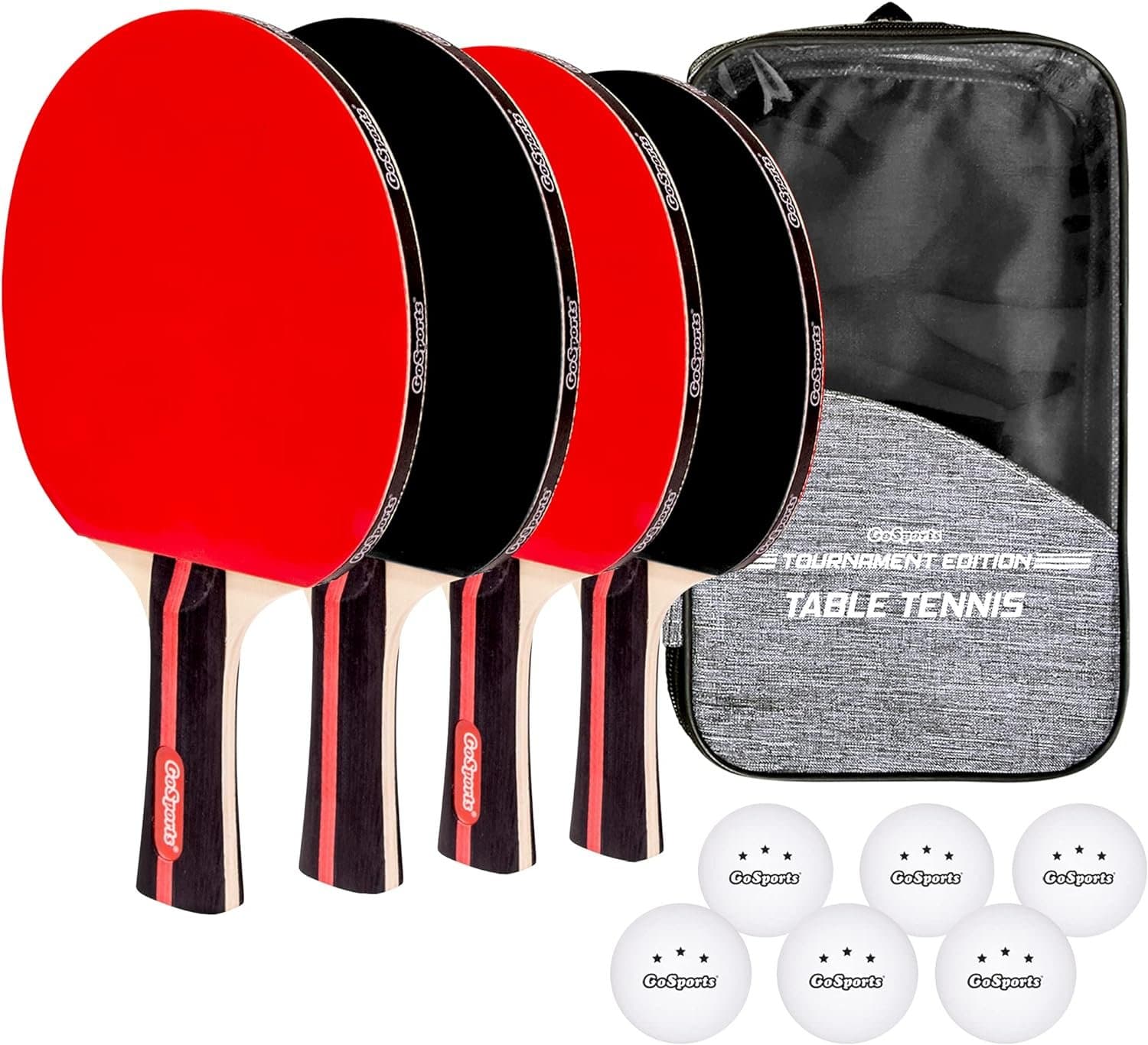
A paddle is built around the blade, the wooden core that largely determines feel, flex, and speed. Blades are described by ply (layers); more plies usually mean stiffer, faster blades while fewer or composite layers give more dwell and control. Handle types (flared, straight, anatomic) affect grip comfort and wrist feel; choose the handle that fits your hand and grip style (shakehand vs. penhold) so you can consistently hit the sweet spot. For beginners, a medium-hard wooden blade with 5–7 plies or a wood-carbon hybrid designed for control strikes the best balance between feel and potential spin.
2. Rubber fundamentals: inverted vs. pimpled (pips), sponge thickness, and tackiness
Rubber type dictates how you create and read spin: inverted (smooth) rubbers are the classic spin engines, excellent for loops and serves, while pimpled (short pips) rubbers reduce spin sensitivity and suit quick blocking or flat hitting. Sponge thickness controls speed and spin, thinner sponges (around 1.5–2.0 mm) deliver more control and predictable feedback, while thicker sponges add speed and catapult for power players. Tackiness (sticky topsheet) increases grip on the ball for more spin but can be harder to manage for beginners; a moderately grippy inverted rubber with medium sponge is the sweet spot for learners chasing control and spin.
3. Recommended control-focused setups for newcomers
Start with a pre-assembled, control-oriented paddle or build a basic custom setup: a medium-hard blade plus inverted rubbers with 1.5–2.0 mm sponge on both sides. This combo gives enough dwell to learn proper brushing technique for topspin without overwhelming speed that masks technical flaws. Avoid premium offensive blades and very thick sponges early on because they reward sloppy timing with raw speed, which slows skill development. A trustworthy starter package from reliable brands will let you focus on stroke mechanics and serve/receive patterns rather than compensating for equipment.
4. Match the paddle to your dominant style: attacker vs. all-rounder
If you know you like to attack aggressively, choose a slightly firmer blade and rubbers that are a tad thicker (closer to 2.0 mm) to support spinny topspin rallies, but still avoid the fastest options until technique is steady. If you’re an all-rounder who values placement, blocks, and controlled spin, prioritize a medium-hard blade with 1.5–2.0 mm sponges and balanced inverted rubbers, this setup promotes consistency across serves, pushes, and loops. Choosing gear that amplifies your current style helps you practice the right skills in club play and local leagues without being overrun by equipment demands.
5. Practical buying tips: test, avoid overkill, and match the player
Whenever possible, test paddles at your club or a demo night to feel how blade flex and rubber sponge affect spin and control during rallies. Start with either a pre-assembled control paddle or select a medium-hard blade with medium-thickness rubbers (1.5–2.0 mm); steer clear of top-tier offensive blades that prioritize speed at the expense of control. Consider hand size, grip type, and whether you’ll play more topspin rallies or short pushes, these factors matter more than brand hype. • Tip: ask local players what they use for a reality check; club-tested gear beats glossy marketing.
6. When to upgrade: signs that you’ve outgrown entry gear
Upgrade when your technique consistently produces intended shots but equipment limits placement, spin, or pace, classic signs include losing control when trying to add power, or your serves and loops feeling muted compared to practice intention. If you’re regularly beating opponents by placement and touch but need more speed to finish points, a move to a slightly faster blade or thicker sponge is warranted. Conversely, if your timing is still uneven, resist upgrading; a flashy blade can mask bad habits and stunt progress. Trackable milestones, reliable topspin rallies, consistent serve variations, and planned point construction, signal readiness.
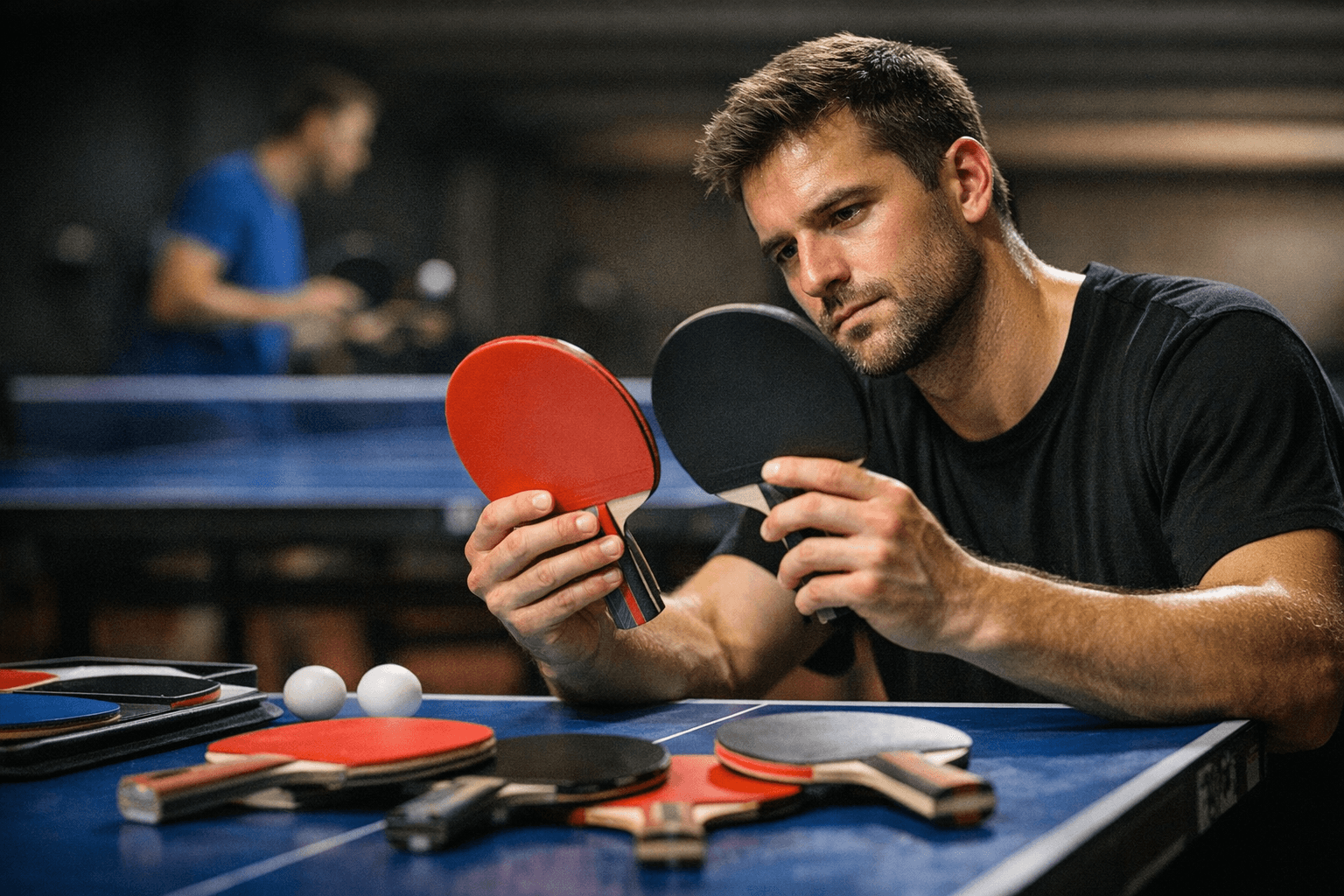
7. Maintenance: storage, cleaning, and checking for peeling
Good maintenance preserves spin and control and saves money; store paddles in a padded case away from extreme heat or humidity to protect glue, wood, and rubber. Clean rubbers after sessions with a damp microfiber or a designated rubber cleaner to remove dust and restore tack, don’t use harsh chemicals or abrasive scrubbing. Regularly inspect for peeling edges, sponge exposure, or hardening; peeling glue lines and delaminating rubbers reduce performance and can be re-glued or replaced by a local coach or shop. • Tip: a simple routine after play (wipe, case, air) keeps rubbers lively and predictable.
8. Basic drills to get the most from a beginner setup
Practice short, purposeful drills that exploit your paddle’s control and spin strengths: consistent forehand/backhand drive rallies focusing on brushing the ball for topspin, short-to-deep push exchanges to master spin variation, and controlled serve-return pairs that emphasize placement over power. Add multiball or coached feed sessions to groove stroke timing at different ball heights; controlled repetition beats random swings when developing spin technique. Spend time on serve spin and receive placement, these are high-return areas where a control-focused paddle shines in casual and league matches.
9. Community resources: suppliers, demo shops, and coaching channels
Local clubs and regional shops are often the best places to test paddles and find pre-assembled control models; national brands like Butterfly, Stiga, JOOLA, and DHS typically offer reliable starter lines and replacement rubbers. Look for demo days at clubs, community center events, or table tennis meetups where you can try blades and rubbers side by side before buying. For coaching, subscribe to reputable channels and club coaches’ clinics to learn how to translate paddle characteristics into shots, video lessons combined with hands-on practice accelerate progress.
10. Final takeaway: prioritize control, then chase speed
Choose gear that enhances learning, medium-hard blade, 1.5–2.0 mm inverted rubbers, and a comfortable handle, and resist the urge to buy speed until your strokes are repeatable. Proper setup, routine maintenance, and targeted drills will convert spin potential into consistent point-winning shots; get the basic choices right and the rest of your game will follow.
Know something we missed? Have a correction or additional information?
Submit a Tip