How to practice doga safely and strengthen bonds with pups
Doga focuses on bonding and relaxation, with practical tips for safe sessions and beginner poses. Follow vet checks, slow introductions, and welfare-aware event practices.

Doga remains a gentle, community-driven way to deepen the human-dog bond and introduce calm into busy lives. The practice is not advanced dog training; its primary benefits are bonding and relaxation. That distinction matters when you pick a class, plan a meet-up, or invite a rescue group to a session.
Start slowly with your dog and keep welfare at the center. If a dog has health issues, consult a vet before trying doga. Never force stretches or positions. Instead, move at the dog’s pace, read canine body language, and stop anything that causes stress. Simple reassurance, soft touch, and patience pay off far more than perfect alignment.
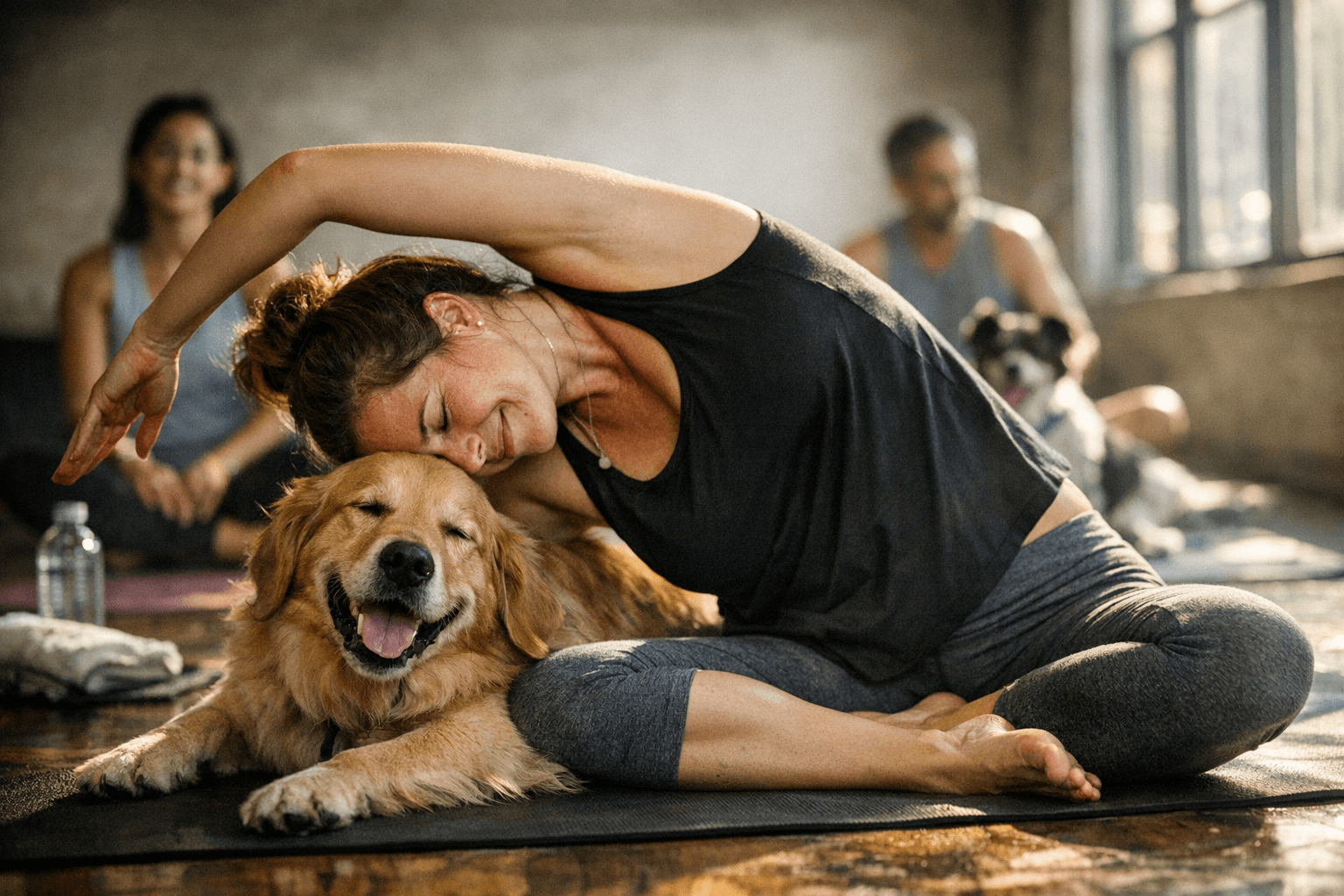
For beginners, use low-commitment poses that prioritize contact and comfort. Heart-to-hound brings owner and dog chest to chest for quiet connection. Gentle massage helps introduce touch and ease muscle tension. Savasana-style relaxation lets dogs and humans settle into a calm closing, promoting rest and lowering arousal. These foundations keep sessions accessible to most dogs and people without pushing physical limits.
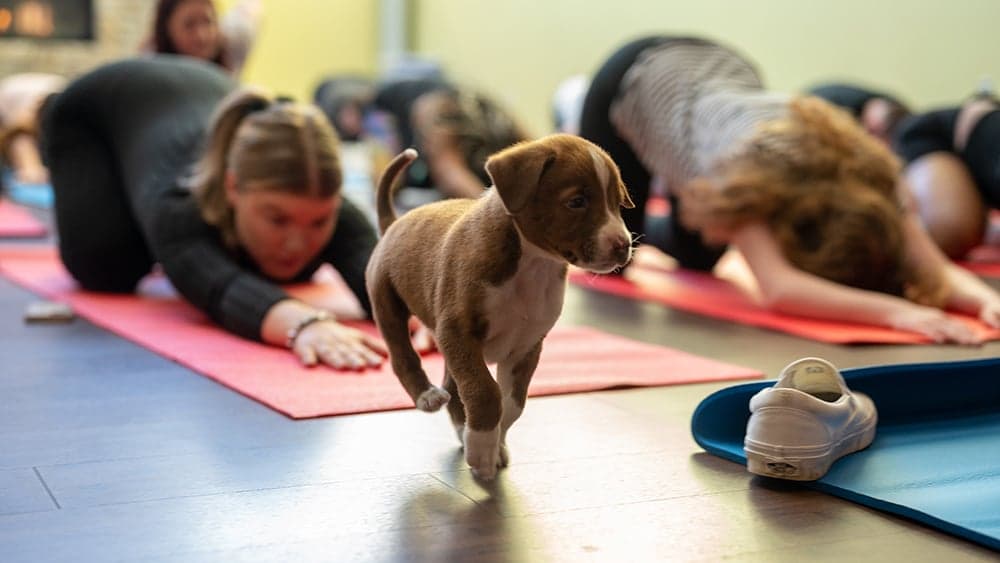
When attending or organizing a doga event, plan for safety and supervision. Prefer calm adoptable or rescue pups for group sessions and make sure hosts have cruelty- and welfare-aware policies in place. Supervision means watching body language continuously, intervening if a dog shows discomfort, and ensuring any introductions are gradual and supervised. Think of the environment as part of the practice: low noise, predictable routines, and short sessions reduce stress and improve engagement.
Community organizers should be transparent about session goals. If the aim is relaxation and bonding, say so. If any handling or stretching will be guided, explain the steps and provide opt-out options. That clarity helps adopters, handlers, and people new to doga understand expectations and prevents situations that might feel like forced training.
Practical prep includes introducing your dog to a mat or blanket at home, using calm cues, and practicing short visits to public spaces so pups learn to settle. When rescue groups attend, coordinate supervision and temperament checks ahead of time to protect both animals and attendees.
Our two cents? Treat doga as a low-pressure way to connect rather than a performance. Start slow, get the vet sign-off for dogs with health concerns, and prioritize calm, welfare-aware providers. Do that and you’re more likely to leave class feeling relaxed, connected, and ready for one more downward dog with your favorite four-legged partner.
Know something we missed? Have a correction or additional information?
Submit a Tip