How to report cheaters and protect your Call of Duty account
Practical steps to report cheaters, gather evidence, and secure accounts to reduce cheating and speed enforcement.
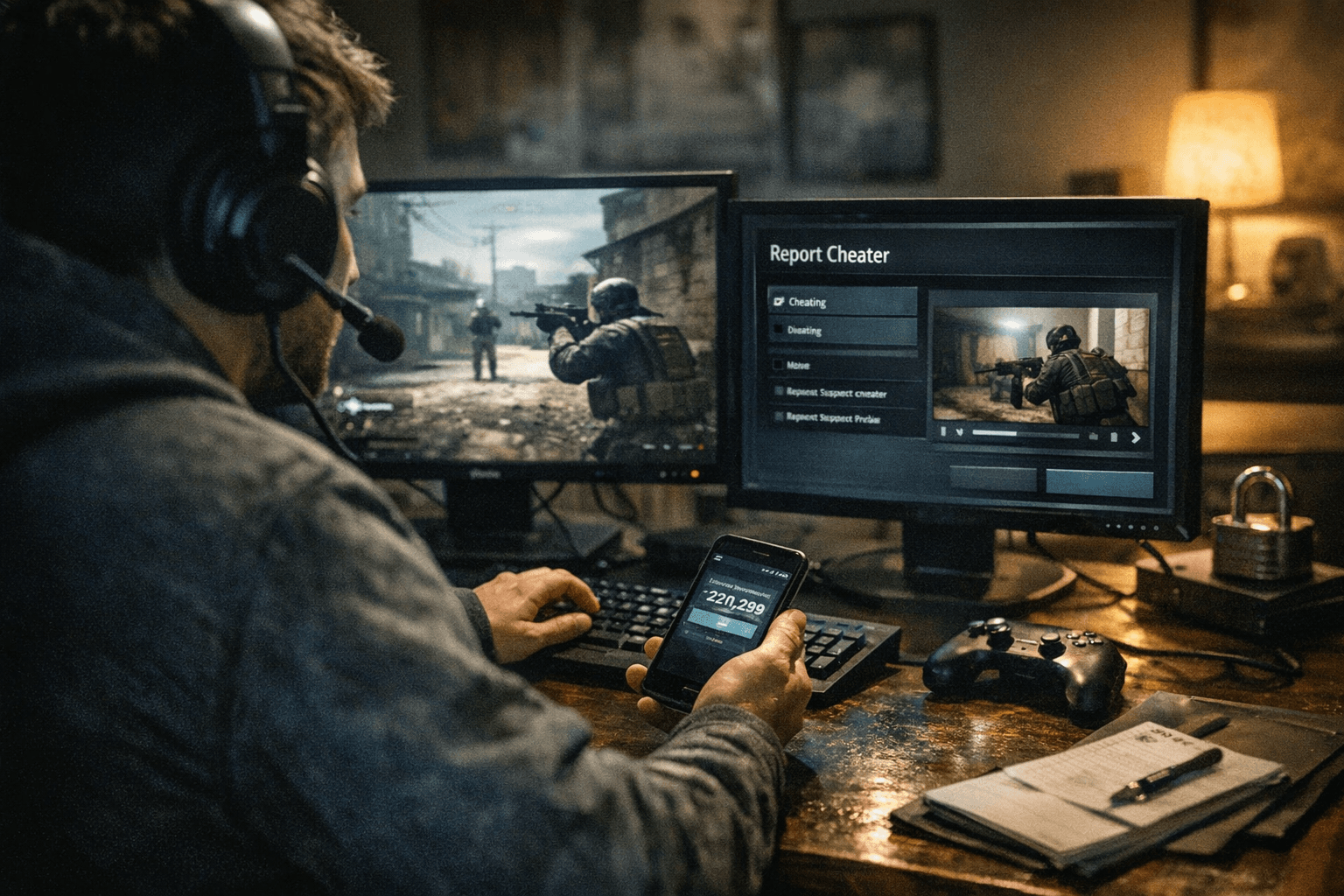
Quick, documented action is the single best tool players have to get cheaters removed and protect match integrity. When you suspect an aimbot, wallhack, speed hack, or other exploit, capture proof, file the in-game report, and follow up through official channels to give moderation teams the evidence they need to act.
Start by recording the incident as soon as possible. Use console native capture, the platform share feature, Nvidia ShadowPlay/GeForce Experience, AMD recording tools, or OBS to clip the moment. Note the exact timestamp, map, and match ID when available and upload clips to cloud storage so they are preserved. Good footage with a clear timeline is far more actionable than vague accusations in chat.
Use the built-in report function first. Report from the player profile or scoreboard and include as many details as you can: time, map, match ID, and the suspected cheat behavior. After in-game reporting, submit a web ticket on the official support site at support.activision.com and attach or link your clips. Include the ticket number in any follow up to create an audit trail. Persistence matters: if you don’t see enforcement, keep the evidence and escalate through the web form using the match ID and timestamps.
Follow RICOCHET and developer guidance for anti-cheat reporting. Track updates from @RavenSoftware, @Treyarch, and @CallofDuty for enforcement notices and tips on what to submit. Use the developer or publisher reporting guidance where available so submissions match the data teams need.
Reduce exposure while you wait for enforcement. Prefer official matchmaking modes and avoid older custom servers or unvetted community lobbies. Consider your crossplay setting based on your risk tolerance; some players toggle crossplay to skew match demographics, and queuing with a premade can cut down on random match risk. Avoid suspicious third-party clients and modded launchers that can compromise account safety.
Lock down your account. Enable two-factor authentication (2FA) on your Activision account, use strong unique passwords, and stay alert for phishing attempts that try to steal credentials or social-engineer bans. If you compete in ladders, leagues, or third-party tournaments, document any cheating and contact league management or tournament admins directly with clips and match IDs. Competitive organizations such as the CDL and third-party admins typically have escalation paths and stricter enforcement options.
Keep community moderation civil and evidence-focused. Public threads full of accusations without proof slow moderator response. Provide clear clips, timestamps, and match IDs so moderators can act. A practical checklist to follow in every incident is: capture the clip, use the in-game report, submit a web support ticket with clip links, follow official accounts for updates, secure your account with 2FA, and avoid dubious third-party clients.
Anti-cheat detection and enforcement remain controlled by developers and publishers and can take time, but thorough documentation and persistence greatly increase the chance of action. Clip it, report it, and secure your profile, consistent community reporting keeps lobbies cleaner and competition fairer.
Know something we missed? Have a correction or additional information?
Submit a Tip